ADAS Calibration Service in San Antonio
Modern vehicles rely on cameras, radar units, sensors, and onboard computers to support many important driver-assistance features. When one of these components is moved, replaced, disconnected, or affected by an accident, the system may require professional calibration.
R WORKS provides ADAS calibration services in San Antonio for vehicles affected by collision damage, windshield replacement, suspension repairs, wheel alignment, and other work involving driver-assistance components.
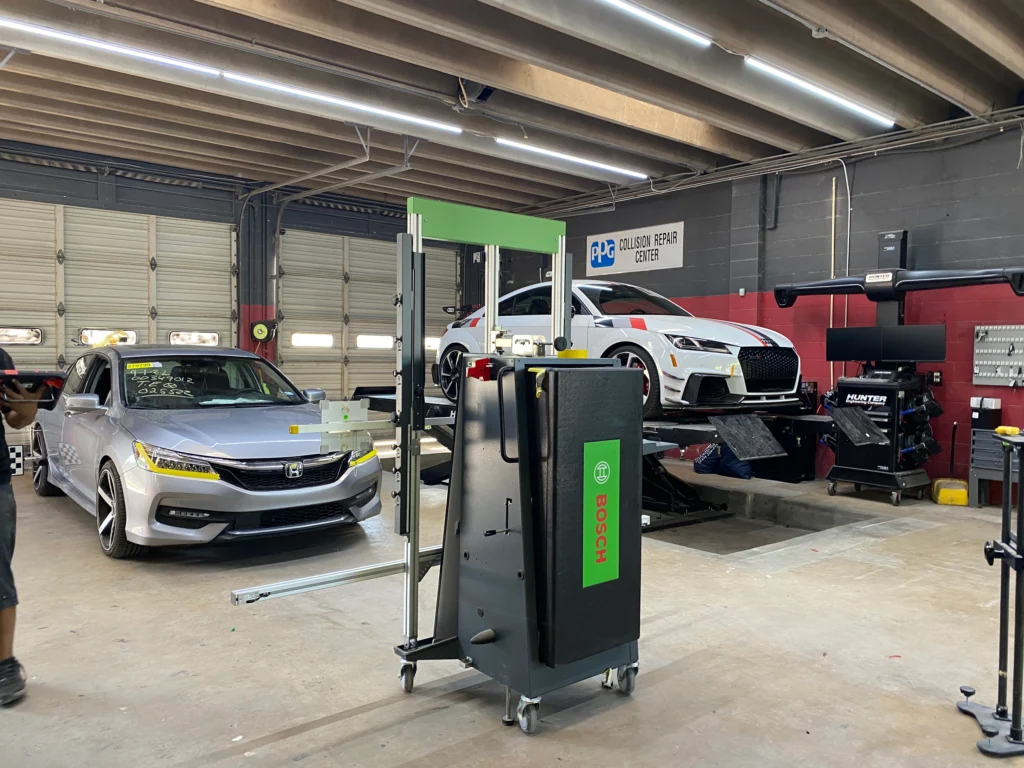
Our team determines the calibration requirements for your vehicle and performs the appropriate procedure using professional diagnostic and calibration equipment, including the Hunter DAS 3000 system.
Contact RWORKS today to schedule an ADAS inspection or calibration appointment.
What Is ADAS Calibration?
ADAS stands for Advanced Driver Assistance Systems. These systems use cameras, radar sensors, ultrasonic sensors, and other electronic components to monitor the area surrounding your vehicle.
ADAS calibration is the process of precisely aiming, positioning, and initializing these components according to the vehicle manufacturer’s procedures.
Even a small change in the position of a camera or radar unit can affect the information the system receives. Calibration helps ensure that the vehicle’s driver-assistance systems are operating according to the specifications established for that year, make, model, and equipment package.
What Vehicle Features Depend on ADAS?
Advanced driver-assistance technology varies between manufacturers and vehicles. Common ADAS features include:
- Forward collision warning
- Automatic emergency braking
- Lane departure warning
- Lane-keeping assistance
- Adaptive cruise control
- Blind-spot monitoring
- Rear cross-traffic alerts
- Parking assistance
- Pedestrian detection
- Traffic sign recognition
- Driver monitoring
- Automatic high beams
- Surround-view camera systems
- Backup cameras and parking sensors
A vehicle may contain several cameras and sensors in different locations. Components can be mounted behind the windshield, grille, bumpers, mirrors, emblems, quarter panels, or other exterior areas.
When Is ADAS Calibration Required?
Calibration requirements differ between vehicle manufacturers. The appropriate procedure must be determined using vehicle-specific repair information rather than assumptions based only on the type of repair.
Your vehicle may require ADAS calibration after:
- A front-end, rear-end, or side-impact collision
- Windshield replacement
- Camera, radar, or sensor replacement
- Bumper removal or replacement
- Grille or front emblem replacement
- Side-mirror replacement
- Structural or frame repairs
- Suspension repairs
- Wheel alignment
- Steering repairs
- Changes to vehicle ride height
- Tire or wheel-size changes
- Disconnecting certain electronic components
- Diagnostic trouble codes involving an ADAS system
- Repairs to a sensor mounting location
Calibration may also be required when a sensor does not appear visibly damaged. A mounting bracket, body panel, windshield, suspension component, or alignment angle can change enough to affect the sensor’s position.
R WORKS evaluates the vehicle, the installed systems, and the completed repairs to determine which calibrations are necessary.
ADAS Calibration After Collision Repair
A collision can affect much more than the visible body damage. The impact may alter the position of cameras, radar sensors, mounting brackets, suspension components, steering parts, or the vehicle’s structural measurements.
For example, a sensor mounted behind the front bumper may need to be removed during bumper or structural repairs. A forward-facing camera may be affected by windshield replacement. Changes to suspension or wheel alignment can also alter the direction in which a camera or radar unit is aimed.
R WORKS incorporates ADAS considerations into the collision repair process. When calibration is required, it can be coordinated with the related body, glass, suspension, or alignment work.
ADAS Calibration After Windshield Replacement
Many newer vehicles have a forward-facing camera mounted to the windshield near the rearview mirror. This camera may support lane-keeping assistance, automatic emergency braking, traffic sign recognition, adaptive cruise control, and other features.
Replacing the windshield can change the camera’s position relative to the road. Even when the camera is reinstalled correctly, the vehicle manufacturer may require calibration after the glass replacement.
R WORKS provides windshield replacement and can determine whether the vehicle’s camera system requires ADAS calibration before the repair is completed.
ADAS Calibration After Wheel Alignment or Suspension Repair
Wheel alignment and suspension geometry affect the direction in which a vehicle travels. Some driver-assistance systems use that direction as a reference point when interpreting camera and radar information.
Calibration or electronic resets may be required after:
- Four-wheel alignment
- Steering-angle adjustments
- Suspension component replacement
- Ride-height changes
- Collision-related suspension repairs
- Subframe removal or adjustment
- Repairs that change the vehicle’s thrust angle
R WORKS can coordinate suspension inspection, wheel alignment, diagnostic procedures, and ADAS calibration at one San Antonio repair facility.
Static and Dynamic ADAS Calibration
Depending on the vehicle and system, the manufacturer may require static calibration, dynamic calibration, or a combination of both.
Static ADAS Calibration
Static calibration is performed while the vehicle remains stationary in a controlled repair environment.
Special targets, patterns, or radar reflectors are positioned at precise distances and angles around the vehicle. The camera or sensor uses these targets as reference points during the calibration procedure.
R WORKS uses professional equipment, including the Hunter DAS 3000 calibration system, for supported static camera and radar calibration procedures.
Dynamic ADAS Calibration
Dynamic calibration is performed while the vehicle is driven under conditions specified by the manufacturer.
The vehicle may need to travel at a particular speed on a road with visible lane markings while a diagnostic tool communicates with the system. Required conditions vary by vehicle and may include speed, distance, traffic, weather, and road requirements.
Combined Calibration
Some vehicles require both static and dynamic procedures. R WORKS follows the applicable requirements for the vehicle and the systems being serviced.
Our ADAS Calibration Process
The exact process varies by vehicle, but an ADAS calibration appointment may involve the following steps.
1. Vehicle and System Identification
We identify the vehicle’s year, make, model, equipment, and installed driver-assistance features. This helps determine which cameras, sensors, and calibration procedures apply.
2. Damage and Repair Review
Our team reviews the accident damage or recently completed work. We look for repairs involving the windshield, bumpers, suspension, alignment, body panels, sensor brackets, and other ADAS-related areas.
3. Diagnostic Inspection
When required, the vehicle is scanned for diagnostic trouble codes and system information. Warning messages, stored faults, and communication problems may need to be addressed before calibration can begin.
4. Pre-Calibration Preparation
ADAS calibration depends on the vehicle meeting specified conditions. Preparation may include checking:
- Tire pressure
- Tire and wheel condition
- Suspension condition
- Vehicle ride height
- Wheel alignment
- Steering-wheel position
- Battery voltage
- Fuel or cargo requirements
- Sensor and camera mounting
- Windshield installation
- Diagnostic trouble codes
A calibration may not complete successfully if the vehicle has unresolved mechanical, structural, alignment, or electronic problems.
5. Calibration Procedure
Our technicians perform the required static, dynamic, or combined calibration using the appropriate targets, equipment, and vehicle-specific procedure.
6. Verification and Documentation
After calibration, the system is checked for completion, warning indicators, and related diagnostic faults. Available documentation may be retained as part of the repair record.
Hunter DAS 3000 ADAS Calibration Equipment
RWORKS uses the Hunter DAS 3000 system for supported static ADAS calibration procedures.
The system positions camera targets and radar reflectors in relation to the vehicle, allowing supported sensors to be calibrated according to the required procedure. Professional positioning equipment is especially important because target distance, height, angle, and vehicle alignment can affect the calibration.
Using professional equipment allows RWORKS to provide ADAS calibration alongside collision repair, auto glass replacement, suspension work, and wheel alignment.
Signs Your Vehicle May Need ADAS Service
A warning light is not the only indication of an ADAS problem. Some calibration issues may not immediately activate a dashboard warning.
Possible signs of a problem include:
- An ADAS or camera warning message
- Lane warnings occurring at the wrong time
- Lane-keeping assistance pulling unexpectedly
- Adaptive cruise control becoming unavailable
- Automatic braking warnings without an obvious hazard
- Blind-spot alerts behaving inconsistently
- A camera or sensor disabled after a repair
- Parking sensors failing to detect nearby objects
- A steering wheel that is off-center
- Driver-assistance features that stopped working after windshield replacement or collision repair
These symptoms do not always mean that calibration alone will correct the problem. The system may also have damaged components, wiring faults, mounting problems, alignment issues, blocked sensors, or diagnostic trouble codes.
RWORKS can inspect the situation and recommend the appropriate next step.
Why Professional ADAS Calibration Matters
ADAS components must interpret the position, speed, and movement of vehicles, lanes, pedestrians, and other objects around your vehicle. These calculations depend on accurate information from properly installed and calibrated sensors.
Calibration should be completed using the correct equipment and vehicle-specific procedure. Simply clearing a warning light or disconnecting the battery does not replace a required calibration.
RWORKS approaches ADAS calibration as part of the complete vehicle repair—not as an isolated add-on. We can evaluate the body, glass, suspension, alignment, and electronic factors that may affect the system.
ADAS Calibration for Auto Body Shops and Repair Professionals
RWORKS can also assist repair facilities that need professional ADAS calibration support for a customer’s vehicle.
Our San Antonio location can provide calibration services related to:
- Collision repair
- Windshield replacement
- Bumper replacement
- Suspension repairs
- Wheel alignment
- Camera replacement
- Radar-sensor replacement
- Blind-spot sensor work
- Diagnostic trouble codes
- Post-repair verification
Contact our team with the vehicle information and completed repair details so we can evaluate the required procedure.
Why Choose RWORKS for ADAS Calibration?
Collision and Calibration Services in One Location
RWORKS provides collision repair, automotive painting, auto glass replacement, suspension repair, wheel alignment, and ADAS calibration. This reduces the need to coordinate several unrelated repair facilities.
Professional Calibration Equipment
We use the Hunter DAS 3000 system for supported static camera and radar calibration procedures.
Vehicle-Specific Approach
Calibration requirements are based on the vehicle and the repair performed. We do not assume that every make and model follows the same procedure.
Complete Repair Considerations
Our team considers the mechanical, structural, glass, alignment, and electronic conditions that can affect calibration.
Convenient San Antonio Location
RWORKS serves drivers, body shops, glass installers, and automotive repair professionals throughout San Antonio and surrounding communities.
Frequently Asked Questions About ADAS Calibration
What does ADAS calibration mean?
ADAS calibration is the process of aiming, positioning, or initializing cameras, radar units, and other driver-assistance sensors according to the vehicle manufacturer’s specifications. Calibration helps the system interpret its surroundings using the correct reference points. Read More on Wikipedia about ADAS
Does every collision require ADAS calibration?
Not every vehicle or collision requires the same calibration. The requirement depends on the vehicle’s equipment, the location of the damage, the components affected, and the manufacturer’s repair procedures.
Do I need calibration after replacing my windshield?
Many vehicles with a windshield-mounted camera require calibration after windshield replacement. The requirement depends on the vehicle and installed camera system.
Can a wheel alignment affect ADAS?
Yes. Some ADAS features rely on steering position, wheel angles, vehicle centerline, or thrust direction. Certain vehicles require electronic resets or ADAS calibration following wheel alignment or suspension repairs.
What is the difference between static and dynamic calibration?
Static calibration is performed while the vehicle is parked using targets or radar reflectors positioned around it. Dynamic calibration is performed while driving the vehicle under conditions specified by the manufacturer. Some vehicles require both.
How long does ADAS calibration take?
Calibration time depends on the vehicle, the number of systems involved, the type of procedure, diagnostic faults, alignment condition, and whether additional repairs are needed. RWORKS can provide a more accurate estimate after reviewing the vehicle.
Will my dashboard always show an ADAS calibration problem?
No. Some faults produce a warning message or diagnostic code, but an improperly aimed sensor may not always create an immediate dashboard warning. Calibration requirements should be based on vehicle-specific repair procedures rather than warning lights alone.
Can damaged sensors be fixed through calibration?
Calibration cannot repair a physically damaged camera, radar unit, bracket, wiring connection, or control module. Damaged components must be properly repaired or replaced before calibration can be completed.
Does insurance cover ADAS calibration?
ADAS calibration may be included in an insurance claim when it is required as part of a covered collision repair. Coverage depends on the loss, repair requirements, insurance policy, and claim approval.
Can RWORKS calibrate ADAS after another shop completes the repair?
Contact RWORKS with the vehicle information and details about the completed repair. We can review the situation and determine whether we can perform the required calibration.
Schedule ADAS Calibration in San Antonio
ADAS calibration may be required after an accident, windshield replacement, wheel alignment, suspension repair, or replacement of a camera or radar sensor.
R WORKS provides professional ADAS calibration in San Antonio using specialized equipment and vehicle-specific procedures. We can also coordinate calibration with collision repair, auto glass replacement, suspension work, and wheel alignment.
Contact R WORKS today to schedule an inspection or request an estimate.