
The days after a wreck are usually a blur of insurance calls, photos, tow arrangements, and a vehicle that may not feel safe to drive. Knowing how to choose a collision repair shop can keep a stressful situation from becoming a second problem. The right shop does more than make dents disappear. It communicates clearly, repairs the damage correctly, helps you understand the process, and stands behind the work after you pick up your keys.
For San Antonio drivers, the choice often comes down to more than the lowest estimate or the closest location. A quality repair should protect your vehicle’s safety, appearance, value, and long-term performance.
How to Choose a Collision Repair Shop After an Accident
Start by separating the immediate need from the long-term decision. If your vehicle is unsafe, arrange a tow or ask whether the shop can help coordinate one. If it is drivable, take a breath before agreeing to repairs. You generally have the right to select the repair facility you want, even if your insurer gives you a list of recommended shops.
An insurer’s recommendation can be useful, but it should not replace your own review. Ask whether the shop handles the type of damage your vehicle has and whether it will work directly with your insurance company. A shop experienced with claims can document damage, communicate with adjusters, and explain what happens if additional repairs are found after disassembly.
That last point matters. Collision damage is not always fully visible from the outside. A cracked bumper cover may hide damaged brackets, sensors, absorbers, or structural components. Honest shops explain that an initial estimate can change when hidden damage is discovered, then keep you informed before the repair moves forward.
Look Beyond the Estimate Price
Two estimates can look similar while covering very different repairs. One may account for proper parts, paint materials, alignment checks, sensor calibration, and necessary mechanical work. Another may focus only on the most visible damage. The lowest number is not always the best value if it leaves you with poor panel fit, mismatched paint, warning lights, tire wear, or a vehicle that pulls to one side.
Ask the estimator to walk you through the repair plan in plain language. You should understand what is being repaired, what is being replaced, and what may need further inspection. If a shop rushes through your questions or cannot explain its recommendations, that is worth taking seriously.
Price still matters, especially for cash-pay repairs. A trustworthy shop should provide a clear estimate and discuss practical options without pressuring you. Sometimes a minor cosmetic repair can be handled more affordably than full panel replacement. Other times, replacement is the safer choice. The right answer depends on the damage, the vehicle, and the quality standard you expect.
Ask About Parts, Paint, and Repair Procedures
Parts decisions affect cost, fit, and durability. Depending on your vehicle and insurance coverage, a repair may involve original equipment manufacturer parts, aftermarket parts, recycled parts, or a combination. There is no one answer that fits every repair. The important thing is that the shop explains the options and uses parts appropriate for the vehicle and repair.
For newer vehicles, ask how the shop addresses cameras, parking sensors, blind-spot monitoring, and other advanced driver-assistance features. A small impact can affect components behind a bumper or windshield, even when the exterior damage appears minor. Proper calibration and verification may be required after repairs.
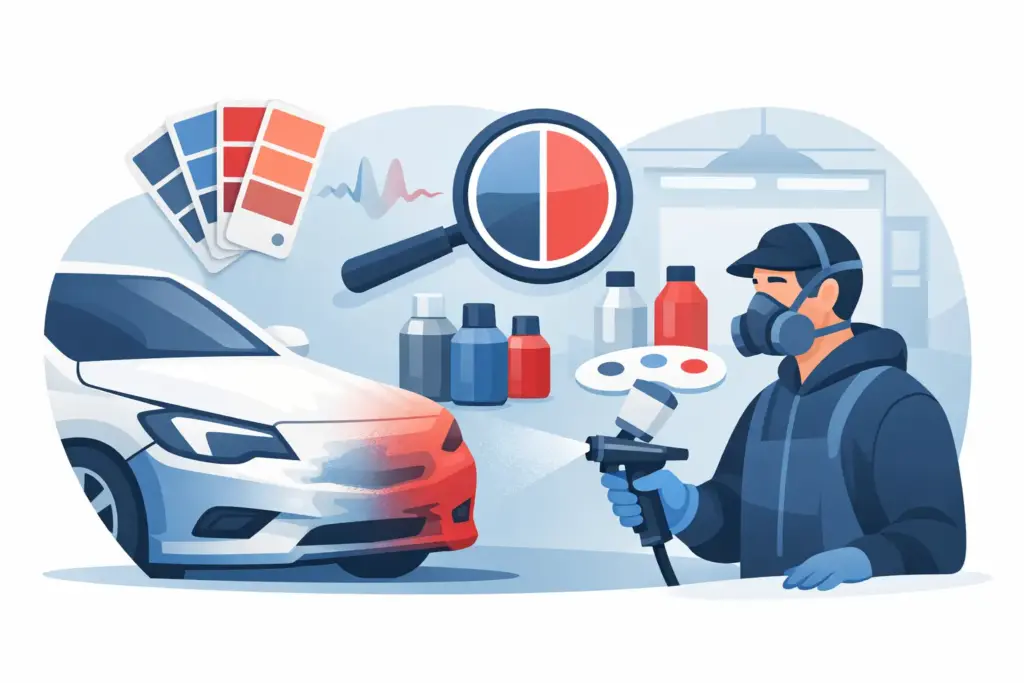
Paint work deserves the same attention. Good auto painting is about more than choosing a color code. It involves preparation, color matching, blending neighboring panels when needed, and allowing proper curing time. Look for a shop that can explain how it handles paint matching rather than promising a result without discussing the process.
Check Reputation, but Read Reviews Carefully
Online reviews are helpful when you look for patterns instead of focusing on one glowing comment or one bad experience. Pay attention to what customers say about communication, repair quality, insurance support, timelines, and how the shop handled concerns. A long history of detailed reviews is often more meaningful than a handful of recent ratings.
You can also ask friends, family members, or coworkers who have had similar work done. A recommendation is especially useful if the person had a repair that required more than cosmetic work, such as suspension damage, frame-related repair, hail damage, or significant paint work.
A local, established shop has a reputation to protect in the community. That does not guarantee every repair will be simple, because parts delays and insurance approvals can affect timelines. It does mean the business should be available to answer questions and address issues after the job is complete.
Evaluate Communication Before You Commit
The first conversation is often a preview of the repair experience. Notice whether the staff answers the phone, returns messages, explains next steps, and gives you a realistic sense of timing. You should not have to chase down basic information about your vehicle.
Ask how often you will receive updates and who your main point of contact will be. A clear process matters when repairs take longer than expected because of supplements, parts availability, or additional damage. No shop can control every delay, but a good one can communicate early and honestly.
Convenience also has real value after an accident. Consider whether the shop offers help with insurance paperwork, scheduling, drop-off arrangements, or a ride home. These services do not replace skilled repair work, but they can make an already difficult week much easier.
Confirm the Warranty and Final Quality Check
Before authorizing repairs, ask what warranty comes with the work and get the details in writing. A lifetime warranty can be a strong sign that a shop is confident in its workmanship, but it is still smart to ask what it covers. Clarify whether the warranty applies to paint, body labor, parts, or all of the above, and whether there are exclusions.
At pickup, take time to inspect the vehicle in good lighting. Check panel gaps, paint consistency, trim, lights, and the operation of doors, trunk, hood, windows, and safety features. If the repair involved suspension or wheel damage, pay attention to how the vehicle drives. It should not pull, vibrate, or make unfamiliar noises.
Do not feel awkward raising a concern. A professional repair shop wants the opportunity to review anything that does not look or feel right. Keep your final invoice, warranty paperwork, and repair documentation for your records, particularly if you plan to sell or trade the vehicle later.
Choose a Shop That Can Handle the Full Picture
Collision repair frequently overlaps with other services. A damaged wheel, for example, may also mean alignment or suspension work. Hail damage can require paintless dent repair in some areas and traditional body repair in others. Cosmetic damage may reveal a broken mount, cracked lamp housing, or damaged glass.
Choosing a full-service shop can simplify the process when more than one system needs attention. Instead of moving the vehicle between separate providers, you have one team coordinating the work and one clear point of contact. Still, confirm that the shop has the experience and equipment for the specific repairs your vehicle needs.
For drivers who want a local team that combines collision repair, painting, hail damage repair, suspension and alignment work, insurance support, and a lifetime warranty, RWORKS is built around making that process straightforward.
The best choice is the shop that earns your confidence before the work begins: one that explains the repair, respects your budget, communicates when plans change, and treats your vehicle like something you rely on every day. That kind of care is worth looking for, especially when the accident was never part of your plan.