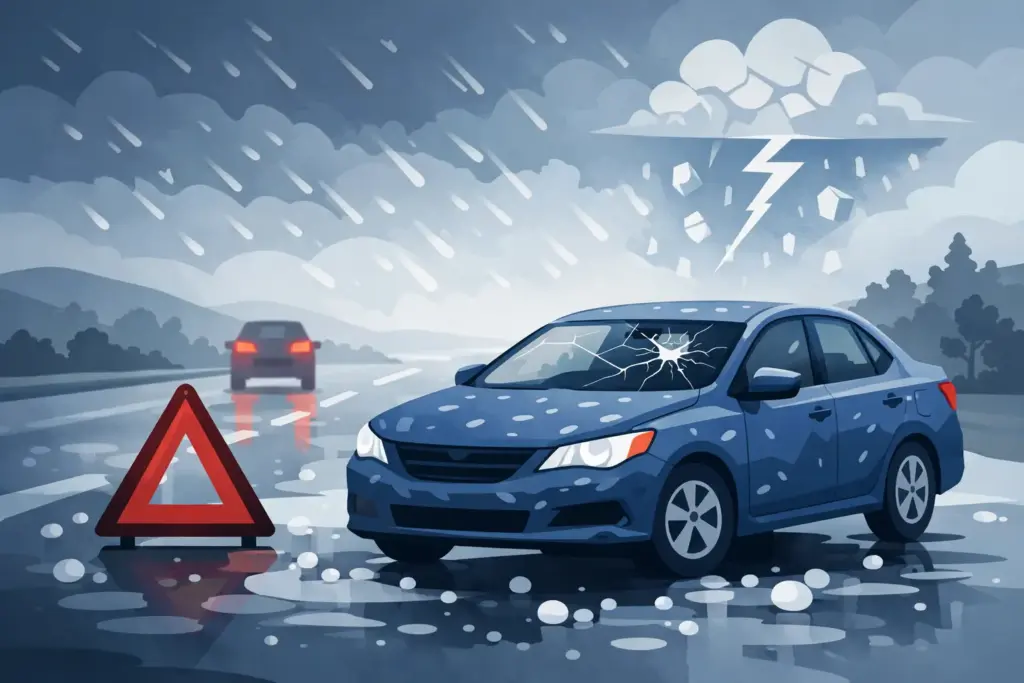
A Texas hailstorm can leave your hood, roof, and trunk covered in dents within minutes. The first question most drivers ask is simple: can you drive with hail damage? Often, yes – but only when the damage is limited to cosmetic dents and your vehicle’s glass, lights, mirrors, and safety systems are still working properly.
The problem is that hail damage is not always as harmless as it looks. A few shallow dents may not affect how your car drives, while cracked glass, damaged lighting, or a loose exterior panel can turn a routine trip into a safety concern. Before getting back on the road, take a few minutes to look beyond the dents.
Can You Drive With Hail Damage Safely?
If hail only dented painted metal panels and did not damage any functional components, driving is generally safe. Your engine, steering, brakes, tires, and suspension are not usually affected by a typical hailstorm. You can normally drive the vehicle home, to work, or to a repair appointment.
That said, “drivable” does not always mean “nothing needs to be done.” Hail dents can reduce resale value, and paint damage can expose metal to moisture over time. In San Antonio, where sun and sudden storms both take a toll on exterior finishes, leaving damaged panels untreated for too long may make a straightforward repair more involved.
The answer changes if the storm damaged your windshield, side windows, rear glass, headlights, taillights, mirrors, or roof accessories. These issues can affect what you see, what other drivers see, and how well your vehicle stays protected from rain.
Damage That Means You Should Not Drive
A careful walk-around is the best first step after a hailstorm. Do it in daylight if possible, and do not touch broken glass with bare hands. Some damage calls for a tow or a repair before driving any farther.
Cracked or shattered windshield
A small chip does not always make a vehicle unsafe to move, but a crack can spread quickly with road vibration, heat, air conditioning, or another bump in the road. Avoid driving if the crack blocks your view of the road, runs through the driver’s primary viewing area, reaches the edge of the windshield, or leaves glass loose.
Your windshield also contributes to the vehicle’s structure and supports proper airbag performance in many vehicles. A severely damaged windshield is more than a visibility problem.
Broken side or rear windows
Do not drive with a shattered side window or rear glass unless it is absolutely necessary to move the vehicle a very short distance to safety. Loose glass can fall into the cabin, rain can damage the interior, and a missing window creates a serious security issue. Covering an opening may help temporarily, but it is not a substitute for proper glass repair.
Damaged headlights, taillights, or turn signals
Hail can crack lenses or knock a light assembly loose. If a headlight, brake light, taillight, or turn signal does not work correctly, driving at night or in poor weather is unsafe. Even if the bulb still works, a cracked lens can allow moisture inside and lead to a later electrical failure.
Loose panels, mirrors, or roof components
Inspect mirrors, trim pieces, roof racks, antenna mounts, sunroof areas, and any aftermarket accessories. A loose piece can detach at highway speed and become a hazard for other drivers. If a mirror is broken or cannot be adjusted, wait for a repair rather than driving with limited visibility.
Hail Damage That May Look Cosmetic but Still Needs Attention
Some hail damage is easy to overlook because it does not stop the vehicle from moving. It can still create repair issues if you wait too long.
Paint chips and deep dents are the biggest concern. Modern vehicle paint has several protective layers, but hail can sometimes break through them, especially along sharp body lines, hood edges, and aluminum panels. Once bare metal is exposed, moisture can lead to corrosion. Rust repair is usually more costly than addressing the original damage early.
Check the weatherstripping around doors, windows, the trunk, and the sunroof. If hail has damaged a seal or distorted the surrounding panel, water may enter the cabin during the next rain. Damp carpet, a musty smell, fogged windows, or unexplained electrical issues can all point to water intrusion.
Also pay attention to your vehicle’s roof. Dents alone are generally cosmetic, but a hard impact near a sunroof, roof rail, or roof-mounted antenna may require closer inspection. Any sign of leaking, cracked glass, or damaged trim deserves prompt attention.
What to Check Before You Drive After a Hailstorm
You do not need to be an auto body expert to make a smart first assessment. Start by checking whether all windows are intact and whether the windshield gives you a clear, unobstructed view. Then turn on the headlights, brake lights, turn signals, and hazard lights to confirm they operate normally.
Look under and around the vehicle for broken plastic, glass, or hanging parts. Open and close the doors, trunk, and hood carefully. If something binds, will not latch, or has visibly shifted, do not force it. Finally, check the cabin for water around the headliner, seats, floor mats, and trunk area.
If the vehicle passes those checks, it is usually reasonable to drive it cautiously to a secure location or repair shop. Avoid high speeds if you suspect a loose panel, and keep clear of standing water if window or seal damage is possible.
Should You File an Insurance Claim for Hail Damage?
Hail damage is typically covered under comprehensive auto insurance, not collision coverage. Comprehensive coverage commonly applies to weather events, falling objects, theft, vandalism, and similar non-collision losses. Your deductible still applies, so the decision to file a claim depends on the extent of damage and your policy.
Take photos before washing the vehicle or attempting any repair. Capture wide shots of the vehicle, close-ups of dents and glass damage, and pictures from several angles. If another storm is expected, move the vehicle into covered parking when safe to do so, but document the condition first.
It is also wise to get a professional estimate before assuming the damage is minor. Hail dents can be difficult to see in flat light, and there may be damage on the roof or upper panels that is not obvious from ground level. A repair center can assess whether paintless dent repair is appropriate or whether conventional body and paint work is needed.
Be cautious about making an immediate decision based only on a door-to-door solicitation after a major storm. Reputable repair shops should explain the damage, answer questions about the repair approach, and provide clear communication about the insurance process, timeline, and warranty.
Repair Options Depend on the Damage
Paintless dent repair, often called PDR, is a strong option when the paint surface is intact and the dents can be carefully worked from behind the panel. It preserves the factory finish and can be an efficient way to restore hail-damaged panels without repainting them.
Not every dent qualifies. Deep impacts, stretched metal, sharp creases, cracked paint, inaccessible areas, and damage near panel edges may require more traditional body repair and refinishing. Glass replacement, light replacement, and seal repairs may be needed in addition to dent work.
A quality repair is about more than making dents less noticeable. The goal is to restore the appearance, panel fit, weather protection, and value of your vehicle. At RWORKS, drivers can also get help understanding the repair plan and navigating an insurance claim, without being left guessing about the next step.
Do Not Put Off a Proper Inspection
It is reasonable to drive a car with minor hail dents for a short time when all safety-related components are intact. But waiting months can complicate matters, especially when paint has been damaged or water may be finding its way into the vehicle. It can also make it harder to separate hail damage from any new damage that occurs later.
Keep your claim information, photos, and repair estimate in one place. If you must drive before repairs begin, park under cover when possible and monitor cracks, leaks, and damaged lights closely. A crack that seems small today can become a replacement issue after a hot afternoon or a rough stretch of road.
After a hailstorm, your vehicle does not need to look perfect to be safe. It does need clear visibility, working lights, secure exterior parts, and protection from the weather. If any of those are in question, let a qualified repair professional inspect it before your next trip.