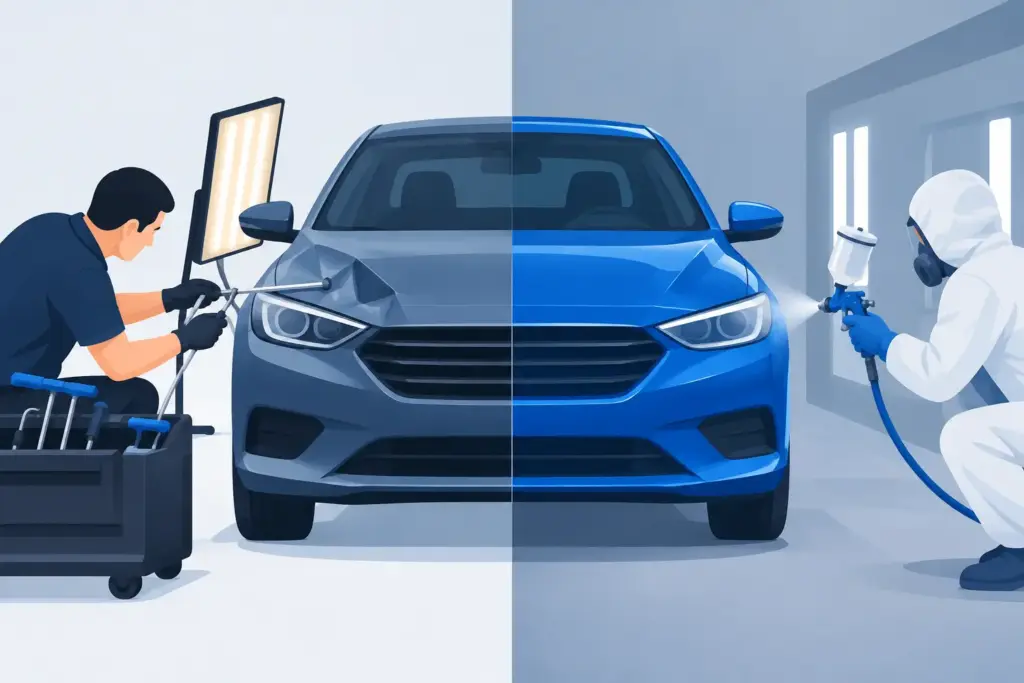
A shopping cart ding, a fresh hailstorm, or a crease in the parking lot can make a well-kept vehicle look older overnight. When the paint is still intact, many drivers ask whether paintless dent repair versus repainting is the better answer. The right choice depends less on how noticeable the dent looks from ten feet away and more on the condition of the metal, the paint, and the panel underneath.
For San Antonio drivers, that distinction matters. A repair that preserves the factory finish can protect resale value and shorten downtime, while a dent with cracked paint or hidden collision damage may need a more complete body and paint repair to look right and last.
What Paintless Dent Repair Can Do
Paintless dent repair, often called PDR, is a specialized technique used to reshape a damaged panel without sanding, filler, or new paint. A technician accesses the back of the panel when possible and carefully works the metal back toward its original position. For areas where rear access is limited, a controlled pulling method may be used from the exterior.
The goal is not to cover the damage. It is to restore the panel while keeping the original factory paint in place. That makes PDR especially useful for door dings, shallow dents, minor creases, and many types of hail damage.
A quality factory paint finish is difficult to duplicate exactly because it was applied under controlled manufacturing conditions. When a dent can be repaired without disturbing that finish, the vehicle keeps its original paint color, texture, and protective coatings. There is no risk of a paint blend line on an adjacent panel because there is no repainting involved.
PDR can also be a faster option. A small door ding may be handled far sooner than a conventional repair that requires bodywork, primer, paint, curing, and reassembly. The actual timeline still depends on the dent location, the number of damaged panels, and the shop’s schedule, but fewer repair stages often mean less time without your vehicle.
When Repainting Is the Better Repair
Repainting becomes necessary when the damage has broken the paint surface or when the panel cannot be returned to shape through PDR alone. A dent can appear minor but still have a sharp center, stretched metal, or a deep crease that prevents a clean paintless repair. If the clear coat is split, the color coat is chipped, or bare metal is exposed, leaving the panel as-is can invite corrosion.
Conventional body repair addresses damage in layers. The technician repairs or replaces the damaged section as needed, prepares the surface, applies the proper materials, and refinishes the panel to match the surrounding area. In some cases, adjacent panels need to be blended so the color transitions naturally under different lighting conditions.
This approach is often the right call after a collision, especially when there is more than cosmetic damage. A bumper impact, for example, may leave a visible dent while also affecting mounting points, brackets, sensors, panel gaps, or structural components behind the surface. Repainting is only one part of the process. A complete inspection helps make sure the vehicle is safe, aligned, and restored correctly.
Paintless Dent Repair Versus Repainting: The Main Differences
The clearest difference is what happens to your vehicle’s original finish. Paintless dent repair preserves it. Repainting replaces the damaged finish with a professionally matched and applied new one.
Cost can differ as well. PDR is often more affordable for eligible dents because it uses less material and typically requires fewer repair steps. That does not mean it is automatically the lowest-priced solution for every job. Extensive hail damage across a roof, hood, trunk, and multiple doors requires detailed labor, even when the paint is intact. Likewise, a tiny dent on a difficult body line may take more skill and time than a larger, accessible dent.
Repainting generally involves more labor, materials, and curing time, particularly when color blending is needed. However, choosing PDR strictly to avoid paintwork when the paint has already failed can lead to a result that does not protect the panel or meet the standard you expect. A good estimate should explain why a repair method is recommended rather than treating every dent the same.
There is also a resale consideration. Original paint is valuable to many buyers because it suggests the vehicle has not needed refinishing. PDR can be a strong choice when it restores the panel cleanly without altering that original finish. But well-executed repainting is preferable to leaving chipped paint, visible body damage, or early rust behind. The best repair is the one that returns the vehicle to a condition you can confidently stand behind.
How to Tell Which Repair Your Vehicle Needs
The first question is simple: is the paint intact? If there are no cracks, chips, scuffs through the clear coat, or exposed metal, PDR may be possible. The next question is whether the metal is accessible and has not been stretched beyond what can be carefully reshaped.
Shallow, rounded dents are usually better candidates than sharp impact points. Dents near the edge of a panel, on reinforced sections, or directly on a strong body line can be more complicated. Aluminum panels, common on many newer trucks and SUVs, may also require different techniques than steel panels.
Hail damage deserves its own consideration. Many hail dents are ideal for paintless repair because the paint often survives the impact. Yet each storm is different. Larger hail, prior paintwork, thin paint, and panel damage near roof braces can change the repair plan. A thorough inspection should look at every affected panel, not just the most obvious dents.
If the dent followed an accident, ask for more than a cosmetic opinion. Uneven gaps around the hood, trunk, doors, or bumper, steering that pulls, new vibrations, warning lights, or a wheel that no longer looks centered can point to damage beyond the painted panel. Body repair, suspension work, and alignment may all be part of returning the vehicle to pre-accident condition.
Insurance, Estimates, and Repair Quality
For insured drivers, both paintless dent repair and repainting may be covered when the damage resulted from a covered event. Hail claims often have different deductibles and claim rules than collision claims, so it helps to review your policy before assuming what you will pay out of pocket.
An estimate should document the visible damage and account for possible hidden damage found after disassembly. This is particularly relevant after a collision, when a bumper cover or fender may hide broken retainers, damaged absorbers, or misaligned components. Clear communication during that process matters just as much as the first estimate.
At RWORKS, the focus is on recommending the repair method that fits the vehicle, not steering every customer toward a single service. Whether a panel qualifies for paintless dent repair or needs conventional bodywork and refinishing, drivers should know what is being repaired, why it is needed, and what to expect for timing. Quality work should also be backed by a warranty that gives you confidence after you drive away.
Choose the Repair That Protects Your Vehicle
A quick-looking fix is not always the right fix. If the paint is intact and the metal can be restored properly, paintless dent repair can preserve your factory finish, reduce downtime, and make minor damage disappear without repainting. If the paint is broken, the panel is sharply creased, or the impact affected more than the surface, repainting and complete collision repair may be the smarter long-term investment.
The most helpful next step is a professional inspection before the damage gets worse. A knowledgeable repair team can show you the options, explain the trade-offs in plain language, and help you move forward with a repair that looks right, protects your vehicle, and fits your situation.