A damaged truck bed is more than an eyesore. A dented bedside, bent tailgate, scraped paint, or rust spot can affect how your truck works, holds value, and stands up to San Antonio weather. The best truck bed repair does not simply hide the damage. It addresses the cause, restores proper fit, and protects the metal so the repair lasts.
For truck owners, the right repair depends on where the damage occurred and how far it traveled. A shallow dent from a loading mishap calls for a different approach than a collision that pushed the bedside into the wheel opening or shifted the tailgate out of alignment. Knowing what quality work looks like helps you make a confident decision before repairs begin.
What the Best Truck Bed Repair Should Address
A truck bed has to handle real work. It is exposed to cargo, tools, trailer equipment, rain, sun, road debris, and frequent impacts around the tailgate and wheel wells. That means a repair must be evaluated for function as well as appearance.
A proper inspection starts with the obvious damage, then looks beyond it. A technician should check the bed floor, bed rails, bedside panels, wheel openings, tailgate, bumper, lights, mounting points, and the gap between the bed and cab. If the truck was hit hard enough, the frame and suspension alignment may also need attention.
The goal is not to make a damaged panel look acceptable from ten feet away. It is to restore clean body lines, consistent panel gaps, secure mounting, and a finish that blends with the rest of the truck. When those details are skipped, problems tend to show up later as peeling paint, uneven tire wear, water intrusion, rattles, or a tailgate that no longer closes correctly.
Cosmetic Damage vs. Structural Damage
Small dents, scuffs, and paint transfer may be limited to the outer bedside panel. In many cases, the metal can be carefully reshaped and refinished without replacing the panel. This can be a sensible option when the damage is shallow, access is available from behind the panel, and the surrounding paint can be properly blended.
Deeper creases, torn metal, crushed bed rails, or damage near a wheel opening are more complicated. These areas often require metal repair, welding, replacement sections, or a full panel replacement. If a truck bed is visibly twisted, does not sit level, or has uneven gaps near the cab or tailgate, cosmetic work alone is not enough.
There is a trade-off between repair and replacement. Repairing an original panel can reduce cost and preserve factory components, but only when the metal can be restored safely and cleanly. Replacement may cost more upfront, yet it can provide the better long-term result when a panel is stretched, heavily creased, rusted through, or distorted around a mounting point.
Common Truck Bed Repairs and What They Involve
Truck bed damage rarely looks the same from one vehicle to the next. A dependable body shop will build the repair plan around the condition of your truck rather than applying one standard fix.
Dents, Creases, and Bedside Damage
Dents from equipment, shopping carts, fence posts, and minor collisions are common. Small dents may be repaired through paintless dent repair when the paint is intact and the panel is accessible. That approach preserves the factory finish, but it is not appropriate for every dent.
When paint is cracked, the metal is sharply creased, or the damage sits along a body line, conventional body repair and refinishing may be needed. The technician reshapes the damaged area, prepares it carefully, applies the correct materials, and refinishes the panel. Color matching matters, especially on trucks with metallic, pearl, or faded paint.
Tailgate and Bed Rail Repair
Tailgates take constant abuse. They can be dented by trailers, struck while backing up, bent by heavy loads, or damaged at the hinges and latches. A quality repair includes checking that the tailgate opens, closes, latches, and aligns evenly with both bedsides.
Bed rails need similar attention. A bent rail may seem minor until it prevents a tonneau cover, camper shell, cargo rack, or bed cap from fitting correctly. Repairing the visible dent without confirming the rail is straight can leave you with a truck that looks better but still cannot do the job you need it to do.
Rust Repair in a Truck Bed
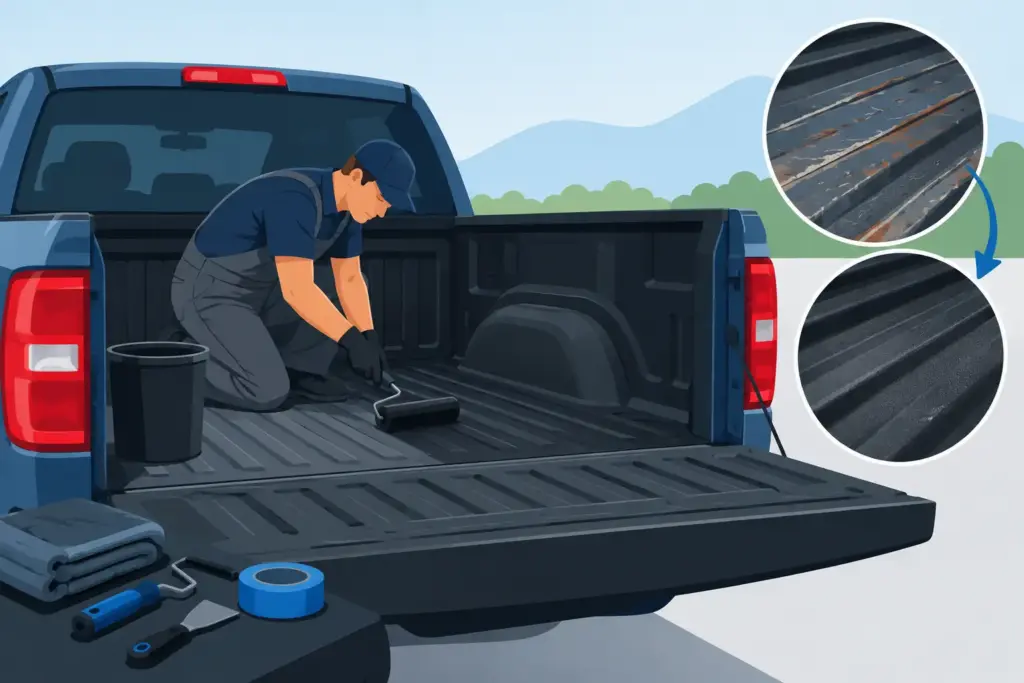
Rust often begins where paint has been chipped by cargo or where moisture collects around seams, wheel wells, and bed-floor components. Surface rust can sometimes be removed and treated before refinishing. Rust that has penetrated the metal is different. Once the metal is weakened or perforated, covering it with filler and paint is not a lasting repair.
The right solution may involve cutting out compromised metal and installing a sound replacement section. It takes more time, but it stops the repair from failing underneath a fresh coat of paint. For work trucks that regularly carry wet materials or spend time outdoors, protective coatings and timely touch-ups can help prevent new corrosion after repair.
Collision Damage, Frame Concerns, and Alignment
A rear-end or side-impact collision can affect more than the truck bed. The bumper, frame, suspension, axle alignment, and rear body structure may all be involved. Warning signs include a truck that pulls to one side, uneven tire wear, a crooked steering wheel, a tailgate that will not align, or a bed that appears shifted relative to the cab.
This is where a full-service repair center matters. Body repairs should be coordinated with suspension and alignment checks when the impact calls for it. Restoring the bedside without correcting the underlying alignment issue can compromise handling and cause new damage over time.
How to Choose the Right Shop for Truck Bed Repair
The lowest estimate is not always the lowest-cost outcome. A quick repair that fails, mismatches the paint, or overlooks related damage can lead to another repair bill later. Look for a shop that explains what was found, what needs to be repaired, and why each step is recommended.
Clear communication is especially valuable when insurance is involved. Truck-bed collision repairs may require an estimate, insurer approval, supplemental documentation for hidden damage, and updates while parts are ordered or repairs are underway. A shop experienced with claims can help keep that process organized while still keeping you informed.
Ask how the shop handles paint matching, whether it checks surrounding panels and alignment, and what warranty stands behind the work. Also ask about the expected timeline, but remember that a realistic timeline is more useful than an overly optimistic promise. Parts availability, paint curing, hidden damage, and insurance approvals can all affect completion dates.
For San Antonio truck owners, RWORKS provides collision repair, auto painting, minor body repair, and alignment-related services in one place, with insurance claim support and a lifetime warranty on qualifying repair work. That combination can be particularly helpful when bed damage is only one part of a larger collision repair.
Protecting the Repair After Your Truck Is Back
Once the work is complete, inspect the truck in good light before you leave. Look at the color match from different angles, check body lines and panel gaps, and operate the tailgate, lights, tonneau cover, and any accessories that attach to the bed. If your truck has a spray-in liner, bed mat, rack, or tool box, make sure it fits properly after the repair.
Afterward, wash dirt and salt from the bed regularly, especially around seams and wheel wells. Touch up fresh chips promptly, avoid dragging sharp cargo across painted rails, and use padding or tie-down protection when hauling heavy materials. A bed liner can add protection, but it should not be used to conceal rust, cracked paint, or unrepaired collision damage.
Before approving any truck bed repair, ask the shop to show you how the visible damage connects to the rest of the truck. A straightforward explanation today can save you from a repair that looks fine at pickup but creates trouble the next time you load up, tow out, or head down the road.