A hard pothole hit on Loop 410, a curb bumped while parking, or a collision that seemed minor can leave your vehicle driving differently. The question is often alignment versus suspension repair: does the vehicle simply need its wheel angles corrected, or is a damaged part affecting how it steers, rides, and responds?
The distinction matters because an alignment adjustment cannot repair worn or bent suspension components. On the other hand, replacing suspension parts without correcting the wheel angles afterward can lead to poor handling and fast tire wear. A proper inspection identifies the real source of the problem before repairs begin.
Alignment Versus Suspension Repair: The Basic Difference
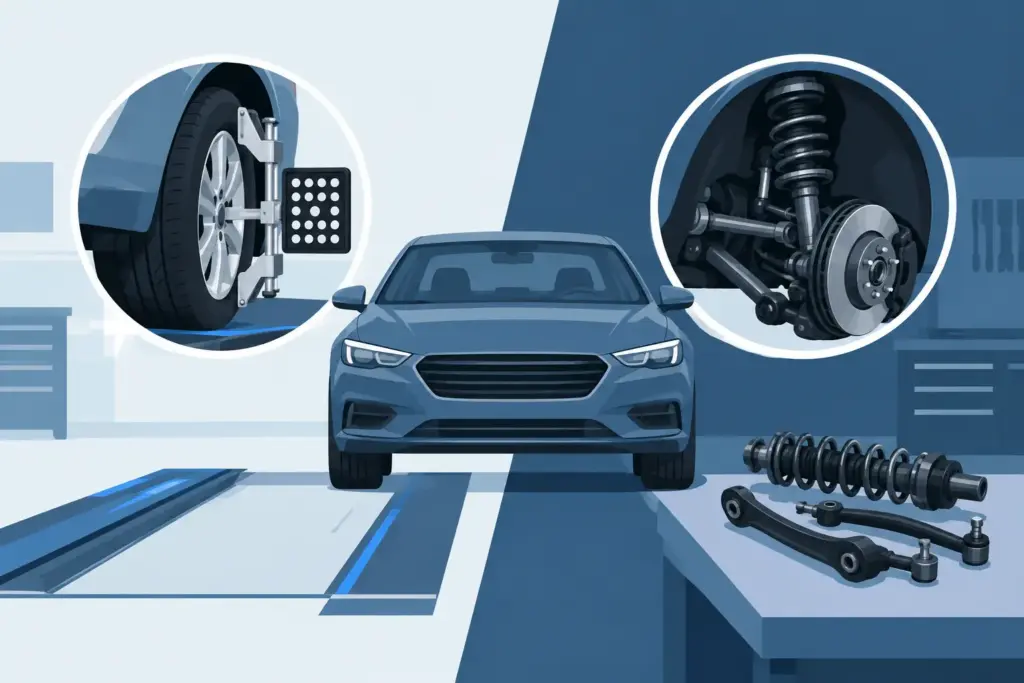
Wheel alignment is the adjustment of your vehicle’s wheel angles to manufacturer specifications. Technicians measure angles commonly known as camber, caster, and toe, then adjust the available settings so the tires point and sit correctly. Proper alignment helps the vehicle track straight, turn predictably, and use its tires evenly.
Suspension repair addresses the system of parts that connects the wheels to the vehicle and manages movement over the road. Depending on the vehicle, that system can include shocks or struts, springs, control arms, ball joints, tie rods, bushings, sway bar links, wheel bearings, and steering components.
Think of alignment as the final positioning of the wheels. Suspension components are the hardware that holds those positions while allowing the vehicle to absorb bumps and remain stable. If the hardware is loose, worn, or bent, the alignment may not stay where it belongs.
A vehicle can need an alignment without needing suspension repairs. This is common after a pothole impact or curb strike that changes an adjustable wheel angle but does not damage a component. It can also need suspension repair first, followed by an alignment. That is more likely after a collision, a severe impact, or years of wear on joints and bushings.
Signs You May Need an Alignment
Alignment concerns often show up first in the steering wheel or tire tread. Your car may drift or pull to one side on a level road, even when you are holding the wheel straight. The steering wheel may sit off-center while the vehicle travels straight ahead.
Uneven tire wear is another common clue. Feathering across the tread, excessive wear on one edge, or tires that wear out much sooner than expected can point to incorrect wheel angles. A slight vibration can also occur, although vibration is frequently caused by tire balance, wheel damage, or a mechanical problem rather than alignment alone.
An alignment check is sensible after a significant pothole hit, curb impact, or collision repair. It is also a good idea when installing new tires, especially if the old set showed uneven wear. New tires deserve a fair start, and correct alignment helps protect that investment.
Still, a pull does not automatically mean alignment. Low or uneven tire pressure, uneven tire wear, a sticking brake component, or road crown can create a similar feeling. That is why an inspection should come before an adjustment.
What an Alignment Does Not Fix
An alignment machine can measure wheel angles accurately, but it cannot make a cracked control arm, worn ball joint, leaking strut, or bent steering part safe again. If a component has too much movement, the readings may shift as the vehicle rolls down the road.
For the same reason, a shop should not force an alignment to compensate for collision damage or a failing part. The wheels may appear closer to specification temporarily, but the underlying issue remains. That can compromise handling, wear out tires, and leave you paying for another repair sooner than expected.
Signs You May Need Suspension Repair
Suspension damage and wear often make themselves known through noises, ride quality, and a less controlled feeling behind the wheel. A clunk when driving over a bump, a pop while turning, or a rattling sound on rough pavement may indicate a worn or loose component.
Pay attention if the vehicle feels bouncy after dips in the road, leans excessively in corners, nosedives when braking, or feels unstable at highway speed. These can be signs of worn shocks or struts, although diagnosis depends on the vehicle and the symptoms.
Visible changes matter as well. One corner sitting lower than the others may suggest a damaged spring or another suspension issue. A wheel that appears pushed back in the wheel opening after an accident deserves immediate inspection. So does a steering wheel that suddenly feels loose, unusually stiff, or inconsistent.
Suspension repair can range from replacing a worn link or bushing to repairing collision-related damage to control arms, knuckles, steering parts, or mounting points. The right repair depends on what is damaged, whether the vehicle can be returned to factory specifications, and whether related parts were affected in the impact.
Collision Damage Can Hide Behind a Straight-Looking Panel
After an accident, a bumper or fender may receive most of the attention because the damage is easy to see. But the force can travel through the wheel and suspension system. Even a low-speed impact can bend a component slightly enough to change alignment readings or tire wear.
This is especially common when a wheel takes the hit. A vehicle may seem drivable, but it can pull, vibrate, make noise, or wear through a tire unevenly within a few thousand miles. A complete collision estimate should account for mechanical and alignment-related damage, not just paint and bodywork.
For insured repairs, detailed documentation helps show why suspension components, steering parts, or an alignment are necessary. A repair center experienced with insurance claims can communicate the findings clearly and help keep the process moving while the correct repairs are approved.
Why the Repair Order Matters
When both issues are present, suspension and steering repairs come first. The technician replaces or repairs damaged components, verifies that the system is secure, then performs the alignment after the vehicle is structurally and mechanically ready.
This order protects the accuracy of the alignment and prevents wasted work. For example, replacing a bent control arm after an alignment changes the geometry again, requiring another alignment. Correcting the failed part first gives the adjustment a stable foundation.
There are exceptions. Some vehicles have limited alignment adjustments, and collision damage may prevent a wheel angle from reaching specification even after obvious parts are replaced. In those situations, precise measurements help identify whether another component, mounting location, or structural area needs attention. A trustworthy shop should explain what the readings mean instead of treating an alignment as a one-size-fits-all service.
What to Expect From a Proper Inspection
A quality evaluation starts with the concern you noticed: pulling, tire wear, a noise, vibration, or a change after an accident. The technician should check tire condition and pressure, inspect steering and suspension components, look for collision damage, and measure alignment angles when appropriate.
The estimate should separate what is worn, what is damaged, and what is recommended for proper repair. Ask whether any parts have play, leaks, cracks, or bends, and whether the vehicle needs an alignment after the work is complete. Clear answers help you understand the repair rather than simply approve a list of parts.
At RWORKS, customers can rely on a repair process built around careful communication, insurance support when needed, and workmanship backed by a lifetime warranty. Whether the concern came from a collision or everyday San Antonio roads, the goal is to return the vehicle to safe, predictable operation – not just make it look repaired.
Protecting Tires, Handling, and Peace of Mind
Do not wait for a small pull or occasional clunk to become a major tire or safety issue. Check tire pressure regularly, pay attention to changes in steering feel, and have the vehicle inspected after a meaningful impact. Keeping up with routine tire rotations also makes unusual wear easier to spot early.
If your vehicle is pulling, making noise, sitting unevenly, or driving differently after an accident, schedule an inspection before assuming it only needs an alignment. The right diagnosis can protect your tires, your budget, and the confidence you should feel every time you head down the road.