A shopping cart rolls loose in a parking lot. A door opens too wide in a tight garage. A hailstorm leaves a few shallow marks across an otherwise well-kept hood. Small dents are frustrating because they can make a vehicle look neglected even when nothing is mechanically wrong. Knowing how to fix minor dents starts with an honest look at the damage, not a quick internet trick.
Some shallow dents can be improved at home. Others need professional paintless dent repair or conventional body repair to avoid cracked paint, stretched metal, or a repair that looks worse in direct sunlight. The right choice depends on the dent’s location, depth, paint condition, and access behind the damaged panel.
Start by Identifying the Type of Dent
Before reaching for a suction cup or heat gun, clean the panel and inspect it in good light. Look at the dent from several angles. A reflection from a window, garage light, or flashlight can reveal whether the panel has a smooth low spot or a sharp crease.
A shallow, round dent in the center of a broad metal panel is usually the best candidate for a simple repair. Think of a light parking-lot ding on a door or a gentle depression in a fender. If the paint is still intact and the metal has not stretched much, paintless dent repair may restore the panel without filler or repainting.
Creases, dents along a body line, damage near an edge, and dents on aluminum panels are more challenging. So are dents with chipped paint, rust, cracked clear coat, or exposed metal. Those issues are no longer only cosmetic. Moisture can reach bare metal, and a small damaged area can become a larger paint and corrosion repair over time.
Plastic bumper covers are a separate case. They may pop back into shape with controlled heat, but the finish can still be scuffed, distorted, or cracked. Sensors, cameras, wiring, brackets, and energy absorbers may also sit behind the bumper. Treat any bumper damage with extra caution.
How to Fix Minor Dents at Home, Safely
DIY methods are most reasonable when the dent is shallow, the finish is undamaged, and the panel is easy to access. The goal is not to force the metal outward. It is to gradually return it to its original shape without creating high spots or damaging the paint.
Try gentle pressure from behind the panel
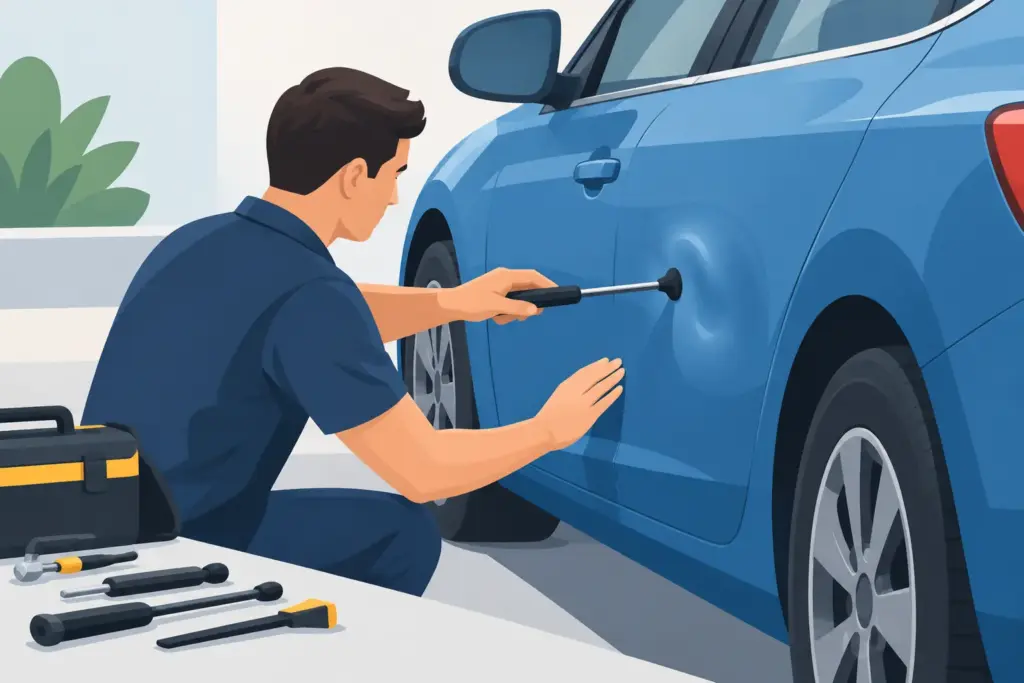
If you can safely remove an interior trim panel or reach the back of the dent through an open area, gentle pressure may help. Use clean hands or a soft, blunt tool designed for automotive trim. Work slowly around the outside of the dent first, then toward the center.
Do not press hard in one spot. Metal can move suddenly, creating a raised area that is often more visible than the original dent. Door panels also contain window components, side-impact hardware, wiring, and sometimes airbag-related parts. If access requires significant disassembly, it is usually better to stop and have the panel assessed by a repair professional.
Use a suction cup only for broad, shallow dents
A small automotive suction cup can sometimes improve a smooth dent on a flat or gently curved panel. Wash and dry the area first so the cup can seal properly. Pull with steady, controlled force rather than jerking it repeatedly.
This approach has limits. It will not correct a sharp crease, a dent on a body line, or damage near the edge of a panel. It also will not repair stretched metal. If the cup does not create a secure seal, do not escalate to more aggressive pulling methods. That is a sign the dent is not well suited to suction.
Be cautious with glue-pulling kits
Glue-pulling kits are widely sold as an easy answer, but they require technique. The tabs, glue temperature, pulling angle, and release process all affect the result. A poorly placed pull can create small peaks in the panel, while overly aggressive adhesive removal can risk the clear coat on an older or previously repainted vehicle.
If you choose to try a kit, test a small, inconspicuous area only if the paint is in excellent condition. Avoid glue pulling on a panel with peeling clear coat, prior bodywork, fresh paint, or visible damage. A professional technician has specialized tabs, lighting, tools, and experience to control the metal rather than simply pull on it.
DIY Dent Fixes to Avoid
Some popular methods create more risk than savings. Extreme heat and cold techniques, including boiling water, hair dryers, heat guns, compressed air, and dry ice, can stress paint and clear coat. They are especially risky under Texas sun, where exterior panels may already be hot.
Avoid drilling holes, striking the panel from the outside, using screws or improvised hooks, or pushing aggressively with sharp tools. These methods can turn a minor repair into one that requires filler, paint, blending into adjacent panels, or replacement parts.
There is also a difference between a dent that looks better from ten feet away and one that is properly repaired. A panel may appear acceptable until it is washed or viewed in direct sunlight. High spots, ripples, and distorted reflections can affect resale value and leave you dissatisfied with the result.
When Paintless Dent Repair Is the Better Option
Paintless dent repair, often called PDR, is a professional process that reshapes the panel from behind or uses controlled glue-pulling techniques from the outside. When conditions are right, it preserves the original factory finish and avoids conventional body filler and repainting.
PDR is often a strong option for door dings, minor parking-lot dents, and hail damage with intact paint. It can also be a more efficient repair because there is no paint curing time. Still, it is not the answer for every dent. If the metal is sharply creased, heavily stretched, torn, or damaged at a difficult edge, conventional repair may deliver a better and more durable result.
A qualified technician will inspect the location of the dent, panel material, paint condition, and access behind the damage before recommending a method. That assessment matters. Modern vehicles have high-strength steel, aluminum, sensors, sound insulation, and structural reinforcements that can change what is safely repairable.
Signs Your “Minor” Dent Needs Professional Repair
A dent deserves professional attention when paint is cracked, chipped, or scuffed through to metal. The same is true if the damage is near a door edge, wheel opening, body line, hood edge, or trunk edge. Those areas are difficult to reshape cleanly because the metal has less flexibility.
You should also schedule an inspection if a door no longer opens or closes smoothly, a bumper is loose, a panel gap has changed, or the dent appeared after a collision. What looks like cosmetic damage can sometimes involve hidden brackets, mounts, impact absorbers, suspension components, or alignment concerns.
For hail damage, do not assume every dent is the same. Hail can leave dozens of small impacts across the hood, roof, trunk, and upper door panels. A proper estimate considers the full pattern of damage and whether paintless repair can preserve the original finish. If you plan to file an insurance claim, document the damage with clear photos before attempting any DIY repair.
Protect the Vehicle While You Decide
If the paint is intact, wash the area gently and keep it clean. Do not cover the dent with tape for long periods, especially in heat, because adhesive residue can be difficult to remove. If bare metal is exposed, arrange a repair soon to prevent corrosion. A temporary touch-up product may offer short-term protection, but it does not replace proper surface preparation and refinishing.
For insured repairs, keep photos, claim information, and any estimate paperwork together. Clear documentation helps the repair process move faster. A good body shop can also explain what the estimate covers, whether additional damage may be found after disassembly, and how the repair plan protects your vehicle’s appearance and value.
Choose the Repair That Holds Up
The best answer is not always the cheapest or fastest-looking fix. A shallow dent with healthy paint may respond well to a careful DIY attempt. But if there is any doubt about the finish, the panel’s shape, or hidden damage, an expert inspection can prevent a small issue from becoming a larger expense.
For San Antonio drivers, RWORKS can evaluate cosmetic dents, hail damage, collision-related panel damage, and alignment concerns with clear communication about the repair path. The right repair should look right in the driveway, under bright sun, and years after the work is complete.