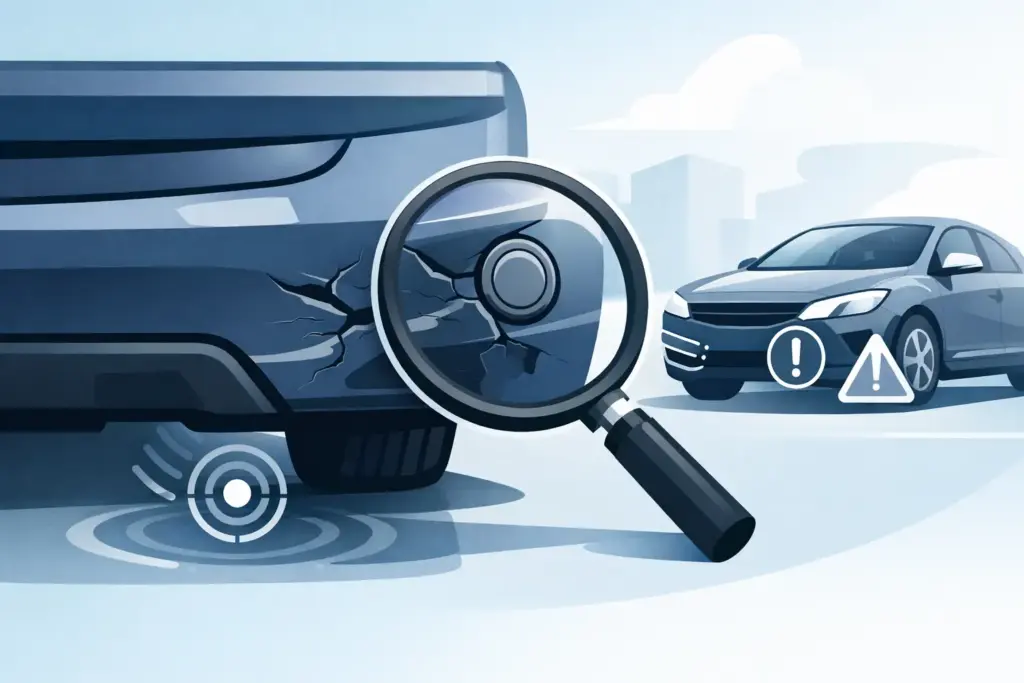
A cracked bumper may look like a cosmetic problem, but the technology behind it can tell a different story. Can bumper damage affect sensors? Absolutely. A low-speed parking-lot bump, a scrape against a curb, or a more serious collision can shift sensor mounts, damage wiring, block radar signals, or leave safety systems needing calibration.
For San Antonio drivers, the practical question is not simply whether the bumper needs paint or replacement. It is whether the vehicle can still accurately detect obstacles, nearby traffic, and potential hazards. A proper collision repair should address both the visible damage and the equipment hidden behind it.
How Bumper Damage Can Affect Sensors
Modern bumpers often contain more than plastic, paint, and reinforcement material. Depending on the vehicle, they may house parking sensors, blind-spot monitoring radar, rear cross-traffic alert components, forward radar, temperature sensors, wiring harnesses, and mounting brackets.
The sensor itself does not always need to be cracked or visibly damaged to cause trouble. It may be sitting a few degrees off its intended position after an impact. It may have a broken retainer, a pinched wire, moisture in a connector, or a bumper cover that no longer fits flush. Even a small change in position can affect the sensor’s detection range or cause a warning light.
This is why a bumper that appears mostly intact can still deserve an inspection. The damage may be limited to the cover, but it may also involve the parts and alignment behind it.
Parking Sensors Can Be Blocked or Misaligned
Parking sensors use ultrasonic signals to detect objects near the vehicle. They are usually the small circular components visible across the front or rear bumper. If one is cracked, pushed inward, painted improperly, or mounted at the wrong angle, it may beep continuously, fail to detect an object, or display an error message.
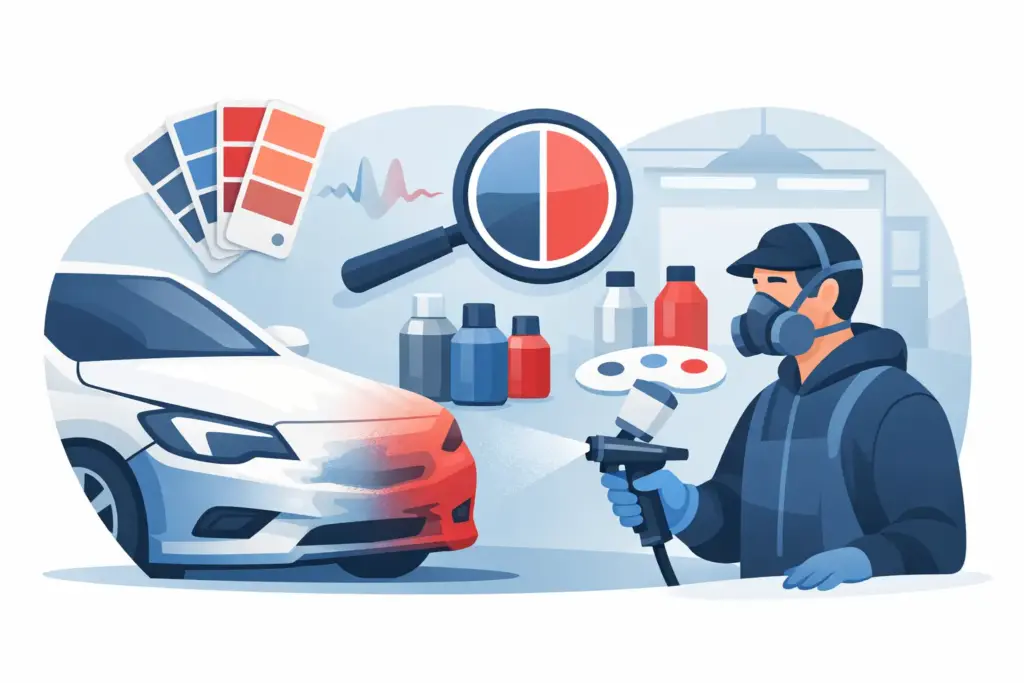
Paint work matters here. Sensors are designed to work through properly applied automotive finishes, but excessive material, the wrong coating process, or damage around the sensor opening can interfere with operation. This is one reason quality bumper repair and refinishing are not just about matching the vehicle’s color.
Radar Sensors Need a Clear, Correct Position
Many late-model vehicles place radar units behind the bumper cover, especially near the rear corners. These sensors support features such as blind-spot monitoring and rear cross-traffic alert. Some vehicles also have forward radar behind the front bumper or grille for adaptive cruise control and automatic emergency braking.
A radar unit can be affected by a dented bumper reinforcement, a shifted bracket, damaged tabs, moisture intrusion, or certain non-factory repair materials. It can also be affected when a replacement bumper cover is installed without restoring the radar unit to the exact position specified by the manufacturer.
That does not mean every bumper repair requires radar replacement. In many cases, the sensor is fine. But it may need a scan, inspection, and calibration to confirm it is reading the road correctly.
Wiring and Connectors Can Be Damaged in a Minor Impact
Behind a bumper cover, wiring is exposed to vibration, road spray, heat, and impact forces. A collision can stretch or pinch a harness without leaving an obvious exterior clue. A loose connector may work intermittently, creating a warning that comes and goes.
Water can make the issue worse over time. If a bumper crack or damaged seal allows moisture into a sensor connector, corrosion may develop later, even if the system initially seems normal. Addressing bumper damage promptly can help prevent a small repair from turning into an electrical diagnosis months down the road.
Signs Your Bumper Sensors Need Attention
The clearest sign is a dashboard warning for park assist, blind-spot monitoring, collision warning, or another driver-assistance system. But not every problem creates a warning immediately.
Pay attention if your parking sensors beep when there is nothing behind you, stop detecting objects, or work only sometimes. A blind-spot alert that no longer appears, rear cross-traffic alerts that behave unpredictably, or an adaptive cruise control feature that becomes unavailable also deserve professional diagnosis.
Physical clues matter, too. Look for a sensor sitting crooked in the bumper, a loose bumper corner, cracked paint around a sensor opening, uneven panel gaps, or a bumper cover that is bowed inward. These conditions can signal that a mount or bracket behind the cover has moved.
It is also worth watching for issues after repairs. If a warning appears after a bumper replacement, paint job, or collision repair, the vehicle may need calibration or a closer inspection of the sensor installation.
Why Calibration May Be Part of the Repair
Calibration is the process of confirming that a vehicle’s cameras and sensors are aimed, positioned, and communicating as the manufacturer intends. Depending on the vehicle and type of damage, calibration may be static, performed with targets and specialized equipment, or dynamic, performed during a controlled road procedure. Some vehicles require one method, while others require both.
Calibration is not an upsell and it is not automatically required for every scratch. The need depends on the vehicle, the systems equipped on it, where the impact occurred, whether parts were removed or replaced, and the manufacturer’s repair procedures.
For example, a light scuff on a bumper corner may only need cosmetic work. A rear-end impact that loosens the bumper cover or damages a blind-spot radar bracket is different. Replacing a front bumper on a vehicle with forward radar may also trigger specific inspection and calibration requirements.
The goal is not merely to clear a warning light. It is to verify that the system can recognize vehicles, objects, and traffic in the way it was designed to. Driver-assistance features are helpful, but they cannot provide reliable support if their sensors are not properly mounted and calibrated.
What to Do After a Bumper Impact
If you have been in an accident, take photos of the damage and note any warning messages that appeared afterward. If your vehicle has parking sensors, blind-spot alerts, or collision-warning features, test them carefully in a safe setting. Do not rely on a system that is showing a fault or behaving inconsistently.
Avoid trying to push a loose bumper back into place or tap a sensor into position yourself. The outer cover may look better temporarily, but the sensor mount, harness, or radar bracket behind it could still be damaged. DIY touch-up paint near sensors can create issues as well if the coating is too thick or the wrong products are used.
A repair facility should scan the vehicle for diagnostic trouble codes, inspect the bumper cover and components behind it, verify part fitment, and follow the repair procedures appropriate for your make and model. If calibration is required, it should be documented as part of the completed repair process.
For insurance claims, be sure to mention every warning light and driver-assistance concern when reporting the accident and during the estimate. Sensor-related damage is not always obvious in the first photos, especially when the bumper cover hides the affected components. A thorough supplement process may be needed once the bumper is removed and the full extent of the damage is visible.
Bumper Repairs Need More Than a Good Exterior Finish
A repaired bumper should look right, fit right, and support the safety technology built into the vehicle. That means checking attachment points, internal absorbers and reinforcements when applicable, sensor retainers, radar brackets, wiring, and finish quality around every sensor opening.
At RWORKS, collision repairs are approached with the understanding that modern vehicle restoration involves more than straightening panels and matching paint. Clear communication, insurance-claim support, and workmanship backed by a lifetime warranty help drivers move forward with confidence after an accident.
If your bumper has been hit and a sensor warning appears later, do not assume the issue will resolve on its own. A timely inspection can protect the vehicle’s safety features, prevent further damage, and give you a clearer path back to confident driving.