A damaged bumper, a cracked windshield, or a wheel that suddenly pulls to one side can feel like a lot to manage after a crash. Knowing how to document accident damage gives you a clearer record of what happened, helps support your insurance claim, and gives your repair shop the information needed to begin an accurate estimate.
The best documentation starts at the scene, but only after you have made sure everyone is safe. You do not need a perfect report or professional-quality photos. You do need a timely, honest record that shows the condition of the vehicles, the location, and the details that may be harder to remember a few days later.
Start With Safety, Then Preserve the Scene
If anyone is injured, call 911 right away. Move to a safer location if you can do so without creating another hazard. In a minor collision, move vehicles out of traffic when local authorities direct you to do so. If the vehicles cannot be moved safely, turn on hazard lights and stay clear of passing traffic.
Once the immediate situation is under control, take photos before cars are moved whenever it is safe and practical. Scene photos can establish the position of the vehicles, road conditions, nearby signs, lane markings, and traffic signals. Those details may matter if the cause of the crash is questioned later.
Do not argue about fault at the scene. Exchange information, cooperate with law enforcement, and stick to factual statements. Your focus is to capture the condition of the vehicle and keep records organized for your insurer and repair facility.
Take Photos That Tell the Full Story
Photos are often the strongest first record of visible damage. Take more than a close-up of the dent or scratch. An adjuster and collision technician need context to understand where the impact occurred and what systems may have been affected.
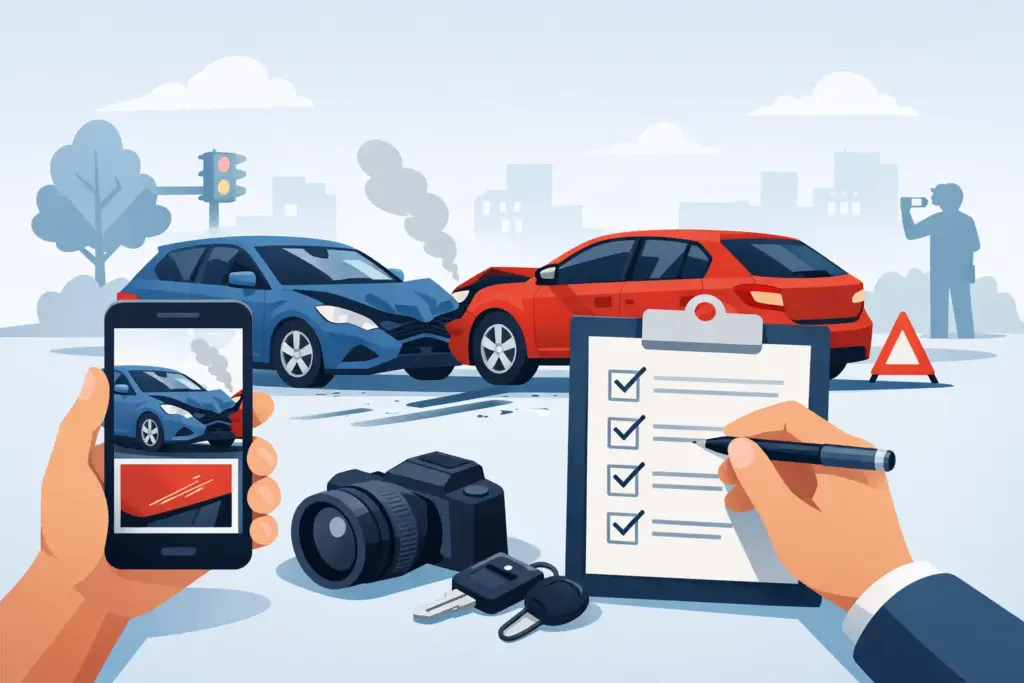
Start with wide photos of each side of your vehicle, including the front, rear, roof, and both corners. Then move closer to photograph damaged panels, broken lights, cracked glass, paint transfer, deployed airbags, leaking fluid, and loose or displaced parts. Take photos from several angles, especially when damage is difficult to see in one image.
Include the other vehicle’s damage as well, if appropriate and safe. Photograph license plates, the overall scene, street names, intersection signs, traffic controls, and debris. If weather, standing water, poor visibility, or road construction played a role, capture that too.
A few details are easy to miss but useful later: the odometer, dashboard warning lights, tire condition, and the VIN plate visible through the windshield. If your car is making noise, pulling, vibrating, or showing a warning message after the collision, record a short video with the sound and a spoken description of the issue.
Avoid filters, edits, screenshots, or markup on the original photo files. Keep the originals saved to your phone or backed up to a cloud account. You can make copies to share, but preserve files with their original dates and times.
Write Down What Photos Cannot Show
Pictures show impact damage, but they do not always explain what you experienced. As soon as you are able, write a short account of the accident in your own words. It does not need legal language. A straightforward timeline is more useful than trying to make it sound formal.
Note the date, time, location, direction each vehicle was traveling, road and weather conditions, and a brief description of the sequence of events. Include what you noticed immediately afterward, such as a steering wheel that sits off-center, a door that no longer closes correctly, a headlight that stopped working, or a new vibration at highway speed.
These observations can help identify damage that is not obvious from the exterior. A low-speed impact may leave only a scuffed bumper cover, for example, but it can also affect bumper reinforcement components, sensors, brackets, suspension parts, or wheel alignment. The full scope is not always visible until a vehicle is inspected and disassembled.
It is also smart to keep a simple contact log. Write down when you spoke with your insurance company, the claim number, the name of the representative, and any next steps they gave you. Save emails, text messages, towing receipts, rental car paperwork, and any estimates you receive.
Collect the Right Information at the Scene
Exchange insurance and contact information with the other driver, but do not rely only on a photo of an insurance card. Take the time to confirm names, phone numbers, policy information, and vehicle details. If law enforcement responds, ask how to obtain the police report or record the report number before leaving.
When witnesses are willing to help, ask for their names and contact details. A witness statement can be valuable, particularly when accounts of the accident differ. Do not pressure anyone for an opinion. Simply ask what they saw and preserve a way for your insurer to contact them if needed.
For quick reference, your accident file should contain:
- Photos and videos of the scene, both vehicles, and your vehicle’s interior warnings
- Names, insurance details, license plates, and contact information for involved drivers
- The police report number, officer information, and witness contact details
- A written timeline of the collision and notes about new driving or mechanical issues
- Claim correspondence, towing invoices, rental documents, and repair estimates
Keep these materials together in one folder on your phone, computer, or email. A well-organized file makes it easier to respond when your insurer, adjuster, or repair shop asks for documentation.
Document Damage Again Before Repairs Begin
Your first photos are critical, but the documentation should not stop at the accident scene. Take a second set of photos in good lighting before the vehicle goes into a repair facility. This is especially helpful if rain, dirt, or a tow truck’s handling made the original damage harder to see.
Ask for a written estimate that identifies the visible damage and explains any likely repair areas. Remember that an initial estimate is not always the final repair plan. Many modern vehicles have components behind bumpers, panels, and trim that cannot be inspected fully until teardown begins. If additional collision-related damage is found, the shop may submit a supplement to the insurance company for approval.
That process is normal. The goal is not to force a repair into the first estimate. The goal is to repair the vehicle correctly, including structural, safety, alignment, paint, and calibration needs when applicable.
Before authorizing work, make sure you understand what is being repaired, who is communicating with the insurer, and how you will receive updates. A reputable shop should be comfortable explaining the process in plain language and notifying you if the repair timeline changes.
Be Careful With Pre-Existing Damage
Honesty matters when documenting a claim. If your vehicle already had a scratch, dent, peeling paint, prior repair, or mechanical issue, mention it. Take separate photos and describe its location. Clear disclosure protects you from confusion later and helps the repair team separate old conditions from new accident-related damage.
The same approach applies if you have already made temporary repairs. If you replaced a broken mirror, taped up a damaged light, or changed a flat tire after the accident, keep receipts and photograph the vehicle before and after the temporary work. Do not discard damaged parts unless your insurer or repair shop confirms they are no longer needed.
When Damage Is Not Obvious, Do Not Wait Too Long
Some accident damage shows up after the adrenaline wears off. You may notice uneven tire wear, a drifting steering wheel, grinding noises, water leaks, trouble opening a trunk, or driver-assistance warnings that were not present before. Report those symptoms promptly and add them to your written notes.
If a bumper, wheel, suspension component, windshield, or light was hit, a professional inspection is worth considering even when the vehicle still seems drivable. Continuing to drive with hidden suspension, alignment, cooling, or safety-system damage can make a smaller repair more complicated.
For San Antonio drivers, RWORKS can help turn your photos, claim details, and visible damage into a clear repair plan while keeping you updated throughout the process. Bring the records you have, ask questions about anything that changed after the collision, and let the repair process begin with the full story of your vehicle – not just the damage that was easiest to see.