A deployed airbag means the repair is no longer just about the visible damage to a bumper, fender, or windshield. Airbag replacement after a collision is a safety-critical repair process that can involve the restraint system, electronic sensors, seat belts, dashboard components, and diagnostic testing. The goal is not simply to make the airbag warning light go away. It is to return the vehicle’s safety systems to proper operating condition.
For San Antonio drivers, that starts with choosing a repair facility that looks beyond surface damage, communicates clearly with the insurance company, and documents the work performed. A properly repaired vehicle should look right, drive right, and be ready to protect its occupants if it is ever needed again.
What Happens When an Airbag Deploys?
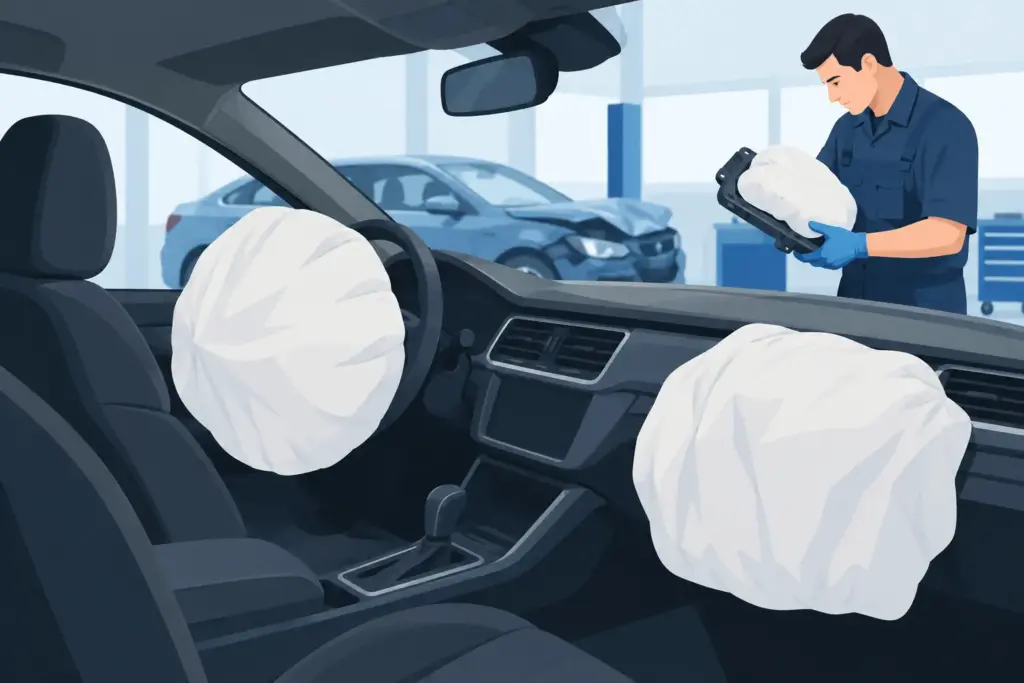
An airbag deploys in a fraction of a second during certain types of impacts. Once it has deployed, it cannot be reset or folded back into service. The airbag assembly must be replaced, but that is rarely the only part affected.
Modern supplemental restraint systems, often called SRS systems, use information from impact sensors, seat occupancy sensors, wiring, seat belt pretensioners, and the airbag control module. During a collision, the vehicle records crash data and may trigger several safety components at once. A front-end impact may deploy the driver airbag, passenger airbag, knee airbag, and seat belt pretensioners. A side impact can affect seat-mounted airbags, curtain airbags, door trim, headliner panels, and related sensors.
That is why an airbag replacement collision repair should begin with a complete inspection and diagnostic scan. The visible airbag is only one piece of a larger system.
Parts That May Need Replacement
The exact repair depends on the vehicle, the impact location, the severity of the crash, and which restraint devices deployed. One collision may require a steering-wheel airbag and seat belt pretensioner replacement. Another may involve a new dashboard, passenger airbag, roof curtain airbags, interior trim, and module service.
Common items that may need inspection or replacement include:
- Driver, passenger, side, knee, or curtain airbag modules
- Seat belts and pretensioners that tightened during the impact
- Airbag control module and crash-data storage components
- Impact sensors, wiring harnesses, and electrical connectors
- Dashboard panels, steering-wheel components, seats, headliners, and door trim
- Windshield glass or interior pieces damaged by airbag deployment
A quality repair plan accounts for both the safety system and the body repairs surrounding it. Replacing a deployed passenger airbag, for example, may require dashboard work that needs to be completed carefully to avoid damaging new components or creating fit-and-finish issues.
Why Diagnostic Testing Matters
The airbag warning light is not a minor inconvenience. It indicates that the vehicle has detected a fault in the restraint system or that a crash event requires repair. Turning off the light without correcting the underlying issue is not an acceptable repair.
A repair professional should use appropriate diagnostic equipment to identify fault codes, inspect system communication, and verify the condition of related components. Depending on manufacturer requirements, certain sensors may need replacement after deployment, while others may need testing or recalibration. The airbag control module may also need to be replaced or professionally reset when permitted by the vehicle manufacturer and applicable repair procedures.
This is one area where shortcuts can carry real consequences. Used airbags, improvised wiring repairs, or bypassed warning lights may cost less in the moment, but they can leave a vehicle with an unreliable safety system. The right repair follows manufacturer procedures for that specific year, make, and model.
Seat Belts Are Part of the Safety Repair
Drivers often focus on the airbags and overlook the seat belts. In many vehicles, the seat belt pretensioner activates during a qualifying collision. This device tightens the belt quickly to help position the occupant before the airbag deploys.
After activation, the belt assembly may need replacement even if it appears normal from the outside. A technician should inspect the belts, buckles, retractors, and pretensioners as part of the collision repair plan. A properly working seat belt and airbag system are designed to work together, not independently.
Will Insurance Cover Airbag Replacement?
If you carry collision coverage and the accident is covered under your policy, airbag-related repairs are generally included in the claim, subject to your deductible and policy terms. If another driver caused the crash, their liability coverage may be responsible. The details depend on fault, coverage limits, the condition of the vehicle, and the insurance company’s evaluation.
Airbag repairs can become expensive because the cost extends beyond the airbag itself. Labor to remove and reinstall interior panels, replace seat belts, repair collision damage, run diagnostics, complete calibrations, and restore the vehicle’s appearance all factor into the estimate.
In some cases, the insurance company may determine that the total repair cost approaches or exceeds the vehicle’s actual cash value. That can result in a total-loss decision. It is frustrating, especially when the vehicle still seems drivable, but the insurer must consider the full cost of restoring both the body and safety systems.
A collision repair shop can help by preparing a detailed estimate, identifying hidden damage, and communicating with the insurer as additional repairs are discovered. At RWORKS, that support is part of helping customers move from the first estimate to a completed repair with fewer surprises.
Choosing a Shop for Airbag Replacement Collision Repairs
Not every repair facility handles restraint-system work in the same way. When comparing shops, ask direct questions about how they approach airbag and seat belt repairs. You deserve clear answers, not vague assurances.
Ask whether the shop performs a pre-repair and post-repair diagnostic scan, follows manufacturer repair information, documents replaced components, and checks for required calibrations. If the collision also affected suspension, steering, wheels, or tires, ask how alignment and drivability will be evaluated before the vehicle is returned.
It also helps to understand who is handling your insurance communication. A shop that provides timely updates and explains changes to the estimate can make a stressful repair process far more manageable. You should know what is being repaired, why it is needed, and when your vehicle is expected to be ready.
Do Not Ignore Related Collision Damage
Even a collision that seems minor can damage more than the bumper cover. Impact forces may affect brackets, radiator supports, wheel alignment, suspension parts, sensors, lighting mounts, and structural components behind the exterior panels. If an airbag deployed, a thorough inspection becomes even more necessary.
For example, a frontal collision may leave the vehicle tracking slightly off-center because of a bent suspension component or alignment issue. A side impact can affect door operation, window glass, side sensors, and wheel positioning. Those concerns should be addressed along with the restraint system rather than treated as separate, unrelated repairs.
The vehicle should also be road-tested when appropriate and checked for warning lights, unusual noises, pulling, vibration, or steering concerns. A car that looks restored but does not drive correctly has not been fully restored.
What to Do After a Collision With Airbag Deployment
First, make sure everyone is safe and seek medical attention when needed. Then document the damage with photos, report the claim to your insurer, and arrange for the vehicle to be inspected. Avoid driving a vehicle with deployed airbags unless it is clearly safe and legal to do so. In many cases, towing is the better choice.
Keep copies of the estimate, insurance correspondence, repair authorization, and final invoice. These records can be helpful for your claim, future vehicle sales, and peace of mind. If you have questions about a recommended repair, ask before authorizing the work. A reputable shop will explain the reason for each item in plain language.
After a collision, the fastest path is not always the best path. Give the repair process enough room to address the parts you can see and the safety systems you cannot. A careful inspection, quality parts, proper diagnostics, and clear communication can help you get back on San Antonio roads with confidence.