A tire can look fine from the side and still be wearing out much faster than it should. Knowing how to identify uneven tire wear gives you an early warning that something underneath your vehicle may need attention – often before it turns into a costly tire replacement, alignment problem, or safety concern on a wet San Antonio road.
Tires should wear gradually and evenly across the tread. When one edge is bald, the center is worn down, or the tread feels rough in one direction, your car is telling you something. The pattern matters because it can point to tire pressure, wheel alignment, worn suspension components, or damage following a collision with a curb, pothole, or another vehicle.
How to Identify Uneven Tire Wear at Home
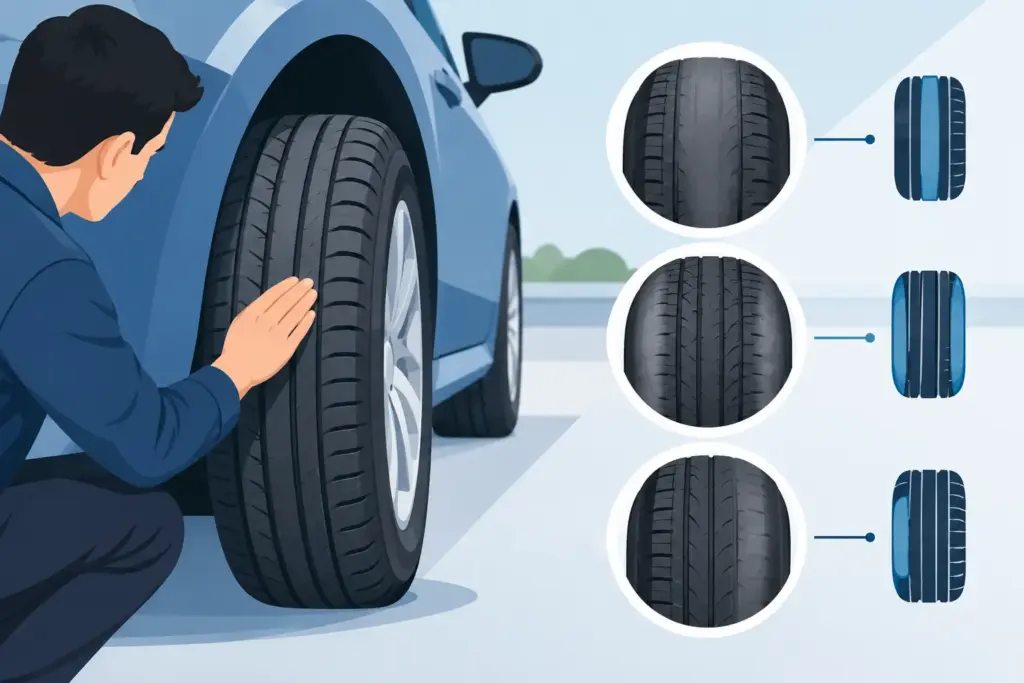
You do not need a lift or specialized equipment to spot many tire-wear concerns. Park on level ground, turn the steering wheel so you can see the front tires clearly, and inspect each tire in good light. Look at both the outside shoulder and the inside shoulder of the tread. The inner edge is easy to miss, but it is often where alignment-related wear starts.
Run the flat of your hand slowly over the tread in both directions. A healthy tire should feel fairly consistent. If it feels smooth one way but sharp or stepped the other way, that is called feathering. It commonly suggests that the tires are being dragged slightly sideways as they roll.
Use the built-in tread wear bars as another quick check. These small raised bars sit in the grooves between tread blocks. When the surrounding tread is level with those bars, the tire is at the legal minimum and needs replacement. More importantly, compare the depth across the tire. A visibly shallower inside or outside edge is not normal wear, even if the rest of the tread still looks usable.
Check all four tires, not just the one that catches your eye. Different patterns on the front and rear tires can help a technician narrow down whether the problem involves rotation intervals, inflation, alignment angles, or suspension condition.
What Uneven Tire Wear Patterns Usually Mean
The tread pattern cannot replace a professional inspection, but it provides useful clues. Some causes are simple and some require prompt repair. The goal is not to diagnose your vehicle from the driveway. It is to know when the wear deserves attention.
Wear on both outer edges
If both shoulders of a tire are more worn than the center, the tire may have been underinflated. An underinflated tire flexes too much, placing extra load on the outer edges. It can also run hotter, reduce fuel economy, and make the vehicle less predictable during emergency maneuvers.
Check pressure when the tires are cold and use the pressure listed on the driver-side door placard, not the maximum pressure printed on the tire sidewall. If pressure keeps dropping, have the tire checked for a puncture, damaged valve stem, or wheel issue.
Wear in the center of the tread
A center strip that is more worn than the shoulders often points to overinflation. Too much pressure causes the tire to ride more heavily on its center. This can reduce the tire’s contact patch and compromise grip, especially in rain.
Overinflation may happen when drivers use the tire’s maximum sidewall rating rather than the manufacturer’s recommended cold pressure. It can also happen after temperature changes if tire pressure is not checked regularly.
One edge worn more than the other
Inside-edge or outside-edge wear is one of the most common reasons drivers need an alignment inspection. This pattern can result from incorrect camber, which is the inward or outward tilt of the wheel, or incorrect toe, which affects the direction the tires point relative to one another.
A pothole, curb strike, worn suspension part, or collision can shift alignment angles. Even a light impact can be enough to create a gradual problem. You may not notice a strong pull at the steering wheel right away, but the tire may still be scrubbing away rubber every mile.
Feathering across the tread
Feathered tread blocks feel uneven, almost like the edge of each block is raised on one side. This is frequently associated with toe alignment that is out of specification. It can also happen when steering or suspension components have play and cannot hold the wheel steady.
Do not assume an alignment alone will always solve feathering. A quality inspection should include the suspension and steering system. If a worn tie rod, ball joint, bushing, or other component is causing movement, the alignment may not stay correct until that part is repaired.
Cupping or scalloped dips
Cupping looks like a series of dips or scoops around the tire. You may also hear a humming, thumping, or roaring sound that gets louder with speed. This wear can be caused by weak shocks or struts, wheel imbalance, damaged wheels, or loose suspension components.
Cupped tires may not recover even after the original problem is fixed. Depending on how severe the pattern is, replacement may be the safer choice. A technician can assess whether the tire still has enough even tread to perform reliably.
When Tire Wear Means You Should Schedule an Inspection
Uneven tire wear is worth addressing soon, but certain signs should move the appointment up. Schedule an inspection promptly if your vehicle pulls to one side, the steering wheel is off-center while driving straight, or you feel vibration through the wheel, seat, or floor. These symptoms can indicate an alignment, balance, wheel, or suspension concern.
You should also have the vehicle checked after a collision, curb impact, or hard pothole strike, even if the body damage seems minor. Modern vehicles are designed with precise suspension geometry. A component can bend or shift enough to affect tire wear without causing an obvious driving problem on the first day.
For drivers who recently had collision repairs, this step matters even more. Cosmetic repairs restore appearance, but a complete post-impact assessment should also consider wheel alignment, suspension condition, and tire damage. At RWORKS, the goal is to help San Antonio drivers understand what their vehicle needs, communicate clearly about the repair, and restore it with workmanship backed by a lifetime warranty.
Can an Alignment Fix Uneven Tire Wear?
An alignment corrects the angles of the wheels so they roll and steer as the vehicle manufacturer intended. It can stop abnormal wear from getting worse, but it cannot put tread back on a tire that has already worn away.
Whether you need tires immediately depends on the severity and location of the wear. A tire with mild, early edge wear may still have safe usable tread after the alignment issue is corrected. A tire with exposed cords, very low tread on one edge, deep cupping, or significant structural damage should be replaced. Your technician should explain the difference plainly rather than recommending parts without showing you why.
There is also a practical trade-off when replacing tires. On many vehicles, replacing two tires is acceptable if the new pair is installed on the rear axle for better wet-road stability. However, some all-wheel-drive vehicles require closely matched tire circumference to protect the drivetrain. Always follow the vehicle manufacturer’s requirements before mixing new and worn tires.
Prevent Uneven Wear Between Service Visits
Tire care is simple, but consistency makes the difference. Check cold tire pressure about once a month and before longer drives. Rotate tires according to the vehicle’s maintenance schedule, often every 5,000 to 7,500 miles, unless your vehicle or tire manufacturer specifies otherwise.
Pay attention to changes in how your vehicle feels. New vibration, a steering wheel that no longer sits straight, a pulling sensation, or a growing road noise deserves more than a quick glance at the tires. Catching the cause early can preserve the tires you already own and help avoid a larger suspension or alignment repair later.
Your tires are the only part of your vehicle that touch the road. A few minutes spent checking their tread today can give you a clearer, safer path to the repairs that actually matter.