A bumper scratch can happen in seconds: a tight parking space, a low garage wall, a shopping cart, or a curb that was closer than it looked. The best bumper scratch repair methods depend less on how dramatic the mark appears and more on how far it has traveled through the paint. A light scuff may come out with careful polishing. A scratch that reaches the plastic bumper cover needs a more durable repair to prevent a patchy, worn-looking finish.
Before buying a repair kit or scheduling an estimate, take a close look at the damage in good light. A practical assessment helps you spend appropriately and protects the value and appearance of your vehicle.
Start by Finding Out What the Scratch Reached
Most painted bumpers have several layers: a clear protective coat, the color coat beneath it, primer, and the plastic bumper cover. The repair approach changes at each layer.
Run a clean fingernail lightly across the scratch. If your nail does not catch, the mark may be paint transfer, road grime, or a shallow clear-coat scuff. If it catches slightly, the color coat may be damaged. If you see gray, black, or bare plastic, the scratch is deeper and usually calls for sanding, primer, paint, and clear coat.
Wash the area first with automotive soap and water, then dry it with a clean microfiber towel. Dirt can make a superficial mark look deeper than it is. It can also scratch the paint further when you begin working on it.
Paint Transfer and Surface Scuffs
A white mark on a dark bumper or a dark streak on a light-colored bumper is often paint from another vehicle, post, wall, or object. It may look serious but can sit on top of your clear coat rather than cut through it.
Use a quality automotive bug-and-tar remover or a paint-safe cleaner on a microfiber towel, testing a small spot first. Work gently and avoid aggressive scrubbing. Once the transfer is gone, inspect the area again. A remaining haze or fine scuff can often be corrected with a mild polishing compound.
Method 1: Polish Away Clear-Coat Scratches
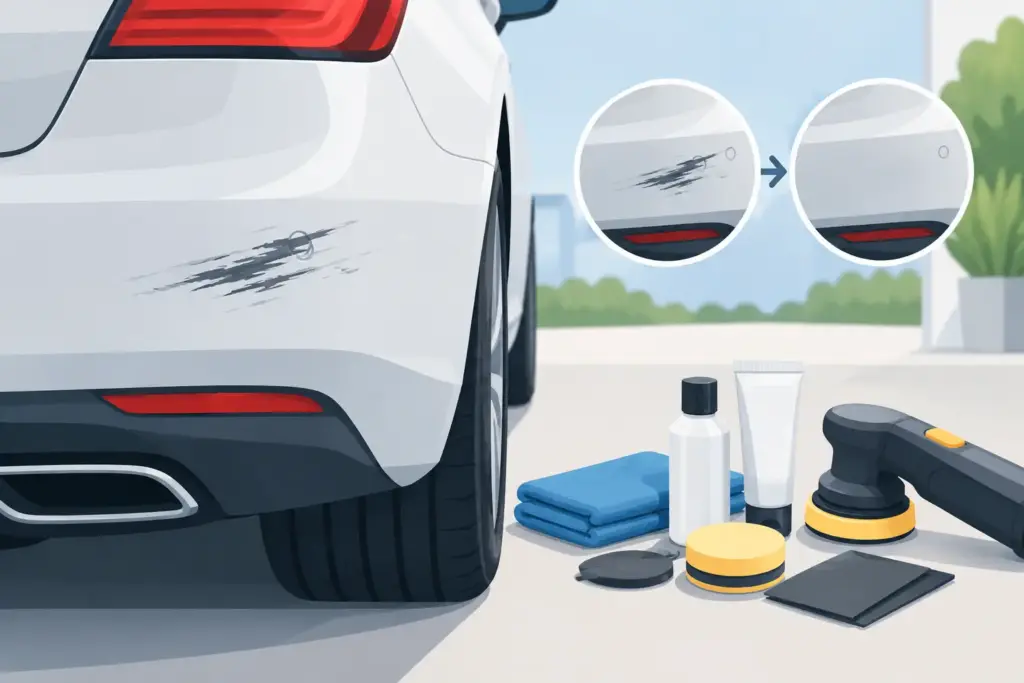
Polishing is one of the best bumper scratch repair methods for light scratches that have not reached the color coat. A fine finishing polish uses mild abrasives to level the edges of a clear-coat scratch, making it far less visible.
Apply a small amount of polish to a foam applicator or microfiber pad. Work one small section at a time using light, even pressure. Wipe away the residue, check your progress, and repeat only as needed. The goal is correction, not force. Excessive polishing removes clear coat and can create a dull spot.
This method works well for light scuffs, fingernail-level scratches near the trunk or door edge, and paint transfer that leaves a faint mark. It will not restore missing color or repair exposed plastic. After polishing, apply a quality wax or paint sealant to help protect the repaired area.
Method 2: Use Touch-Up Paint for Small Color Loss
When the scratch breaks through the clear coat and removes a small amount of color, touch-up paint can make the damage much less noticeable. This is often a reasonable option for a narrow scratch in an inconspicuous area, especially if the bumper is otherwise in good condition.
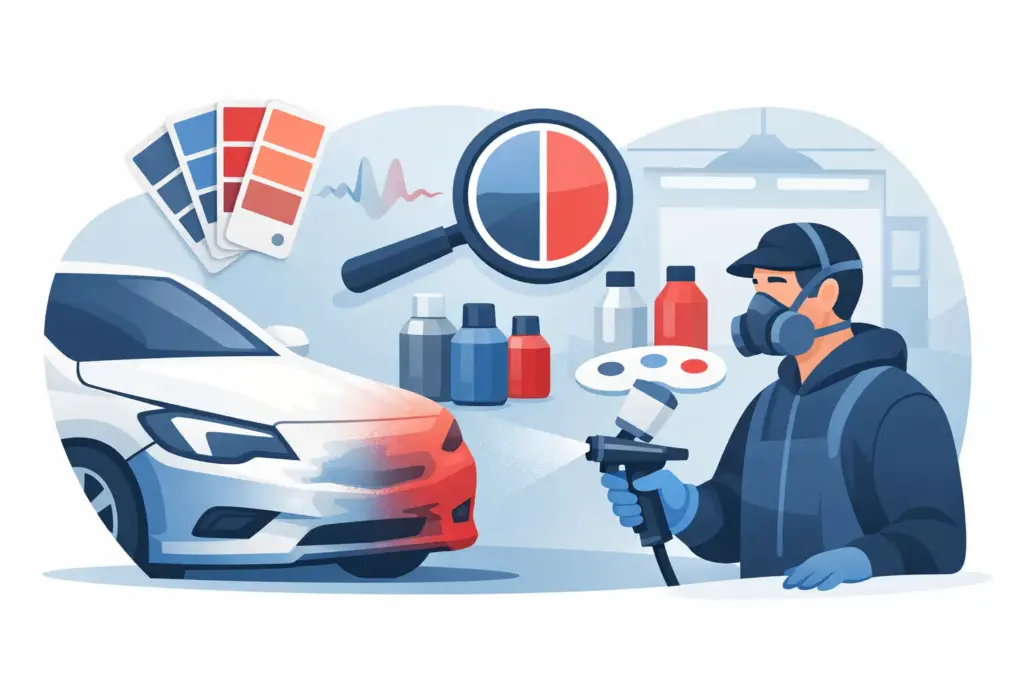
The key is matching the paint code, not simply choosing a color that looks close. Your vehicle’s paint code is commonly found on a label inside the driver’s door jamb, under the hood, or in the owner’s documentation. Even common colors such as white, silver, gray, and black can have multiple shades and metallic variations.
Clean and dry the scratch thoroughly. Use a fine applicator to place thin coats of paint only inside the damaged line. Allow each coat to dry according to the product instructions before adding another. A clear coat may be needed after the color builds to the surrounding surface level.
Touch-up paint is a concealment solution, not a factory-level refinish. It can protect the underlying material and improve the appearance from a few feet away, but brush marks, texture differences, and color variation may remain visible up close. It is generally best for small chips and narrow scratches, not broad scraped areas.
Method 3: Sand, Prime, Paint, and Clear Coat
Deeper scratches require a more complete repair process. When you can see primer, bare plastic, or an uneven gouge, simply applying paint over the area will not produce a durable or natural-looking result. The damaged section needs to be leveled, prepared, refinished, and blended correctly.
A professional repair typically begins with cleaning and careful sanding to smooth the scratch and feather the paint edges. If the bumper cover is gouged, a flexible plastic repair material may be used to rebuild the surface. The technician then applies adhesion promoter where needed, primer, matched base color, and clear coat.
Color matching and blending make the difference here. Bumpers can age differently from metal body panels because they are made from flexible plastic and may reflect light differently. Sun exposure, previous repairs, metallic paint, and pearl finishes can all make a simple spot repair challenging. A body shop can blend the color into adjacent areas so the repair does not stand out in sunlight.
This approach costs more than a do-it-yourself kit, but it is usually the better value when the damage is obvious, covers a larger area, or affects a newer vehicle. It also avoids the common problems of aerosol paint repairs: overspray, rough texture, mismatched gloss, and peeling clear coat.
Method 4: Repair Gouges, Cracks, and Loose Bumper Material
Not every bumper issue is strictly cosmetic. A scrape can leave a gouge, crack the plastic, loosen mounting tabs, or push the bumper cover out of alignment. These problems deserve a professional inspection, particularly after contact with another vehicle, a parking barrier, or road debris.
Modern bumpers often contain parking sensors, cameras, radar components, wiring, brackets, and energy-absorbing materials behind the painted cover. A bumper that appears to have only a scratch may also have hidden damage. If sensors are malfunctioning, warning lights appear, panel gaps have changed, or the bumper feels loose, do not treat it as a paint-only repair.
Plastic repair can be an excellent option when the bumper cover is structurally sound. In other cases, replacement is the safer choice. The right decision depends on the location and size of the damage, whether mounting points are intact, and whether the bumper can be restored to proper fit and function.
When a Professional Repair Is the Smarter Choice
A DIY repair can make sense for a small, shallow blemish on an older vehicle. Professional refinishing is usually worth considering when the scratch reaches bare plastic, the damage is wider than a few inches, or your vehicle has metallic, pearl, or tri-stage paint. It is also the better route if you lease your vehicle, plan to sell it soon, or want the repaired area to hold up through San Antonio heat and regular washing.
Insurance may help when bumper damage is part of a collision claim. Even if the visible scratch seems minor, an estimate can identify damage behind the cover and give you a clear picture of repair options. A good repair facility should explain what is cosmetic, what affects vehicle safety or fit, and what your insurer may require.
For San Antonio drivers, RWORKS can inspect bumper damage, provide a clear estimate, coordinate with insurance when appropriate, and restore the finish with repair quality backed by a lifetime warranty.
Avoid These Common Bumper Repair Mistakes
The quickest fixes are often the ones that create more work later. Avoid using household solvents, abrasive scrub pads, or harsh cleaners that can stain or dull automotive paint. Do not use a magic eraser on painted surfaces, since its abrasive texture can damage the clear coat.
Skip the temptation to sand deeply without a plan. Bumper covers are plastic, and sanding through surrounding paint or creating an uneven low spot makes refinishing more difficult. Aerosol paint can also be risky without proper prep, masking, temperature control, and clear-coat application.
Finally, do not ignore a bumper that is loose, cracked, or interfering with a sensor. Cosmetic damage is one thing. A damaged component that affects fit, visibility systems, or crash protection needs qualified attention.
The right repair should do more than hide a scratch for a few weeks. Whether the solution is a careful polish, matched touch-up paint, or a complete refinish, choose the method that protects your vehicle’s appearance, fit, and long-term value.