After a collision, a vehicle can look like it has a damaged bumper, fender, or door while the more serious issue sits underneath the paint. The difference between unibody versus frame construction helps determine how damage is measured, repaired, and verified before your vehicle returns to the road.
For San Antonio drivers, this is more than an auto-shop detail. Whether you drive a family SUV, a daily commuter, or a full-size truck, the structure of your vehicle affects crash protection, alignment, handling, repair time, and cost. A proper repair begins with identifying the type of construction and inspecting the entire impact area, not just the visible damage.
What Is Unibody Construction?
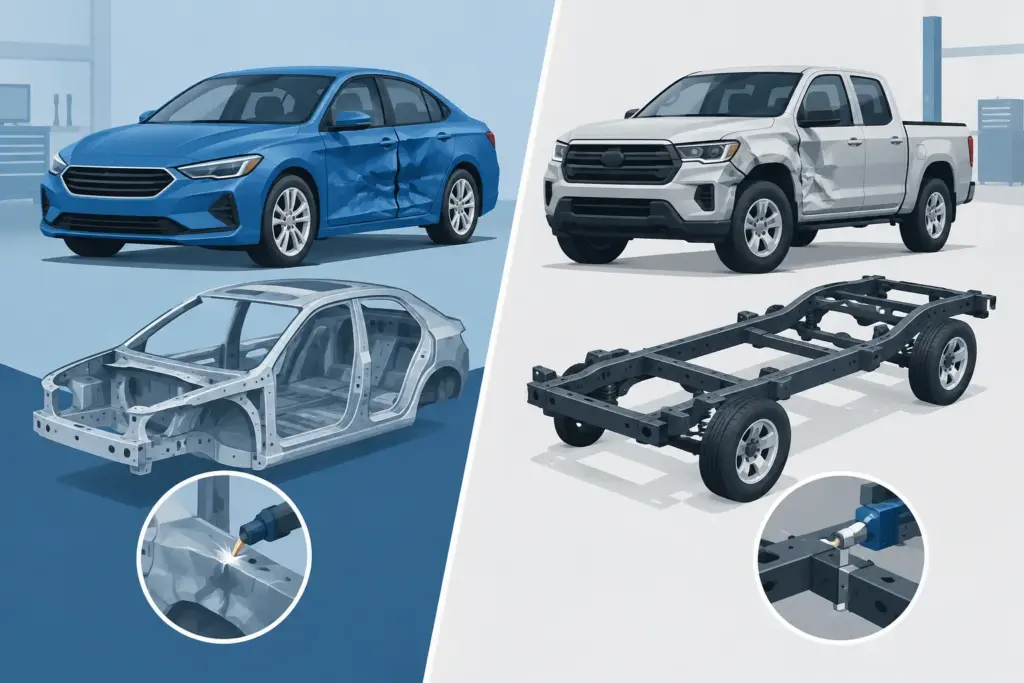
Most modern passenger cars, crossovers, minivans, and many SUVs use unibody construction. Rather than resting on a separate heavy frame, the body and structural support components are engineered as one integrated assembly. The floor pan, roof pillars, rocker panels, rails, and other reinforced areas all work together to support the vehicle.
A unibody vehicle is designed with specific areas that manage collision forces. Some sections are intended to absorb energy in an impact, while the passenger compartment is built to remain as stable as possible. That design can improve ride comfort, reduce vehicle weight, and support better fuel economy.
It also means collision damage may travel beyond the panel that was struck. A front-end impact, for example, can affect the bumper reinforcement, radiator support, front rails, suspension mounting points, or wheel alignment. Even a relatively low-speed collision deserves a thorough inspection when the vehicle pulls, the steering wheel sits off-center, warning lights appear, or body gaps have changed.
Common signs of unibody damage
Visible wrinkles in the engine compartment, uneven gaps around doors or the hood, a trunk that no longer closes correctly, or a vehicle that drifts while driving can all point to structural concerns. These symptoms do not automatically mean the vehicle is unsafe or beyond repair. They do mean measurements and repair planning should come before cosmetic work.
A qualified collision shop uses manufacturer-informed procedures and computerized measuring equipment to compare structural points against the vehicle’s specifications. The goal is not to make the exterior look straight. The goal is to confirm that the structure is positioned correctly so related repairs, including suspension and alignment work, can be performed accurately.
What Is Body-on-Frame Construction?
Body-on-frame construction uses two main pieces: a separate structural frame underneath and a body mounted on top of it. This design is common in many pickup trucks, heavy-duty trucks, and some traditional SUVs.
The frame carries much of the load and provides a strong foundation for towing, hauling, and off-road use. That strength is one reason truck owners often prefer it. A body-on-frame vehicle can be well suited to demanding work, but it is not invulnerable to collision damage. A bent, twisted, or displaced frame can affect how the vehicle drives, how tires wear, and whether panels and components fit as designed.
Frame damage is not always obvious from the outside. A truck may still start and move after an impact while its frame rails, crossmembers, suspension points, or mounting locations are out of specification. That is why a visual estimate may change after a complete teardown and structural measurement.
Frame repair requires precision, not guesswork
Repairing a frame is not simply a matter of pulling metal until it appears straight. Technicians must measure the frame, identify the direction and extent of the damage, secure the vehicle properly, and use controlled pulling methods when repair is appropriate. They then remeasure to verify the result.
Suspension and steering components deserve special attention after any impact involving a wheel, curb, pothole, or front or rear corner. An alignment can reveal whether angles are within specification, but alignment alone does not replace a structural inspection. If a mounting point has moved, simply adjusting the alignment settings may not address the underlying problem.
Unibody Versus Frame: Which Is Stronger?
Neither design is simply “stronger” in every situation. Each is engineered for different priorities.
Body-on-frame vehicles are generally valued for durability under heavy loads, towing capability, and serviceability in demanding truck applications. Unibody vehicles are often lighter, more efficient, and designed to manage crash energy through carefully engineered structural zones. Modern unibody SUVs can be exceptionally strong, while a body-on-frame truck can sustain serious damage if the impact reaches the frame or suspension mounting areas.
What matters after an accident is not which design wins a general comparison. What matters is where the impact occurred, how force moved through the vehicle, which materials are involved, and whether repair procedures allow the damage to be corrected safely.
Many newer vehicles also use high-strength steel, aluminum, adhesives, and advanced safety systems. Those materials and systems can change the repair approach significantly. Applying too much heat to certain high-strength steel components, for example, may compromise their engineered properties. Aluminum repairs require separate tools and contamination controls. Sensors, cameras, and radar units may need calibration after repairs or alignment work.
Why a Complete Damage Assessment Matters
A vehicle’s appearance after a collision rarely tells the full story. Behind a cracked bumper cover may be damaged absorbers, brackets, reinforcements, wiring, cooling components, or sensors. Behind a dented truck bedside may be frame, suspension, or mounting-point concerns.
A complete assessment typically starts with documenting visible damage and listening to the driver’s concerns. It continues with a more detailed inspection once panels or components are removed as needed. This process can uncover additional damage that was hidden at the first estimate.
That can be frustrating when you are waiting for repairs, but it is better than completing a paint and panel repair without addressing what lies beneath. Clear communication matters here. You should know what was found, why it affects the repair plan, and whether the shop is working with your insurer on approved supplemental repairs.
At RWORKS, the focus is on explaining the repair process clearly, coordinating with insurance when applicable, and keeping customers informed as the work moves forward. The right plan depends on the vehicle and the damage, not on rushing a one-size-fits-all repair.
Questions to Ask After a Collision
If your vehicle may have structural damage, ask the repair facility whether it will be measured before and after repairs. Ask whether suspension, steering, and wheel alignment will be inspected, especially if the collision involved a tire, wheel, or curb strike.
It is also reasonable to ask how advanced driver-assistance features will be handled. Features such as lane-departure alerts, adaptive cruise control, blind-spot monitoring, and parking sensors rely on correctly positioned cameras and sensors. Depending on the vehicle and repairs performed, calibration may be required.
Finally, ask about the warranty on repair workmanship and the plan for replacement parts. A trustworthy shop should be willing to explain what it found and what work is necessary without burying you in technical jargon.
When You Should Schedule an Inspection
Do not wait for obvious body damage if your vehicle was involved in an impact. Schedule an inspection if you notice a pull, vibration, uneven tire wear, steering changes, warning lights, fluid leaks, rubbing noises, or doors and panels that do not close as they once did.
The same advice applies after hail damage or cosmetic damage if the event also involved a collision, falling debris, or a hard strike near the roof, hood, or glass. What looks cosmetic may be limited to the exterior, but a careful assessment provides peace of mind.
A sound repair is built on accurate measurements, correct procedures, and careful verification. If your vehicle does not feel or drive the way it did before an accident, trust that signal and have it checked before small concerns turn into larger ones.