The difference between repairable versus total loss can change everything after an accident: where your vehicle goes, how your claim is handled, whether you keep the car, and what comes next financially. A vehicle can look severely damaged and still be repairable. On the other hand, a relatively minor collision can lead to a total-loss decision if the vehicle’s value is low or hidden damage pushes repair costs too high.
For San Antonio drivers, the most helpful first step is not guessing from what you can see in the driveway. It is getting a thorough estimate and understanding how your insurer reaches its decision. That gives you a clearer picture of your options before you make a rushed call about repairs, replacement, or keeping a totaled vehicle.
Repairable Versus Total Loss: The Core Difference
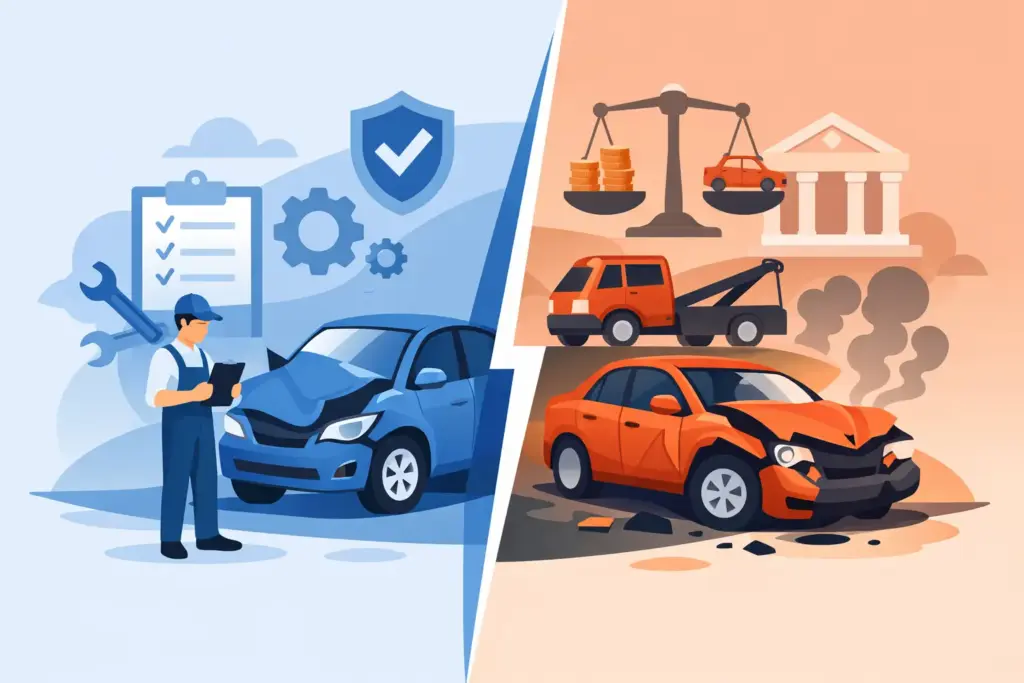
A repairable vehicle is one an insurer determines can be safely restored for a cost that makes financial sense compared with its pre-accident value. Repairs may include body work, paint, glass replacement, suspension work, alignment, mechanical corrections, and replacement of damaged safety components.
A total loss means the insurer has decided the vehicle is not economical to repair under its claim guidelines. This is primarily a financial determination, not a judgment that the vehicle is automatically beyond repair. In many cases, a skilled shop could physically repair the vehicle. The question is whether the repair cost, anticipated supplements, and salvage value outweigh what the insurer considers the vehicle’s actual cash value.
Actual cash value is generally the vehicle’s market value immediately before the accident. Age, mileage, trim level, condition, prior damage, local market data, and options can all affect it. A late-model truck with low mileage may support a larger repair estimate than an older vehicle with high mileage, even if both sustained similar damage.
What Insurers Consider Before Making the Call
An initial estimate is an important starting point, but it is not always the final number. Modern vehicles are built with layers of components behind the bumper cover, fender, door, and quarter panel. Sensors, wiring, brackets, structural reinforcements, cooling parts, and suspension pieces may not be visible until disassembly begins.
Insurers commonly weigh several factors together:
- The vehicle’s actual cash value before the loss
- The estimated cost of parts, labor, paint materials, and required calibrations
- The likelihood of additional damage found during teardown
- The vehicle’s salvage value
- State regulations and the insurer’s total-loss procedures
This is why two estimates can look different early in the process. A visual estimate documents damage that can be seen. A repair plan after disassembly may reveal additional collision damage that needs to be addressed for a proper repair. Those additions are called supplements, and they are a normal part of many collision claims.
At RWORKS, clear updates matter because customers should not be left wondering why an estimate changed or why an insurer needs additional documentation. A quality repair process includes documenting hidden damage, communicating with the insurance company, and explaining the next step in plain language.
Why Visible Damage Can Be Misleading
A cracked bumper or dented fender may look straightforward, but the impact behind it can be more significant. Today’s vehicles often place radar units, parking sensors, cameras, airbag sensors, and cooling components near the front and rear of the vehicle. Even a low-speed impact can affect systems that need inspection, repair, or calibration.
The opposite can also be true. A vehicle with a bent hood, broken lights, and scraped paint may look like a total loss at first glance, yet still be a reasonable candidate for repair once its structure and mechanical systems are inspected. Cosmetic damage is often more repairable than drivers expect, especially when the frame, suspension mounting points, airbags, and major safety systems are intact.
Hail damage is another example. A car can have dents across the hood, roof, trunk, and doors without having a major collision issue. The decision may depend on the vehicle’s value, the extent of panel damage, paint condition, and the most appropriate repair method.
The Safety Question Comes Before the Price Question
Cost affects the insurance decision, but safety affects the repair plan. A reputable collision repair center does not simply make a vehicle look better. The goal is to restore it according to proper repair procedures, including structural measurements, suspension and alignment checks, airbag-system inspection, and calibrations when needed.
That is especially important after an impact that affects steering, wheels, suspension, or the underside of the vehicle. A car may drive after a collision but still pull to one side, have uneven tire wear, or handle unpredictably because an alignment angle or suspension component is out of specification.
If a vehicle is approved for repair, ask what inspection and repair steps are being performed. You do not need to become an auto body expert, but you deserve straightforward answers about damaged areas, parts choices, anticipated timeline, and whether the repair carries a warranty.
What Happens If Your Vehicle Is Declared a Total Loss?
When an insurer declares a total loss, it typically makes a settlement offer based on the vehicle’s actual cash value, minus your deductible if one applies. The insurer usually takes possession of the vehicle and sells it as salvage. If you have a loan or lease, the payment process can involve your lender, which may change how much of the settlement reaches you directly.
Review the valuation report carefully. Check that it reflects the correct year, make, model, trim, mileage, options, and overall pre-accident condition. If you recently replaced tires, installed major equipment, or made documented improvements, keep your receipts. Not every expense raises value dollar for dollar, but accurate information helps support a fair review.
You may also have the option to retain the vehicle, depending on the claim and title requirements. In that situation, the insurer generally deducts the salvage value from the settlement, and the vehicle may receive a salvage or rebuilt title designation. Keeping a totaled vehicle can make sense in limited cases, but it comes with real trade-offs. It may be harder to insure, finance, sell, or repair properly, and it should never be returned to the road without a complete safety-focused assessment.
How to Protect Yourself During the Claim
Start by taking photos of the damage, the accident scene if possible, and the vehicle’s overall condition. Save claim numbers, adjuster contact information, estimate documents, and receipts for recent maintenance or upgrades. These records make conversations easier when questions arise.
Choose a repair facility you trust for an estimate and repair planning. Insurance companies may recommend shops in their network, but the right decision is the one that gives you confidence in the workmanship, communication, and warranty. Ask how the shop handles supplements, how often you will receive updates, and what happens if additional damage is found.
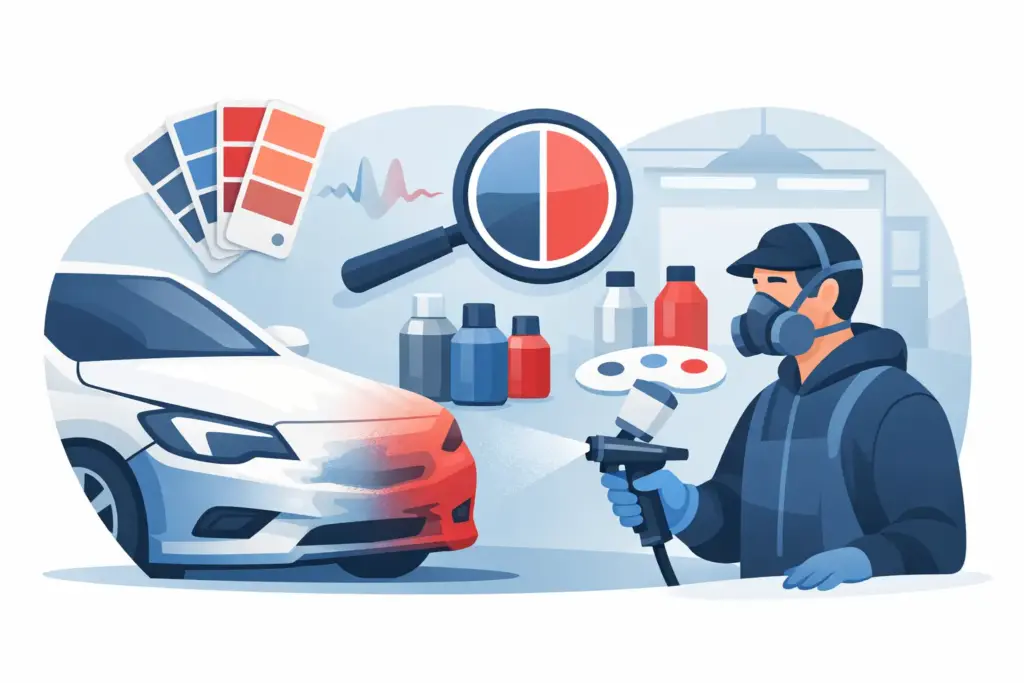
If the vehicle is repairable, do not judge the repair solely by the lowest estimate or fastest promise. Proper parts, accurate color matching, careful fit and finish, alignment verification, and required calibrations all affect the result long after the initial repair is complete.
If it is a total loss, do not feel pressured to accept a settlement before you understand the valuation. Ask questions, compare the vehicle details used in the report, and make sure you know how any loan payoff, deductible, rental coverage, or gap coverage applies to your situation.
When Repair Is Often the Better Path
Repair is often a strong choice when the vehicle has a solid pre-accident value, damage is contained to repairable panels or bolt-on parts, and a complete inspection confirms that it can be safely restored. It can also be the more practical path when you know the vehicle’s maintenance history, it fits your family’s needs, or replacement prices make finding a comparable vehicle difficult.
Still, repair is not always the best answer. If the damage is extensive, the vehicle has low market value, or a safe repair would require costs that exceed the insurer’s threshold, a total-loss settlement may protect you from investing further in a vehicle that no longer makes financial sense.
After an accident, the best next move is a careful inspection and an honest conversation about what your vehicle needs. Whether the answer is repair or replacement, clear information will help you move forward with confidence instead of uncertainty.