
A collision repair estimate can look straightforward until you ask the question that matters months or years later: what happens if the repair does not hold up? A lifetime warranty auto body repair provides meaningful reassurance, but only when you understand what the shop is standing behind, how long “lifetime” applies, and what circumstances may fall outside the warranty.
For San Antonio drivers, that clarity matters. Heat, hail, busy highways, and everyday wear can expose poor paintwork, panel fitment problems, and shortcuts that may not be visible when a vehicle first leaves the shop. A real warranty is not just a line on an estimate. It is a shop’s commitment to correct workmanship-related issues if they appear after the repair.
What a Lifetime Warranty Auto Body Repair Usually Covers
A lifetime warranty generally covers the quality of the repair work performed by the body shop for as long as you own the vehicle. The focus is workmanship: whether repaired panels were properly prepared, whether paint was correctly applied, and whether replacement or repaired parts were installed as intended.
Coverage often includes concerns such as paint peeling, cracking, fading caused by improper application, adhesion failure, body filler issues, or panel alignment problems related to the original repair. If a bumper was repaired and the finish begins separating because the surface was not properly prepared, that is the kind of issue a workmanship warranty is designed to address.
The word “lifetime” needs context, though. It usually means the lifetime of your ownership, not the lifetime of the vehicle under every future condition. If you sell the vehicle, the warranty may not transfer to the next owner. Policies also differ between shops, so customers should ask for the warranty terms in writing before authorizing repairs.
At RWORKS, the value of a lifetime warranty is tied to doing the repair correctly from the start. That includes careful damage assessment, quality body and paint work, and communication throughout the process so there are no surprises about what was repaired and why.
What a Lifetime Warranty Does Not Cover
A warranty is a promise about the repair, not a blanket policy for every problem that could happen to your car later. That distinction protects both the customer and the repair facility from confusion.
For example, a lifetime auto body repair warranty typically does not cover a new collision, rock chips, hail damage that occurs after the repair, vandalism, misuse, poor maintenance, or normal aging of unrelated parts. If another driver hits the same repaired door six months later, that new damage would need a new repair and, often, a new insurance claim.
It may also exclude mechanical components unless those parts were specifically repaired or replaced as part of the original work. A collision can affect suspension, steering, and alignment, but a paint and body warranty is not automatically a warranty on every mechanical system in the vehicle. This is why a complete post-collision inspection matters, especially when a vehicle pulls to one side, has uneven tire wear, or handles differently after an accident.
Manufacturer parts may carry their own warranty terms. A replacement headlamp, sensor, or aftermarket component can have coverage set by its manufacturer rather than the body shop. A trustworthy repair center will explain which warranty applies to which part of the job.
Why the Quality Behind the Warranty Matters
A warranty has value only if the shop has the skills, processes, and local reputation to honor it. The cheapest estimate is not always the best value when it leaves out necessary repairs, uses poor-quality materials, or does not account for hidden damage behind a bumper or panel.
Proper collision repair begins with a detailed inspection. Modern vehicles often have sensors, cameras, safety systems, and structural components behind areas that appear to have only cosmetic damage. Repairing the visible dent without addressing what sits beneath it can create larger problems later.
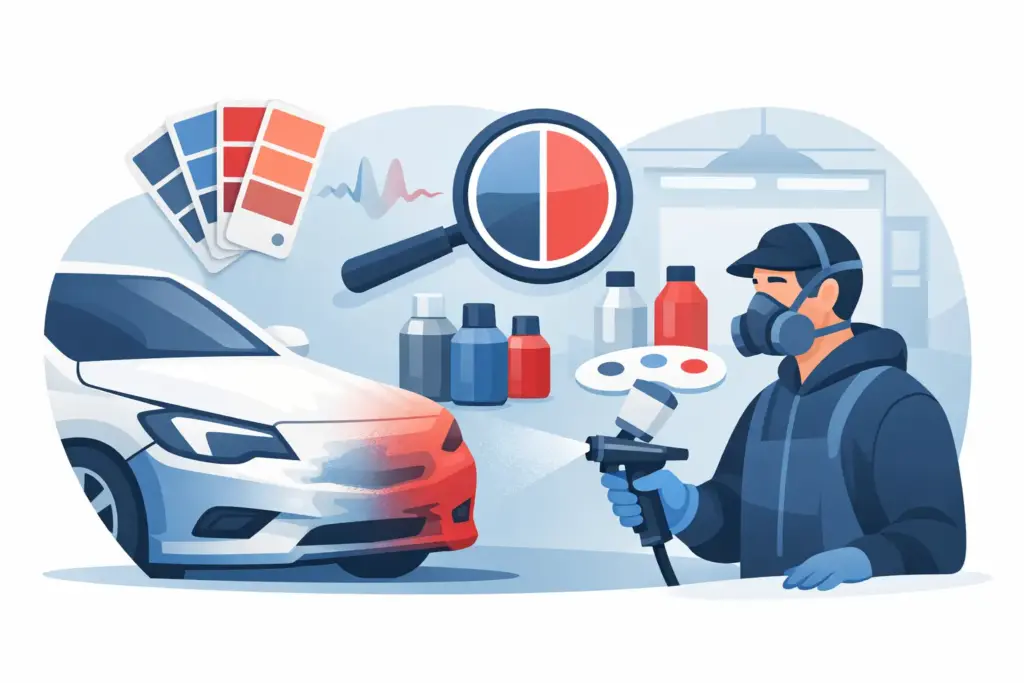
Paintwork is another area where preparation makes a major difference. Matching color is important, but durability depends on more than a close color match. The surface must be cleaned, repaired, primed, sealed, and refinished according to the material and repair requirements. Poor prep may not show immediately. It can show up later as peeling, cracking, or an uneven finish that becomes more noticeable in the Texas sun.
The same principle applies to panel fitment. A repaired hood, door, bumper, or fender should not simply look acceptable from a few feet away. It should align properly, open and close as intended, and maintain consistent gaps with nearby panels. These details are signs of craftsmanship, and they are the kind of work a quality warranty should support.
Insurance Repairs and Warranty Questions
Many drivers assume that because an insurance company is paying for a repair, the insurer guarantees every aspect of the work. In reality, the repair facility’s workmanship warranty and the insurance claim are separate parts of the process.
Your insurer may approve an estimate, issue payment, or work with the shop on supplements if additional damage is found. The body shop is still responsible for the quality of the repairs it performs. You also have the right to choose the repair facility that works on your vehicle, rather than feeling pressured to use a particular shop.
Ask whether the shop will communicate directly with the insurer, document hidden damage, and keep you updated if the repair timeline changes. Insurance claims can involve approvals and parts availability that are outside a shop’s control, but clear communication should never be optional.
A good repair partner will explain the estimate in plain language, help manage the claim process, and let you know if a repair requires additional structural, suspension, or alignment work. That support reduces friction at a time when most drivers already have enough to manage.
Questions to Ask Before You Approve Repairs
Before choosing a shop, ask for a clear explanation of its warranty. You do not need to be an automotive expert to ask practical questions.
Start by asking whether the warranty is written and whether it applies for as long as you own the vehicle. Confirm whether it covers paint, bodywork, panel alignment, and labor. If replacement parts are involved, ask whether they are original equipment, aftermarket, or recycled parts, and which warranty applies to each.
It is also smart to ask what steps the shop takes to verify the repair before delivery. Depending on the damage, that may include a final quality inspection, paint finish check, wheel alignment verification, or calibration of safety-related systems. The answer should be specific, not vague.
Finally, find out what happens if you have a concern after pickup. A reputable local shop should make it easy to return for an inspection, explain the issue, and determine whether it relates to the original repair. You should not have to argue for attention after the invoice is paid.
Protecting Your Vehicle After the Repair
Once your vehicle is back, take a few minutes to review it before leaving. Look at repaired areas in daylight if possible. Check color consistency from different angles, inspect panel gaps, and make sure doors, trunk lids, hoods, and windows operate normally. If your repair involved suspension or alignment work, pay attention to how the vehicle tracks and handles on the drive home.
Keep your final invoice, repair order, warranty paperwork, and any insurance documentation together. These records make it easier to address a future workmanship concern and can be useful if you need to explain the repair history when selling the vehicle.
You should also care for the finish as recommended by the shop. Avoid harsh chemicals or abrasive washing methods, especially soon after refinishing. Normal washing and routine care help preserve the appearance of quality paintwork, while ignoring bird droppings, tree sap, or other contaminants can damage any finish over time.
A lifetime warranty should give you confidence, not create fine-print uncertainty. Choose a shop that explains its coverage clearly, repairs the full scope of damage, and remains available after your vehicle is returned. When the work is done with care and the warranty is backed by a trusted local team, you can get back on the road knowing the repair was built to last.