A fresh paint finish can make accident damage, hail marks, faded panels, and everyday scrapes disappear. But quality auto painting is not simply spraying color over a damaged area. The finish is only as good as the repair work, preparation, color match, and curing process underneath it.
For San Antonio drivers, that matters. Strong sun, road debris, sudden storms, and heavy daily driving can be hard on a vehicle’s exterior. Whether you are repairing collision damage or refreshing a worn panel, knowing what a proper paint job involves helps you choose a shop based on workmanship, not just the lowest estimate.
What Happens Before Auto Painting Begins
Painting should be one of the final stages of a body repair, not the first. If a bumper is cracked, a fender is dented, or a door is misaligned after a collision, those issues need to be corrected before paint is applied. Otherwise, the vehicle may look better briefly while the underlying problem remains.
A repair technician starts by assessing the damaged area and determining whether the panel can be repaired or needs replacement. Minor dents may be reshaped and refinished. More severe damage can require parts replacement, structural measurement, or suspension and alignment work to ensure the vehicle drives correctly and panels line up as they should.
Once the bodywork is complete, the surface is cleaned, sanded, and prepared for primer. This step is where careful shops earn their reputation. Paint will reveal surface flaws rather than hide them. A rushed repair can lead to visible waves, rough texture, peeling, or a repair line that becomes more noticeable with time.
Surface Preparation Makes the Difference
Proper preparation removes damaged paint, smooths repaired areas, and creates a stable surface for new coatings. Depending on the repair, this may involve filler work, primer, guide coating, block sanding, and repeated inspections under good lighting.
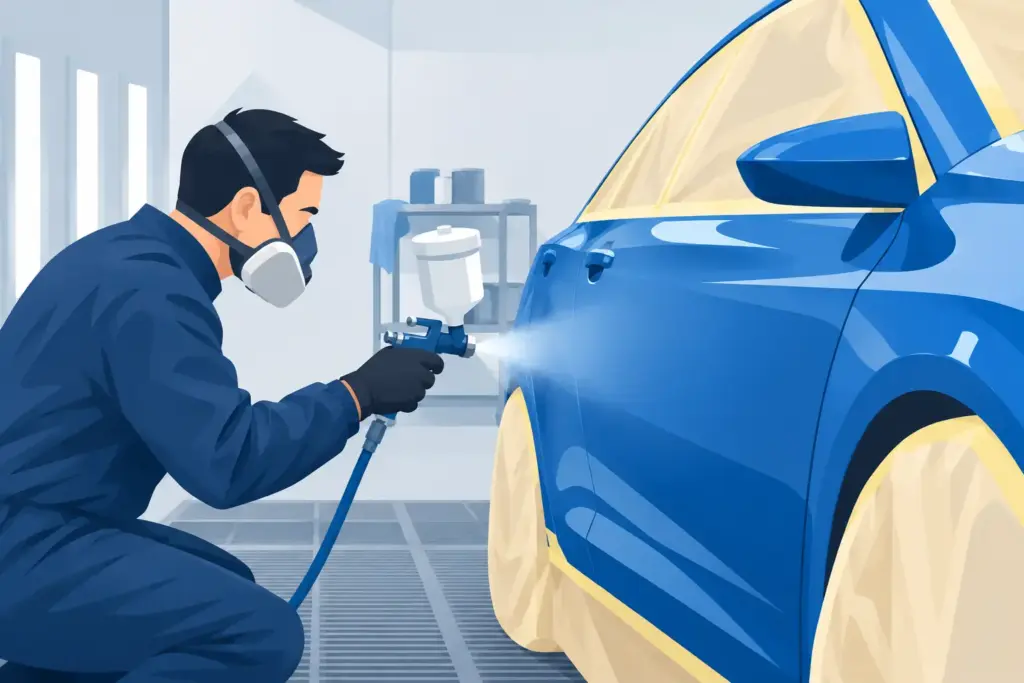
Technicians also mask adjacent panels, trim, glass, and openings carefully. Overspray on moldings or rough tape lines are not signs of a finished repair. A clean paint job should look intentional from every angle, including the edges where panels meet.
Why Paint Matching Is More Complex Than It Looks
Your vehicle has a factory paint code, but that code is only the starting point. Sun exposure, age, previous repairs, and even the angle of metallic flakes can change how a color appears on the vehicle. A silver truck parked in the Texas sun, for example, may not match a newly painted panel with a simple paint-code formula alone.
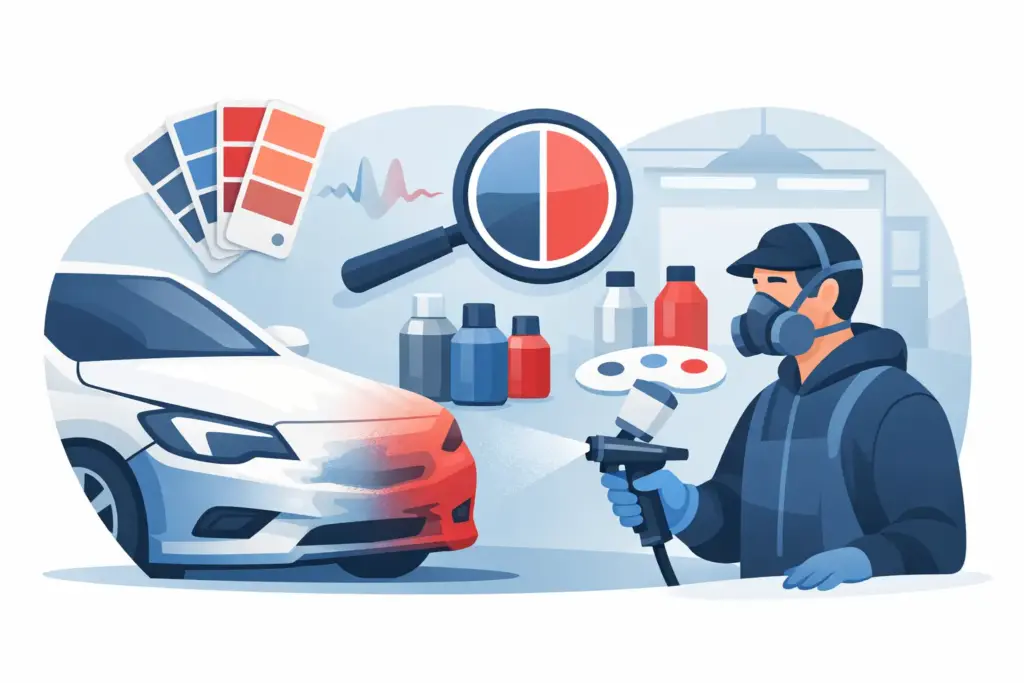
A professional painter uses color-matching tools, spray-out cards, and visual comparison to adjust the formula when needed. Pearls, metallic finishes, tri-coats, and certain reds, whites, and grays often require extra attention. The goal is for the repaired area to blend naturally with the surrounding finish in daylight, shade, and artificial light.
In many cases, the best way to achieve that result is to blend color into an adjacent panel rather than paint only the damaged spot. This can add labor and materials, but it avoids a hard color break that may be visible later. It is a practical trade-off: a slightly larger repair area can produce a more consistent final appearance.
The Layers of a Durable Paint Finish
Automotive refinishing uses a system of coatings designed to protect the vehicle as well as restore its appearance. The exact process depends on the damage and paint type, but it commonly includes primer, color coat, and clear coat.
Primer supports adhesion and helps level repaired surfaces. The color coat creates the vehicle’s visible shade and effect. Clear coat adds gloss and provides protection against UV exposure, moisture, and normal wear. Each layer requires appropriate flash time, application technique, and controlled conditions.
A paint booth is especially valuable because it limits dust and helps maintain the temperature and airflow needed for consistent results. Even with careful work, small imperfections can occasionally occur in refinishing. What matters is that the shop inspects the finish, corrects issues when necessary, and does not return a vehicle until the repair meets its standards.
Curing Is Not the Same as Drying
Paint may feel dry to the touch before it has fully cured. Modern refinish materials can be safely handled after controlled baking or drying, but the finish continues to harden over time. Your repair facility should provide clear instructions for washing and caring for the vehicle after pickup.
For the first several weeks, avoid abrasive polishing, automatic brushes that can be harsh on a fresh finish, and unnecessary exposure to chemicals. Hand washing with a gentle automotive soap is generally the safer choice. If you have questions about a specific coating or repair, ask before applying wax, ceramic products, or detailing compounds.
When Insurance Covers Auto Painting
If painting is part of a collision or comprehensive claim, the insurer typically pays for necessary repairs based on the details of the loss and your policy coverage. That may include refinishing a repaired or replaced panel, blending adjacent panels when justified, and related materials.
You are not required to let an insurer choose your repair shop. You can select a qualified local shop that communicates clearly with you and works with the insurance process. The estimate may change after disassembly if hidden damage is found, which is common after impacts. A responsible shop documents those findings and submits supplements for insurer review instead of cutting corners to stay within an early estimate.
Ask for an explanation if the estimate includes terms you do not recognize, such as blend, refinish, corrosion protection, or repair versus replace. Clear answers help you understand what is being restored and why. At RWORKS, the focus is on keeping customers informed while helping manage the claim process from estimate through final repair.
Choosing a Shop for Paint and Body Repair
Price matters, especially for a cash-pay repair, but comparing estimates line by line is more useful than comparing the bottom number alone. One estimate may include the preparation, blending, removal and installation of trim, and necessary materials to perform the job correctly. Another may leave out steps that affect the appearance and durability of the repair.
Look for a shop that is willing to discuss its process in plain language and provide updates when timelines change. A lifetime warranty is also a meaningful sign that the business stands behind its workmanship. Ask what the warranty covers and keep your repair documentation after pickup.
Before authorizing work, it is reasonable to ask about the expected turnaround time, whether parts delays could affect it, how the color match will be handled, and whether the shop will contact your insurer directly. Good communication does not eliminate every surprise in collision repair, but it prevents customers from being left wondering what is happening with their vehicle.
Protecting Your Vehicle’s New Finish
No paint finish is immune to chips, fading, or damage, particularly on a vehicle that spends its days outside. Regular washing removes road film, bird droppings, tree sap, and contaminants that can harm clear coat if left too long. Parking under cover when possible also helps reduce UV exposure.
If you notice a fresh chip that reaches bare metal, have it inspected sooner rather than later. Small paint damage can allow moisture to reach the metal and eventually contribute to corrosion. A prompt touch-up or localized repair may prevent a larger refinishing job down the road.
After any paint repair, take a moment to inspect the vehicle at pickup in natural light if possible. Check the repaired panels, panel gaps, trim, and overall color consistency. A trustworthy shop wants you to feel confident before you leave, and it should be available if you notice a concern after you get home.
The right finish should do more than make your vehicle look good in the parking lot. It should restore pride in your car or truck, protect the repaired area, and let you get back on San Antonio roads knowing the work beneath the shine was handled with care.