A repaired fender can be structurally sound and still look wrong if its color does not disappear into the rest of the vehicle. Under San Antonio sunlight, even a slight difference in shade, metallic sparkle, or gloss can stand out. That is why how paint matching works after accident repair involves much more than finding a paint code and spraying one damaged panel.
A quality collision repair process accounts for the vehicle’s original factory color, the way that color has changed over time, and the finish on the panels around the repair. The goal is not simply to make a new panel look painted. It is to make the repair difficult to spot from normal viewing distance in real-world light.
How Paint Matching Works After Accident Repair
Every vehicle leaves the factory with a paint code, usually found on a label in the door jamb, under the hood, or in another manufacturer-designated location. That code gives the repair team a starting formula for the vehicle’s original color. It does not guarantee a perfect match by itself.
Automakers may use several acceptable variations of the same color during production. A silver truck, for example, may have different formulas based on the assembly plant, paint batch, or model year. Then there is normal wear. Sun exposure, heat, washing, road grime, and previous repairs can all change how the existing finish looks compared with the day the vehicle was new.
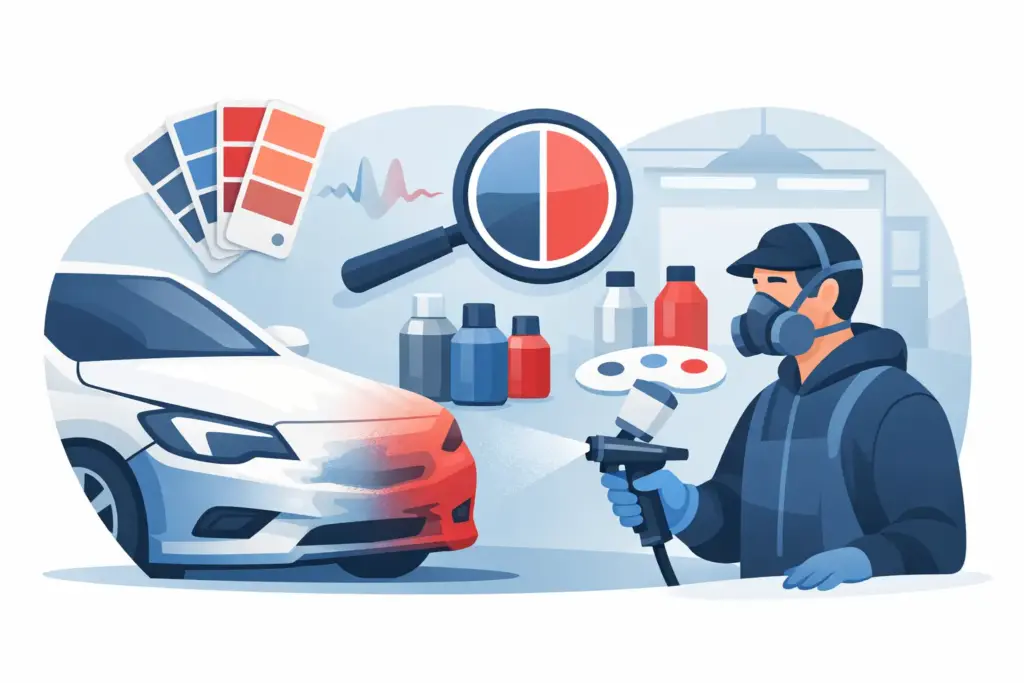
A technician begins by identifying the correct paint code and inspecting the vehicle in person. Modern paint-matching tools, including color-reading devices, can help measure the surface and narrow down available formula variations. The technician also looks at the color from multiple angles, because metallic and pearl finishes can appear lighter or darker depending on where you stand and how the light hits them.
The selected formula is mixed carefully, then sprayed onto a test card or spray-out panel. This step matters because a color may look right in a mixing cup but look different after it dries and receives clear coat. The test panel lets the painter compare the result directly against the vehicle before applying color to the repaired area.
Why the Paint Code Is Only the Starting Point
Paint is made of more than a basic color. It can include metallic flakes, mica pearls, tinted layers, and clear coat that affect depth and reflectivity. Two panels may look similar in a shaded shop bay yet look noticeably different outside at noon.
Solid colors, such as straightforward black, white, or red, are often more forgiving. Metallic gray, silver, blue, and certain pearl whites require greater precision. On these finishes, the orientation of the metallic particles affects the final appearance. Spray pressure, gun distance, application technique, and drying conditions can all influence how the color lays down.
This is one reason a reputable body shop does not rush paint work just to shorten a repair timeline. The right match comes from preparation, testing, and experienced application. It may take a small adjustment to the formula before the painter gets the closest possible result for that specific vehicle.
Blending Makes the Repair Less Visible
When a damaged door, bumper, quarter panel, or fender is repaired or replaced, painting only that individual part may create a visible edge between new and existing paint. Even if the color is close, the difference can show where the panels meet.
To prevent that line, technicians often use a process called blending. Instead of stopping the new color at the edge of the repair panel, the painter gradually feathers the color into the adjacent panel. Clear coat is then applied across the appropriate area to create a consistent gloss and protect the finish.
For example, if a front fender needs repair, blending may be recommended into the front door or hood, depending on the vehicle’s body lines and color. This does not mean more work is being added without reason. It is often the most reliable way to make the repaired section look natural next to the rest of the vehicle.
Blending is especially valuable for colors that shift in different light, as well as vehicles that have spent years parked outdoors. A vehicle that looks like one shade of white in the garage may show warmer or cooler undertones in direct Texas sun.
Surface Preparation Affects the Final Color
Good paint matching cannot overcome poor body preparation. Before refinishing begins, the repaired area must be shaped correctly, sanded smoothly, cleaned, primed when needed, and sealed. Any unevenness beneath the paint can change reflections and make the panel look wavy, even if the color itself is accurate.
The old finish must also be properly prepared so the new paint bonds correctly. Skipping steps can lead to peeling, rough texture, or visible repair edges later. A quality repair is built in layers: metal or plastic repair, filler work when appropriate, primer, sealer, color, and clear coat.
The clear coat deserves attention, too. It provides the gloss and protection people associate with a factory finish. A mismatch in gloss can be just as noticeable as a mismatch in color. The final polishing process helps remove minor imperfections and brings the repaired area into visual alignment with surrounding panels.
What Can Affect the Match and Repair Timeline
The size and location of the damage influence how much painting and blending are needed. A small bumper scuff may require a different approach than a creased door, hail damage across the roof, or a collision that involves multiple panels. Replacement parts can also require additional work because they arrive unpainted and must be fitted before refinishing.
Paint matching may take longer when a vehicle has a specialty finish, such as a tri-coat pearl, matte paint, custom color, or previous aftermarket paintwork. These finishes are repairable, but they demand more testing and care. A shop should explain when the process is more involved instead of making a quick promise that does not reflect the work required.
Parts availability, insurance authorization, and hidden damage found during disassembly can also affect the overall schedule. The paint portion of the job is only one stage of collision repair, but it should not be treated as an afterthought. Clear communication about the repair plan helps prevent surprises along the way.
How Insurance Fits Into Paint Matching
If another driver caused the accident or you are using collision coverage, the estimate may include refinishing and blending operations needed to restore the vehicle properly. Insurance estimates can evolve after the shop removes damaged parts and identifies additional repair needs.
A professional repair facility documents the damage, explains necessary operations, and communicates with the insurer when supplements are required. Vehicle owners should not have to choose between a correct repair and a confusing claims process. At RWORKS, that means helping customers understand what is being repaired, why blending may be recommended, and where the claim stands throughout the process.
For cash-pay repairs, the same standard applies. The estimate should clearly distinguish between the visible damage, the necessary preparation work, and the refinishing needed for a durable result. The lowest quote is not always the best value if it leaves out steps that make the repair noticeable later.
What to Look for When You Pick Up Your Vehicle
Before leaving the shop, view the repaired area from several angles and, if possible, in outdoor light. Look along the body line rather than staring only at the center of the repaired panel. The color should transition naturally into adjacent panels, and the gloss should look consistent.
Keep in mind that no two panels reflect light in exactly the same way, particularly on older vehicles or complex metallic finishes. Still, you should not see a hard color line, obvious shade change, rough texture, or sanding marks. The repair should look right in the conditions where you drive every day, not just under shop lighting.
Ask how long to wait before waxing or applying paint protection products. Fresh paint needs time to fully cure, and following the shop’s care guidance protects the finish while it settles.
A well-matched repair is the result of careful inspection, tested color formulas, skilled blending, and patience at each stage. When you need accident repair, choose a shop that is willing to explain the process clearly and stand behind the work long after the paint has dried.


Pingback: Bumper Repair or Replacement Cost Explained - R Works
Pingback: How to Read a Repair Estimate Before Approval - R Works