A cracked bumper after a parking-lot mishap can look like a simple cosmetic problem, but the bumper repair or replacement cost often depends on damage you cannot see from the driveway. Modern bumpers may contain sensors, cameras, brackets, absorbers, grille components, and paint finishes that all need to work correctly when the repair is complete.
For San Antonio drivers, the right choice is rarely about finding the lowest number on an estimate. It is about restoring the vehicle safely, matching its appearance, and avoiding a repair that creates bigger issues later. A quality collision shop should explain what is damaged, what can be repaired, and why replacement may be the better value in some cases.
What Does Bumper Repair or Replacement Cost?
Most minor bumper repairs fall in the range of a few hundred dollars, while more extensive repairs or full bumper replacement can reach well over $1,000. Vehicles with advanced driver-assistance systems, premium paint, or damage behind the bumper can cost more because they require additional parts, labor, and calibration.
A scuff or shallow dent on a painted plastic bumper may only need sanding, refinishing, and paint blending. A torn cover, broken mounting tabs, or damage to the internal reinforcement usually calls for more involved work. If the bumper includes parking sensors, a backup camera, radar, or blind-spot monitoring equipment, those systems may need to be removed, inspected, and recalibrated after the repair.
The estimate should account for the full repair, not just the visible crack. A bumper that looks acceptable from the front can still be loose, misaligned, or unable to protect the vehicle as designed.
When Bumper Repair Makes Sense
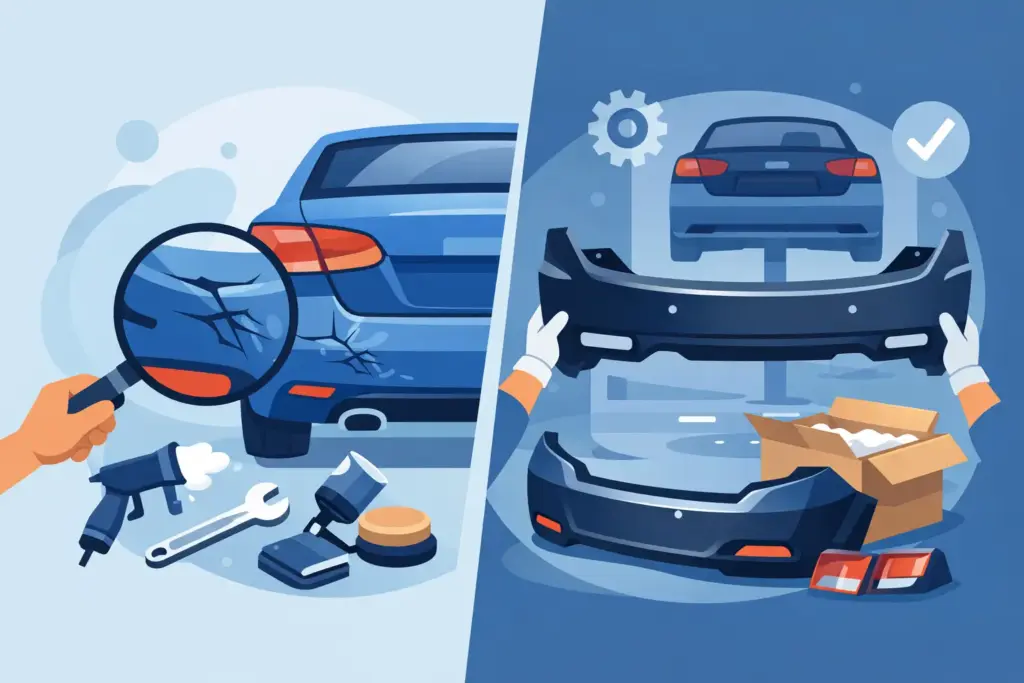
Repair is often the practical option when the bumper cover has surface-level damage and remains structurally sound. Common examples include paint transfer, light scratches, shallow dents, small cracks, and minor scrapes from a curb or parking incident.
Plastic bumper repair can produce excellent results when it is done properly. The damaged area is prepared, repaired with appropriate materials, shaped, primed, and refinished to match the surrounding panels. For many drivers, this preserves the original part and keeps the repair cost lower than replacement.
Repair may not be the best answer if a crack runs through mounting points, the cover is badly warped, or the damage affects sensor locations. Trying to save a severely damaged bumper can result in uneven panel gaps, peeling paint, or a part that does not fit securely. A trustworthy shop will not recommend replacement simply because it is easier, but it should not force a repair where replacement is clearly the safer, longer-lasting choice.
Paint Match Matters
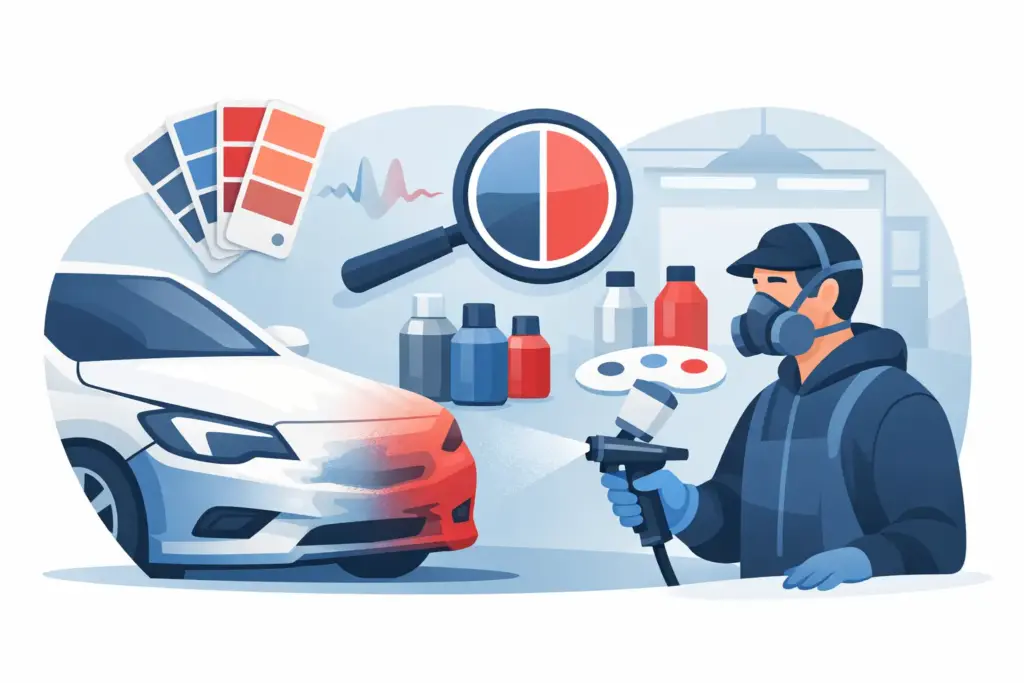
Bumper covers are often plastic, while adjacent fenders and quarter panels are metal. Those materials can reflect color differently, especially with metallic, pearl, and tri-coat finishes. Proper refinishing may require blending into neighboring panels to create a consistent color match.
That is one reason a quick spot repair is not always the final answer. The goal is for the repaired area to look right in sunlight, shade, and under parking-lot lights, not just immediately after it leaves the paint booth.
When Replacement Is the Better Choice
Replacement is commonly recommended when the bumper cover is split, heavily deformed, missing pieces, or damaged around the areas that secure it to the vehicle. It may also be necessary if the energy absorber, reinforcement bar, brackets, grille shutters, or other components behind the cover have been affected.
A replacement bumper is not always a single-part job. Depending on the vehicle, the estimate can include the new cover, trim pieces, emblems, grilles, retainers, absorbers, paint materials, labor, and system calibration. On newer vehicles, the bumper may house technology that helps with parking, emergency braking, adaptive cruise control, or lane-change alerts. Those features must be restored and verified, not simply reinstalled.
After a more significant impact, alignment or suspension concerns can also be part of the conversation. If the vehicle pulls, the steering wheel sits off-center, or a wheel took the hit, the bumper damage may be only one part of the repair. Addressing the whole condition of the vehicle helps prevent tire wear, handling problems, and repeat visits.
The Factors That Change Your Final Price
No two bumper estimates are exactly alike, even when the damage looks similar. Vehicle make, model, year, and trim level affect part availability and pricing. An original manufacturer part may cost more than an aftermarket alternative, while some vehicles have limited part options or require specific components to support their safety systems.
Labor time is another major factor. Removing a bumper on an older vehicle can be straightforward. Removing one from a late-model SUV or truck may involve sensors, cameras, wiring, splash shields, wheel-well liners, and other trim pieces. Once the cover is off, hidden damage can become visible.
Paint also has a meaningful effect on price. Basic solid colors are generally less complex than metallic, pearl, matte, or multi-stage finishes. Matching the repaired bumper to panels that have aged in the Texas sun requires careful color mixing and experienced refinishing work.
Finally, consider whether the damage is isolated. A bumper strike can damage a headlight, fender, hood edge, grille, underbody panel, or cooling components. A complete estimate should identify related damage before work begins whenever possible.
Insurance Claim or Cash Pay?
If another driver caused the damage or your collision coverage applies, insurance may cover much of the repair after your deductible. The best first step is to document the damage with photos, save any incident information, and contact your insurer if you plan to file a claim.
You still have the right to choose the repair facility. An estimate from the insurance company is not necessarily the final repair plan, particularly if additional damage is found after disassembly. A professional shop can communicate with the insurer, submit supporting documentation, and request approval for necessary supplemental repairs.
For cash-pay repairs, ask for a clear written estimate and discuss options honestly. In some cases, repairing the existing cover is the most economical path. In others, replacement prevents future fitment and durability problems. The lowest initial price is not always the lowest overall cost if the repair does not hold up.
Questions Worth Asking Before You Approve Repairs
Before authorizing bumper work, make sure you understand whether the estimate covers repair or replacement, paint and color matching, related parts, and sensor or camera calibration when applicable. Ask whether hidden damage is possible and how you will be updated if the scope changes.
It is also reasonable to ask about the warranty. Collision repair work should give you confidence after you drive away. At RWORKS, customers receive a lifetime warranty on repairs, along with clear communication throughout the process. That matters when you are trusting a shop with both your vehicle’s appearance and its safety-related components.
Do Not Ignore a Loose or Damaged Bumper
A bumper that is hanging loose, rubbing a tire, blocking a light, or exposing sharp edges should be inspected promptly. Even if the vehicle still drives normally, loose panels can worsen with road vibration and create a hazard for you or other drivers.
If warning lights appear after the impact, treat that as a separate concern rather than assuming the bumper damage is cosmetic. Sensors, radar modules, and other equipment may need attention before the vehicle is fully ready for the road.
A careful inspection and a straightforward estimate take the guesswork out of the decision. Whether the right answer is a targeted repair or a complete replacement, choose work that restores the fit, finish, and function your vehicle needs for the miles ahead.