A collision can turn an ordinary commute into a string of decisions: Is the car safe to drive? Should you call insurance first? How long will repairs take? This collision repair process guide explains what typically happens from the first estimate through final pickup, so you can make informed choices and know what to expect from your repair shop.
Start With Safety and Documentation
Before thinking about dents, paint, or repair timelines, make sure everyone is safe. Move the vehicle out of traffic if possible, call emergency services when needed, and exchange information with the other driver. If your vehicle is leaking fluids, has a damaged wheel, a deployed airbag, or steering that feels wrong, do not drive it.
Photos taken at the scene can be useful later. Capture the overall position of the vehicles when it is safe, close-ups of visible damage, license plates, insurance information, and the surrounding area. Keep a copy of the police report number if an officer responds. These details help an insurer understand the loss and can also help a repair facility document damage accurately.
Visible damage is not always the full story. A bumper that appears lightly scraped may be hiding broken brackets, impact-absorbing material, sensor damage, or damage behind the cover. That is why a vehicle should be inspected by a qualified repair professional before assumptions are made about cost or safety.
The Collision Repair Process Guide Begins With an Estimate
The estimate is the starting point, not always the final repair plan. A repair professional examines the damaged areas, identifies parts that are clearly affected, and estimates labor for body work, paint, mechanical repair, and related operations. They may also check panel gaps, wheel position, lights, glass, and trunk or door operation.
At this stage, some damage remains hidden because it cannot be seen until parts are removed. Modern vehicles have reinforcement bars, sensors, wiring, mounts, cooling components, and structural sections behind exterior panels. A proper estimate should account for what is visible while leaving room for a supplement if teardown reveals additional damage.
Ask the shop to explain the estimate in plain language. You should understand which panels are being repaired or replaced, whether the vehicle needs paint blending into adjacent panels, and whether alignment, suspension, sensor calibration, or mechanical work may be required. A clear explanation now helps prevent confusion later.
Insurance Claims and Your Right to Choose a Shop
If you are filing an insurance claim, report the accident promptly and keep your claim number available. Your insurer may inspect the vehicle remotely, send an adjuster, or ask for photos and an estimate. That initial insurance estimate is often based on visible damage and may not include every operation needed after disassembly.
You can choose the repair facility you trust. An insurer may recommend shops in its network, but the decision is yours. Choose a facility based on workmanship, communication, warranty coverage, repair capability, and confidence that the shop will advocate for a complete repair.
A good collision center can communicate directly with the insurer, submit supplements for newly discovered damage, and explain where the claim stands. This is especially helpful when repairs involve multiple departments, such as body work, auto painting, suspension repair, alignment, glass replacement, or calibrations.
Your deductible is generally your responsibility under your policy, regardless of where you repair the vehicle. If you are paying out of pocket, request a written estimate and discuss repair priorities honestly. In some cases, cosmetic damage can be addressed separately from more urgent safety or mechanical issues. That depends on the vehicle, the damage location, and whether the car can be safely returned to service.
What Happens During Disassembly and Repair
Once repairs are authorized, the shop orders necessary parts and begins the disassembly process. This is when technicians remove damaged bumper covers, trim, lamps, liners, wheels, panels, or interior components to inspect the structure and mounting points underneath.
If hidden damage is found, the shop documents it with photos and prepares a supplement. Insurance approval can add time, but it is better than repairing only what was visible at first glance. Skipping necessary operations to meet an early estimate can affect fit, safety systems, corrosion protection, or the way the vehicle drives.
For structural damage, technicians measure the vehicle against manufacturer specifications and use specialized equipment to restore key points to their intended position. For suspension or wheel-impact damage, the vehicle may need component replacement and a precision alignment. A vehicle can look repaired while still pulling, vibrating, or wearing tires unevenly if alignment-related damage is not corrected.
Repair versus replacement is not a one-size-fits-all decision. A skilled technician may repair a dented metal panel when the damage is accessible and the panel can be restored properly. Replacement may be the better choice when a panel is torn, heavily stretched, corroded, or designed to manage crash energy in a way that cannot be safely restored.
Parts selection can also vary. Original equipment manufacturer parts may be specified by the repair plan, insurer, vehicle age, or customer preference. Alternative parts can sometimes be appropriate, particularly for certain cosmetic repairs, but fit, availability, and quality matter. A reputable shop should be transparent about the parts being used and any effect on timing.
Paint, Reassembly, and Safety-System Checks
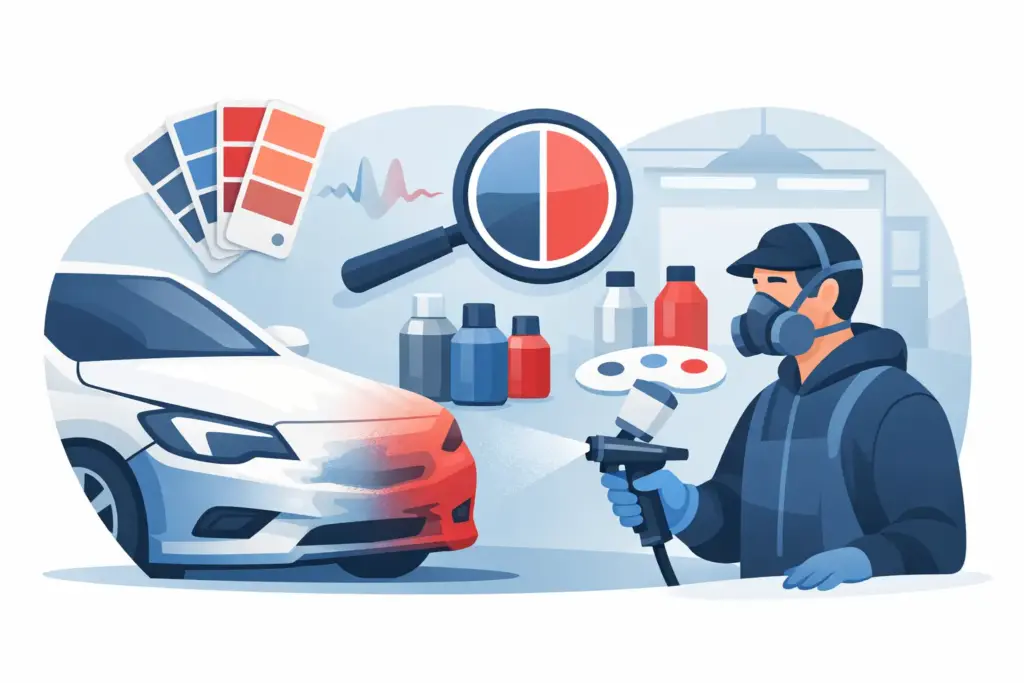
After body and structural repairs are complete, the vehicle moves into refinishing. The damaged area is prepared, primed when necessary, color-matched, painted, and protected with clear coat. To create a consistent appearance, paint may need to be blended into nearby panels. This is common because factory paint changes slightly over time from sun exposure, weather, and normal use.
Once the finish has cured, technicians reassemble the vehicle and check that panels, trim, lights, seals, and accessories fit and operate correctly. They also inspect gaps between panels and make adjustments as needed. Details matter here: a hood that latches correctly, a bumper that sits evenly, and a door that seals properly all reflect the quality of the repair.
Many newer vehicles use cameras, radar, parking sensors, lane-assist features, and other advanced driver-assistance systems. Depending on the damage and repairs performed, these systems may require scanning, aiming, or calibration. This is not an optional cosmetic step. When required, calibration helps ensure the vehicle’s safety features operate as intended.
Final Quality Control Before Pickup
Before you pick up the vehicle, the repair facility should conduct a final inspection. That can include checking paint appearance in proper lighting, verifying repairs and parts against the work order, confirming warning lights are addressed, and road-testing the vehicle when appropriate. The goal is not just to make the vehicle look better in the parking lot, but to return it in proper working condition.
At pickup, take a few minutes to walk around the vehicle with a representative. Review the repaired area, ask about any work completed beyond the original estimate, and make sure you understand the warranty. Keep copies of the final invoice, repair order, and warranty information with your vehicle records.
RWORKS has served San Antonio drivers since 2007 with full-service collision repair, paint, hail damage repair, suspension and alignment work, insurance-claim support, and a lifetime warranty on qualifying repairs. Clear updates throughout the process help customers plan around transportation, parts availability, and changing repair timelines.
Why Repair Timelines Can Change
The honest answer to how long collision repairs take is that it depends. A minor dent repair may move quickly, while a more involved collision can require parts orders, insurer supplement approval, structural measuring, paint curing, alignment, or sensor calibration. Supply availability can also affect the schedule, especially for newer models or specialty trim.
The best repair experience is not one built on unrealistic promises. It is one built on timely communication. If the scope changes or a part is delayed, you deserve a straightforward update, an explanation of what changed, and a realistic next step.
After an accident, a clear repair plan can take much of the uncertainty out of the situation. Choose a shop that looks beyond the visible damage, communicates with your insurer, and stands behind the work long after the vehicle leaves the lot.


Pingback: How to Choose an Insurance Approved Body Shop - R Works