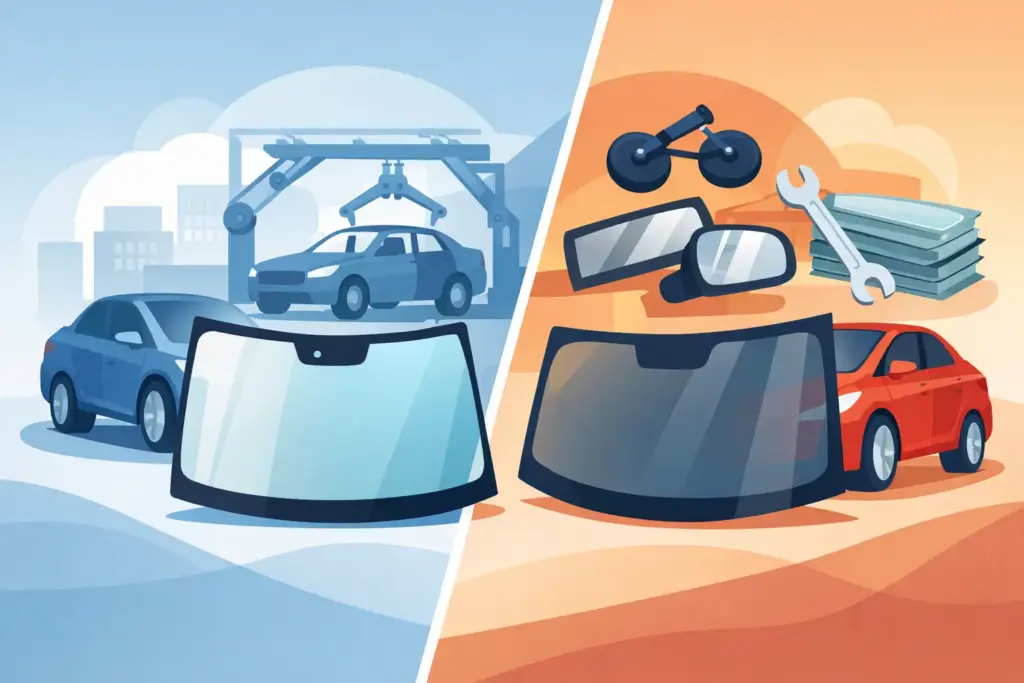
A cracked windshield can turn a routine repair into a confusing decision fast. When comparing OEM vs aftermarket auto glass, the right answer depends on your vehicle, its safety technology, your insurance coverage, and the quality of the installation. A lower price may be appealing, but a windshield is more than a piece of glass. It supports visibility, helps manage crash forces, and often houses cameras and sensors that drivers rely on every day.
For San Antonio drivers dealing with collision damage, rock chips, hail, or a broken side window, the goal is simple: restore the vehicle correctly without paying for features that do not add real value. Understanding the difference between original equipment manufacturer glass and quality aftermarket glass can help you ask the right questions before approving a repair.
What OEM Auto Glass Means
OEM auto glass is made by, or made to the specifications of, the company that supplied glass for your vehicle when it was built. It typically carries the automaker’s logo along with required safety markings. For example, an OEM windshield for a particular truck or SUV is designed around that vehicle’s original dimensions, tint band, acoustic properties, heating elements, camera bracket, and antenna connections.
That does not always mean the automaker physically manufactured the glass. Major glass manufacturers often produce it for the automaker. The difference is that OEM glass is sold under the vehicle brand’s approved specification and labeling.
For vehicles with complex driver-assistance systems, OEM glass can offer extra peace of mind. The mounting area for a forward-facing camera, the clarity through the camera zone, and the shape of the windshield are all expected to match the original design closely. That consistency can make calibration more straightforward, although calibration is still required whenever the manufacturer calls for it.
OEM glass is generally the higher-cost option. Depending on the vehicle and availability, the price difference can be substantial. It may also take longer to source, particularly for newer, luxury, specialty, or less common vehicles.
What Aftermarket Auto Glass Means
Aftermarket auto glass is produced by companies other than the vehicle manufacturer. Reputable aftermarket glass is built to meet federal safety standards and is commonly used for windshield, back-glass, and side-window replacements. It will have required Department of Transportation markings, but it will not carry the automaker’s logo.
The aftermarket category is broad. Some products are made by established manufacturers with strong quality-control programs and vehicle-specific designs. Others may have less consistent fit, optical clarity, tint matching, sound insulation, or sensor-bracket placement. This is why “aftermarket” alone does not tell the whole story.
A quality aftermarket windshield can be an excellent choice for many vehicles, especially when the car does not have advanced camera systems or when a dependable replacement is needed at a more manageable cost. Insurance policies also frequently base their approved estimate on aftermarket or equivalent glass, unless an OEM endorsement is part of the policy.
The best repair decision is not simply OEM versus aftermarket. It is OEM versus a specific, verified replacement product installed with the correct procedures.
OEM vs Aftermarket Auto Glass: The Differences That Matter
Fit, appearance, and features
OEM glass is intended to duplicate the original windshield or window as closely as possible. That can matter when your vehicle has a heads-up display, rain sensor, heated wiper park area, acoustic-laminated windshield, embedded antenna, special molding, or a precise factory tint.
High-quality aftermarket glass can fit very well, but minor differences are possible. A windshield may have a slightly different shade at the top, a different logo-free appearance, or less sound-dampening material. On certain vehicles, even a small variation around a camera mount or molding can matter more than it would on a basic windshield.
For a daily driver without specialized glass features, those differences may not affect the ownership experience at all. For a late-model vehicle with premium equipment, matching the original specification more closely may be worth the added cost.
Safety standards and structural performance
Both OEM and legitimate aftermarket automotive glass must meet applicable federal safety requirements. The windshield also needs to be installed with the correct adhesive, preparation, curing time, and replacement moldings or clips where needed. Poor installation can create bigger concerns than the label on the glass.
The windshield contributes to the roof structure and helps the passenger-side airbag deploy in the intended direction. If the bonding surface is not properly prepared, if the wrong urethane is used, or if the vehicle is driven before the adhesive reaches its safe drive-away time, the repair may not perform as designed in a crash.
That is why choosing an experienced repair facility matters. A careful technician checks for rust, damaged pinch welds, broken trim, water leaks, and collision damage around the windshield opening before installing new glass. Replacing the glass without addressing those conditions is not a complete repair.
ADAS cameras and calibration
Many newer vehicles use a windshield-mounted camera for forward collision warning, automatic emergency braking, lane departure alerts, lane-keeping assistance, traffic-sign recognition, or adaptive cruise control. After a windshield replacement, that camera may need static calibration, dynamic calibration, or both, based on the manufacturer’s requirements.
Calibration confirms that the camera sees the road accurately and that the vehicle’s safety features respond at the proper time. It is not an optional add-on just because there are no warning lights on the dash. A camera can look perfectly centered while still needing calibration after glass removal and replacement.
OEM glass may be preferred for certain vehicle makes or advanced systems because it closely mirrors the original camera area and optical design. However, many quality aftermarket windshields are designed to support successful calibration. The key is verifying the part, following the vehicle manufacturer’s repair procedures, and documenting calibration after the job is complete.
If a shop cannot clearly explain whether your vehicle needs calibration, where it will be performed, and how the result will be confirmed, ask more questions before authorizing the work.
Cost, insurance, and availability
Aftermarket glass often costs less than OEM glass, sometimes by hundreds of dollars. That can reduce your out-of-pocket expense, especially for cash-pay repairs or policies with high deductibles. It also may be available sooner, which matters when a broken windshield leaves a vehicle unsafe to drive or exposed to rain.
OEM glass can make sense when your policy covers it, when the vehicle is newer or high-value, when the glass has specialized features, or when a manufacturer-specific part is recommended for proper calibration. Some insurance policies include an OEM-parts endorsement, but coverage rules vary. Review your policy or ask your insurer what it authorizes before assuming OEM glass is included.
A repair estimate should be clear about the type of glass proposed, related parts, molding replacement, adhesive, labor, and ADAS calibration. The lowest estimate is not always the best value if it leaves out necessary procedures.
How to Choose the Right Glass for Your Vehicle
Start with the vehicle, not the price tag. A basic older sedan with a conventional windshield may be a strong candidate for quality aftermarket glass. A newer SUV with a front camera, rain sensor, acoustic glass, and a heads-up display deserves a closer review of OEM options and calibration requirements.
Consider the condition of the surrounding damage as well. After a collision, the windshield frame, roof line, dashboard, pillars, mirror mounts, suspension, or alignment can be affected. Glass replacement should be part of a complete inspection, not a separate cosmetic fix. A vehicle that pulls, has uneven panel gaps, or shows damage around the roof or A-pillars may need collision repairs before new glass is installed.
Ask the repair professional which manufacturer is supplying the glass and whether it matches your vehicle’s options. Ask whether new moldings, clips, or retainers are needed. Ask about safe drive-away time, leak testing, and ADAS calibration. Clear answers are a good sign that the shop is focused on the repair, not just getting a windshield in place quickly.
When OEM Glass Is Usually Worth Considering
OEM glass is often worth pricing when the vehicle is still under warranty, is leased, has advanced safety technology, or includes premium windshield features. It can also be the practical choice when an insurer approves it and availability is reasonable.
Drivers who want the closest possible factory appearance may prefer OEM glass for a newer vehicle they plan to keep for years. The automaker logo itself does not make a windshield safer by default, but the exact fit and original feature match can be meaningful in the right situation.
When Quality Aftermarket Glass Makes Sense
Quality aftermarket glass is a sensible option when it meets the required specifications, fits the vehicle correctly, supports any necessary calibration, and comes from a trusted manufacturer. It is especially practical for many common vehicles, older models, and repairs where insurance coverage or budget makes OEM glass difficult to justify.
The word “quality” matters. A professional should be able to explain what product is being used and why it is appropriate for your vehicle. Choosing aftermarket should feel like an informed decision, not a compromise hidden in the fine print.
At RWORKS, clear communication is part of restoring confidence after an accident. Whether your repair calls for OEM glass or a proven aftermarket option, insist on a complete plan that accounts for fit, safety systems, calibration, and the condition of the vehicle around the glass. The right replacement is the one that lets you get back on San Antonio roads with a clear view and confidence in the work behind it.

Pingback: Post Collision ADAS Calibration Explained Clearly - R Works