A collision estimate can contain a lot of unfamiliar terms, but few choices raise more questions than OEM versus aftermarket collision parts. If your bumper, headlight, fender, grille, or suspension component needs replacement, the part selected can affect the repair cost, fit, availability, and the final appearance of your vehicle.
The right answer is not always “OEM” or always “aftermarket.” It depends on the damaged area, your vehicle, the repair procedures required by the manufacturer, your insurance coverage, and what will return the vehicle to a safe, dependable pre-accident condition. A trustworthy repair plan explains those differences before work begins.
What Are OEM Collision Parts?
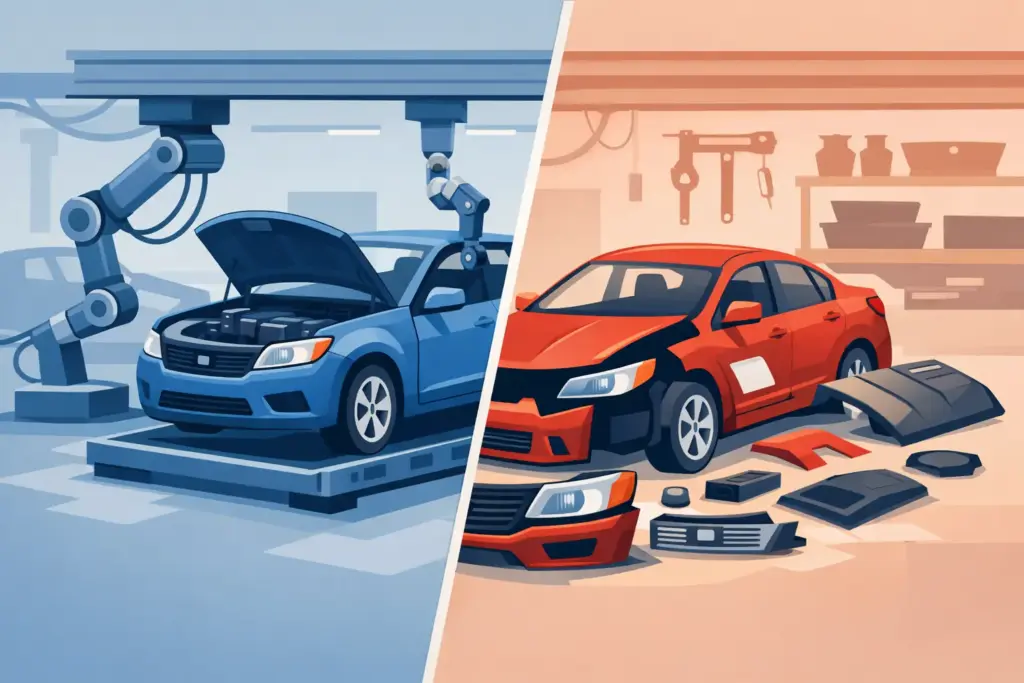
OEM stands for Original Equipment Manufacturer. An OEM collision part is made by, or for, the vehicle manufacturer and is designed for that specific make, model, trim level, and model year. It is the closest match to the part installed when the vehicle was built.
For example, an OEM bumper cover is designed around the vehicle’s original mounting points, body lines, sensors, lamps, and grille openings. An OEM headlight may be built to work with the vehicle’s specific wiring, aiming system, and safety technology. That does not mean every OEM part is automatically necessary for every repair, but it does mean the part begins with the manufacturer’s intended specifications.
OEM parts can be especially valuable when a repair involves advanced driver-assistance systems, structural components, complex lighting, high-end trim, or panels where a precise fit is essential. Modern vehicles may place radar sensors, cameras, parking sensors, wiring, and safety-related brackets behind a bumper cover or inside a grille. Small differences in shape or material can create extra work during installation and calibration.
The trade-off is cost. OEM parts are often more expensive than aftermarket alternatives, and some may need to be ordered. Availability can influence the repair timeline, particularly following major storms, widespread hail events, or supply shortages.
What Are Aftermarket Collision Parts?
Aftermarket collision parts are produced by companies other than the vehicle manufacturer. They can include bumper covers, fenders, hoods, grilles, lamps, mirrors, and other replacement components. Quality varies by manufacturer, part type, and vehicle application.
A well-made aftermarket fender or bumper cover can be a practical option for certain repairs. These parts are commonly used in the collision industry because they may be more readily available and can reduce the overall cost of a repair. For an older daily driver with straightforward cosmetic damage, a quality aftermarket panel may be a sensible choice.
Still, aftermarket does not mean identical. The part may require additional preparation, adjustment, or refinishing to achieve proper panel gaps and appearance. In some cases, it may not be appropriate for a particular vehicle or repair procedure. A professional body shop should evaluate the part after test-fitting it, not simply assume every replacement part will install the same way.
There are also industry certification programs that evaluate some aftermarket replacement parts for fit, material, and performance standards. Certification can be a useful factor, but it should not replace a repairer’s judgment or the manufacturer’s repair requirements.
OEM Versus Aftermarket Collision Parts: What Matters Most
Part selection should be based on more than the lowest line item on an estimate. The location of the damage and the technology on the vehicle matter just as much.
Fit, finish, and paint preparation
An OEM panel or bumper cover generally offers a predictable starting point for fit because it was engineered for the vehicle. That can matter when matching adjacent body lines, hood gaps, door gaps, or trim pieces. It can also matter when the vehicle has a premium finish where minor alignment differences are easier to notice.
Aftermarket parts can fit well, but they sometimes require more adjustment before painting and installation. A qualified technician checks fit before the final refinish process. Once a part is painted, correcting an issue becomes more time-consuming and costly.
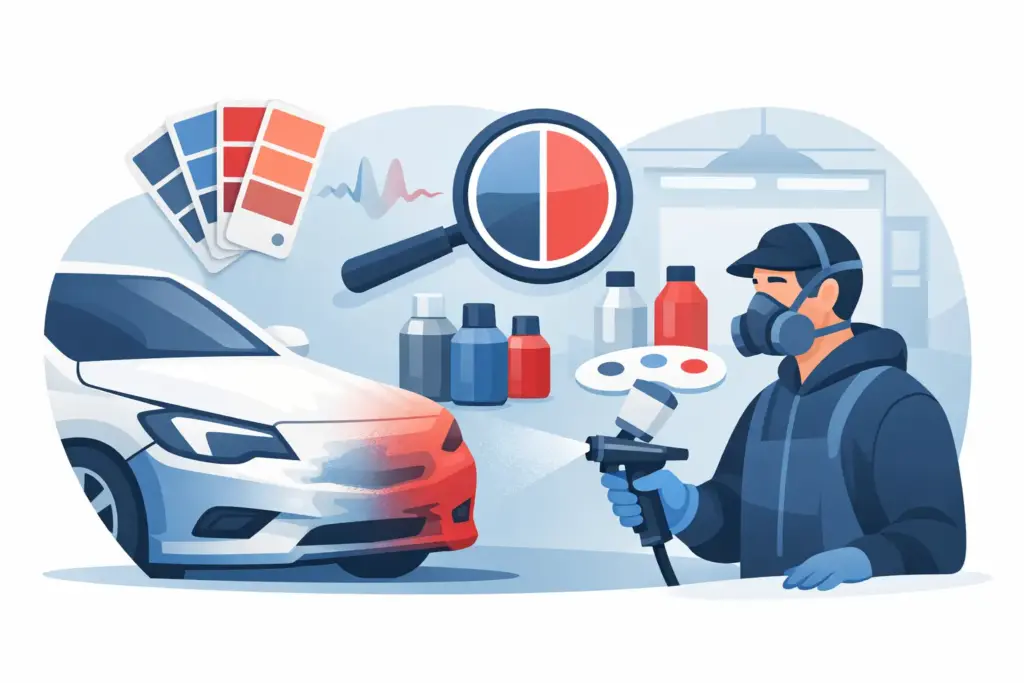
Paint quality is not determined solely by whether a part is OEM or aftermarket. Proper surface preparation, color matching, blending, spray technique, and curing are what create a finish that looks right beside the original panels.
Safety systems and repair procedures
This is where the decision can become more specific. A bumper cover may look like a cosmetic piece, but it can interact with sensors, brackets, absorbers, active grille shutters, and camera systems. A headlight can contain adaptive lighting features or electronics that require exact compatibility.
Vehicle manufacturers publish repair procedures that technicians use to determine what must be replaced, repaired, calibrated, or inspected after an impact. If a manufacturer procedure calls for an OEM part, a particular bracket, or a calibration step, that direction should be followed. Skipping it to save money can create problems that are not visible from the outside.
After repair, certain vehicles need an alignment, scan, or advanced driver-assistance system calibration. That work verifies systems such as lane-departure warnings, forward-collision alerts, and parking sensors are operating as intended. The correct part and the correct process go together.
Cost, insurance, and your estimate
Insurance policies and claim practices often influence whether OEM or aftermarket parts appear on an estimate. Many policies allow insurers to specify alternative parts when they are available and appropriate, especially for vehicles that are no longer new. Some policies include OEM-parts endorsements, while others do not.
Before authorizing repairs, ask what type of parts are listed and why. If you prefer OEM parts, ask whether your policy covers them, whether an OEM option is available, and what the price difference would be if you choose to pay the difference yourself. A clear conversation early in the process is easier than discovering the issue after parts have been ordered.
A good repair facility can communicate with the insurance company, document necessary operations, and explain your options in plain language. The goal is not to turn every estimate into a debate over part labels. It is to make sure the repair plan is complete, safe, and transparent.
Vehicle age and long-term plans
Your plans for the vehicle can shape the decision. On a newer vehicle, a leased vehicle, a luxury model, or a vehicle you expect to keep for many years, OEM parts may be worth stronger consideration for certain visible or technology-heavy repairs.
On an older vehicle with minor damage, a high-quality aftermarket component can help control out-of-pocket costs without compromising a sound repair. The best choice may also differ from one part to another. An OEM sensor bracket and headlight may be appropriate, while an aftermarket fender could be a reasonable option.
Questions to Ask Before Approving Collision Repairs
You do not need to be a collision expert to take an active role in the repair. Ask whether the estimate includes OEM, aftermarket, recycled, or reconditioned parts. Recycled parts come from another vehicle and can be a good option for certain components, but they should be inspected for condition and compatibility.
It also helps to ask whether your vehicle requires scanning, wheel alignment, sensor calibration, or manufacturer-specific repair procedures. If a replacement part does not fit correctly during test-fitting, ask how the shop will address it. These questions are not about second-guessing the technician. They help establish clear expectations for quality and communication.
At RWORKS, the conversation starts with the damage in front of us and the needs of the vehicle, not a one-size-fits-all answer. Our team helps San Antonio drivers understand their estimate, work through insurance questions, and stay informed as repairs move forward.
The Best Part Is the One That Supports a Proper Repair
There is no universal winner in OEM versus aftermarket collision parts. OEM may offer the most direct match for a complex repair, while a quality aftermarket part may be a smart, cost-conscious option for another. What matters is that the selected part fits properly, supports required safety systems, meets the repair plan, and is installed with care.
After an accident, you deserve more than a quick answer and a low number on an estimate. You deserve a repair team that explains the options, follows the right procedures, and treats your vehicle like the dependable part of your daily life that it is.