A collision can leave more behind than a cracked bumper or a dented door. Damage beneath the visible panels can affect how your vehicle drives, protects you, and holds its value. This structural vehicle repair guide explains what vehicle structure does, how professional repairs work, and what San Antonio drivers should ask before approving collision repairs.
What Structural Vehicle Damage Means
A vehicle’s structure is the framework that supports the body, suspension, engine components, and passenger cabin. Depending on the vehicle, that may include the unibody rails, frame rails, pillars, rocker panels, floor pan, crossmembers, and mounting points for suspension or drivetrain components.
Modern vehicles are designed to manage crash energy in specific ways. Crumple zones absorb force in a collision while the passenger compartment is intended to remain as protected as possible. That design helps save lives, but it also means damage is not always obvious from the outside.
A low-speed impact may only require bumper, paint, or minor body repair. A harder hit can shift a rail, wrinkle a floor pan, move a suspension mounting point, or alter the alignment of panels and safety systems. The difference matters. Cosmetic repairs restore appearance, while structural repairs restore the vehicle’s underlying geometry and safety performance.
Signs You May Need Structural Vehicle Repair
You do not need to diagnose the damage yourself. In fact, a complete inspection often requires measurements and disassembly that cannot be done in a driveway. Still, a few warning signs deserve prompt attention after a collision.
A vehicle that pulls to one side, has an off-center steering wheel, or wears tires unevenly may have alignment or suspension damage. Doors, hood, or trunk lids that no longer close evenly can point to shifted mounting areas or surrounding panel damage. New rattles, vibration, water leaks, warning lights, and gaps between body panels should also be checked.
Visual clues can be useful, too. Look for buckling around the trunk floor, ripples in the roof or rocker panels, wrinkled metal near the engine bay, or a bumper that sits noticeably uneven. These signs do not automatically mean the vehicle has major frame damage, but they are reason enough for a professional collision inspection.
Do not rely on the vehicle feeling drivable as proof that it is safe. Many structural issues allow a car or truck to move normally at first. The concern is whether it will align correctly, handle predictably, and protect occupants properly in a future crash.
How a Professional Structural Repair Is Performed
Quality structural repair starts with a written estimate and a thorough damage assessment, not a quick look at the bumper. A repair facility may use computerized measuring equipment to compare the vehicle’s current dimensions with manufacturer specifications. This identifies whether key points have moved and by how much.
Inspection and Blueprinting
The first estimate after an accident is often only the starting point. Once damaged parts are removed, technicians can see hidden damage to brackets, reinforcements, sensors, suspension components, and inner panels. This process is often called blueprinting.
If additional damage is found, the repair plan may change. That can be frustrating when you are waiting on your vehicle, but it is better to identify repair needs before reassembly than to cover up damage behind new parts. A reputable shop should explain what was found, why it changes the repair, and how insurance approval or direct-pay pricing will be handled.
Measuring, Pulling, and Repairing the Structure
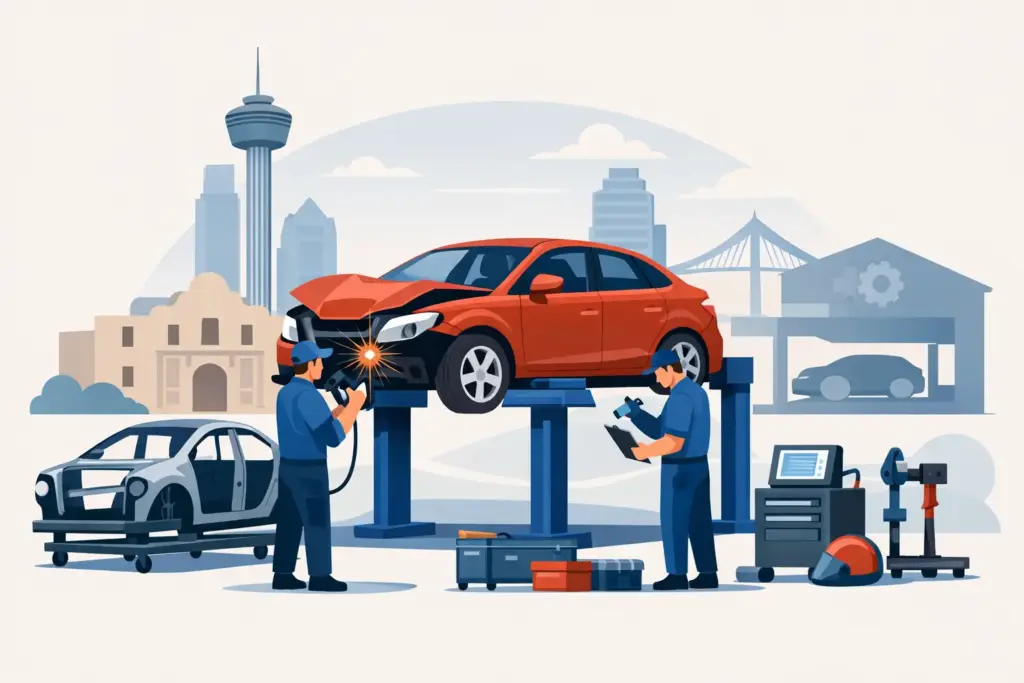
When structural points are out of specification, trained technicians use dedicated frame and measuring equipment to return them to the correct position. Controlled pulls are made based on measurement data, not guesswork. The objective is not simply to make body panels look straight. It is to restore the dimensions that allow the vehicle’s systems and panels to fit and function as designed.
Some components can be repaired within manufacturer procedures. Others must be replaced. High-strength steel, aluminum, and mixed-material construction have made this decision more technical than it was years ago. Improper heating, welding, or straightening can weaken certain materials, so repair methods must match the vehicle and the damaged part.
Mechanical, Safety, and Finish Work
Structural repair is usually connected to other work. Suspension and wheel alignment may be needed if an impact affected steering or mounting points. Advanced driver-assistance systems may require scanning, calibration, or both after repairs. Airbag sensors, cameras, radar components, and restraint-system parts need careful attention.
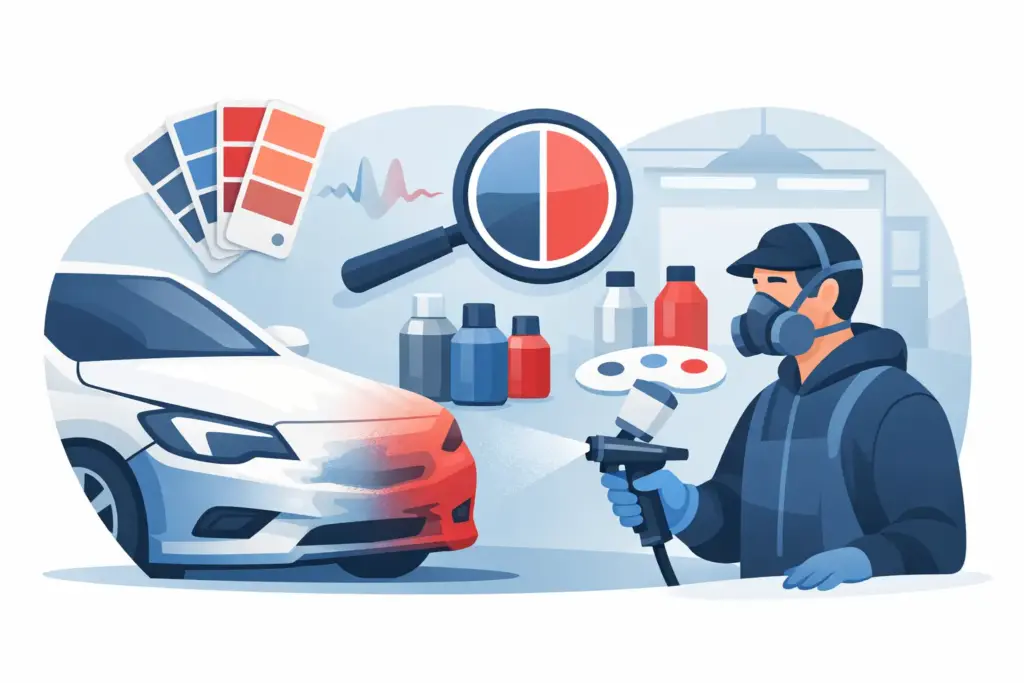
Only after the structure, mechanical components, and fitment are addressed should the vehicle move into body and paint work. Paint and panel repair are highly visible, but they should not be treated as the whole repair when collision damage reaches deeper areas.
Repair or Total Loss: What Determines the Outcome?
Not every structurally damaged vehicle is a total loss, and not every repairable vehicle should be repaired. Insurance companies generally compare the estimated repair cost with the vehicle’s actual cash value, state guidelines, and expected supplemental damage. The vehicle’s age, condition before the accident, mileage, and availability of parts can all affect the decision.
Structural damage does not automatically make a vehicle unsafe or beyond repair. When it can be restored according to proper procedures, measured accurately, and completed by qualified technicians, a repair may be appropriate. On the other hand, severe damage to the passenger compartment, extensive intrusion, or repair costs that exceed the vehicle’s value may lead to a total-loss decision.
For cash-pay repairs, the conversation is somewhat different. You may decide whether a repair makes financial sense for your situation, but safety-related work should not be reduced to a shortcut. Ask for a clear breakdown of necessary structural, mechanical, and cosmetic repairs so you can make an informed choice.
Questions to Ask Before Authorizing Repairs
The right repair shop should welcome questions, especially when an accident has disrupted your routine and created uncertainty. Ask whether the vehicle will be measured against manufacturer specifications and whether the shop will inspect for hidden damage after teardown.
You should also ask how the shop handles supplements with your insurer, whether suspension alignment and safety-system calibrations are included when needed, and what warranty applies to the repair. Clear answers are a sign that the shop has a process, not just a promise.
It is reasonable to ask for updates, too. Parts delays, insurer approvals, and added damage can affect the timeline. What matters is being told early and honestly. RWORKS helps San Antonio drivers through that process with collision repair, insurance-claim support, clear turnaround communication, and a lifetime warranty on qualifying repair work.
Why Accurate Repairs Matter After You Pick Up Your Vehicle
When you collect your vehicle, inspect the completed work in good light. Check that doors, hood, trunk, and liftgate open and close smoothly. Look at panel gaps, paint color consistency, trim fit, and warning lights. On the first drive, pay attention to steering feel, braking, vibration, and whether the vehicle tracks straight.
If something feels different, call the repair facility rather than waiting for a small issue to become a larger one. A post-repair concern may be simple to correct, but it deserves attention. Keep your repair documents, estimate, final invoice, and warranty information together for future service or resale records.
After a collision, the fastest-looking repair is not always the best repair. Choose the team that is willing to inspect beneath the surface, explain the plan in plain language, and stand behind the work long after the paint has dried.