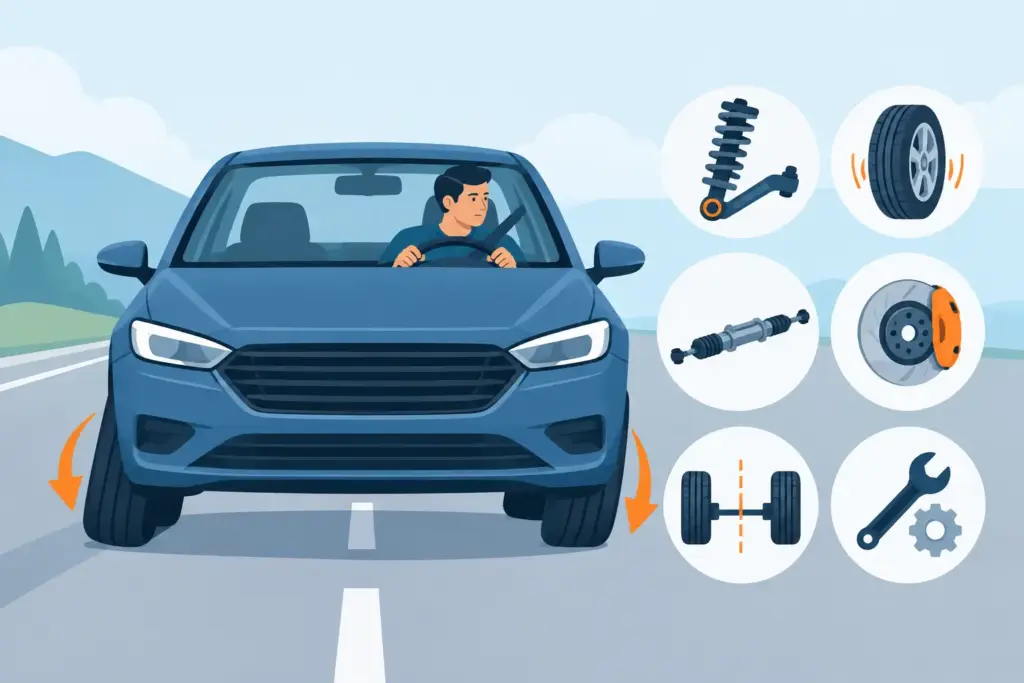
A steering pull is easy to dismiss at first. Maybe your car drifts slightly right on Loop 410, or you find yourself correcting the wheel on every straight stretch of road. But if you are wondering, why does steering pull, the answer can range from a simple tire-pressure issue to damage affecting your brakes, suspension, or wheel alignment.
The key is noticing when it happens. A vehicle that consistently pulls in one direction is telling you something has changed. Addressing it early can protect your tires, improve control, and help prevent a smaller repair from becoming a larger one.
Why Does Steering Pull to One Side?
Steering pull means the vehicle naturally moves left or right when you briefly loosen your grip on the wheel on a level, straight road. It is different from a light vibration, wandering, or the normal feeling of following grooves in worn pavement. The direction and timing of the pull give a repair technician useful clues about the cause.
A slight drift to the right can be normal on some roads because pavement is designed with a crown that sends rainwater toward the curb. That drift should be mild and should change when you drive on a road with a different slope. A strong, steady pull that remains on relatively flat pavement is not something to ignore.
Uneven Tire Pressure or Tire Damage
Tire pressure is one of the first things to check because it is common, inexpensive to correct, and directly affects how each tire meets the road. A tire that is significantly low can create extra rolling resistance and make the vehicle pull toward that side. Temperature swings, a slow leak, a puncture, or a damaged valve stem can all contribute.
Tire condition matters just as much. Uneven wear, separated belts, a sidewall bulge, or mismatched tires can change the way the vehicle tracks. Sometimes a tire can look acceptable from the outside while an internal issue causes a pull. If the pull began after hitting a pothole or curb, a tire inspection is especially worthwhile.
Check pressure when the tires are cold and use the pressure listed on the driver-side door placard, not the maximum pressure molded into the tire sidewall. If one tire repeatedly loses air, it needs more than a refill.
Wheel Alignment Is Off
Alignment is a leading cause of a persistent pull, particularly after a collision, curb strike, pothole impact, or suspension repair. Alignment is not simply making the steering wheel look straight. It is the adjustment of wheel angles so the tires point and contact the road as the vehicle manufacturer intended.
When those angles are out of specification, the vehicle may pull left or right, the steering wheel may sit off-center, and tire tread may wear much faster on one edge. Even a low-speed parking-lot impact can shift an alignment angle enough to change how the vehicle drives.
An alignment adjustment solves the problem only when the related parts are in good condition. If a bent component, worn bushing, or damaged control arm is causing the angle to shift, aligning the vehicle without repairing that issue may provide only a temporary improvement.
A Brake May Be Dragging
If your vehicle pulls mainly when you apply the brakes, the problem may be in the braking system rather than the alignment. A sticking caliper, seized slide pin, restricted brake hose, uneven pad wear, or contaminated brake component can make one wheel brake harder than the other.
A dragging brake can also cause the car to pull while cruising, often with a burning smell, excessive heat near one wheel, reduced fuel economy, or a vehicle that feels sluggish. Do not touch a wheel or brake component to check for heat after driving. Brakes can become hot enough to cause injury.
Brake-related pulling deserves prompt attention because braking control is a safety issue. The longer a brake drags, the more likely it is to damage pads, rotors, calipers, and other components.
Worn or Damaged Suspension and Steering Parts
Your suspension does more than soften bumps. Components such as shocks, struts, control arms, ball joints, tie rods, bushings, and wheel bearings help keep the tires positioned correctly under acceleration, braking, and turns. Wear in one of these parts can make the vehicle pull, wander, clunk, or feel unstable.
This is particularly common after an accident. The visible body damage may be minor, but an impact can bend or weaken parts behind the wheel. A vehicle can also develop a pull after severe potholes, road debris, or repeated driving on rough roads.
Warning signs that point toward suspension or steering damage include a pull that gets worse over bumps, a loose steering feel, knocking sounds while turning, uneven ride height, or tires that wear unevenly despite recent rotation. These symptoms need a complete inspection, not just a quick alignment check.
When a Steering Pull Is Most Noticeable
Pay attention to the pattern. A pull that occurs all the time points more often to tires, alignment, or suspension. A pull that appears only under braking raises concern about the brake system. A pull during acceleration can sometimes relate to drivetrain forces, worn mounts, or suspension geometry, especially on certain front-wheel-drive vehicles.
Wind, road grooves, heavy loads, and road crown can affect how a vehicle feels, so testing matters. On a safe, straight, lightly traveled road, keep both hands near the wheel and notice whether the vehicle requires repeated correction. Never take your hands completely off the wheel to test a pull.
If you recently installed new tires, the concern may be tire-related even if the tires are properly inflated. Tire construction varies, and a condition sometimes called tire conicity can cause a pull. A qualified shop can inspect the tires, rotate them in a diagnostic pattern when appropriate, and determine whether the pull follows a specific tire.
What You Can Check Before Scheduling Service
Start with a quick walk-around. Look for a visibly low tire, uneven tread, cuts, bulges, or an object lodged in the tire. Check tire pressures against the door-placard specification. Also think about when the problem began: after a collision, tire replacement, brake work, a pothole, or gradual wear.
Avoid trying to correct a pull by adjusting tie rods or suspension components at home. Modern vehicles often require precise measurements and calibration procedures, and incorrect adjustments can worsen tire wear or handling. A steering wheel that is crooked after an alignment also should not be treated as cosmetic. It can indicate the alignment was not finished correctly or that an underlying part needs attention.
When to Have the Vehicle Inspected Right Away
Schedule an inspection soon if the pull is strong, sudden, or worsening. The same is true if it is accompanied by brake noise, a burning odor, vibration, a loose steering wheel, a tire-pressure warning, uneven tire wear, or visible damage after an impact.
If the vehicle pulls sharply during braking, feels difficult to control, or has a damaged tire, avoid unnecessary driving until it has been checked. Those symptoms can affect your ability to stop or stay in your lane when traffic changes quickly.
A proper diagnosis should include a tire and wheel check, brake inspection, evaluation of steering and suspension components, and alignment measurements when appropriate. At RWORKS, our team can inspect accident-related damage and mechanical alignment concerns, explain what we find clearly, and help you make a repair decision based on the condition of your vehicle.
A steering pull rarely fixes itself. Catching the cause early gives you a better chance to protect your tires, preserve safe handling, and get back to driving San Antonio roads with confidence.