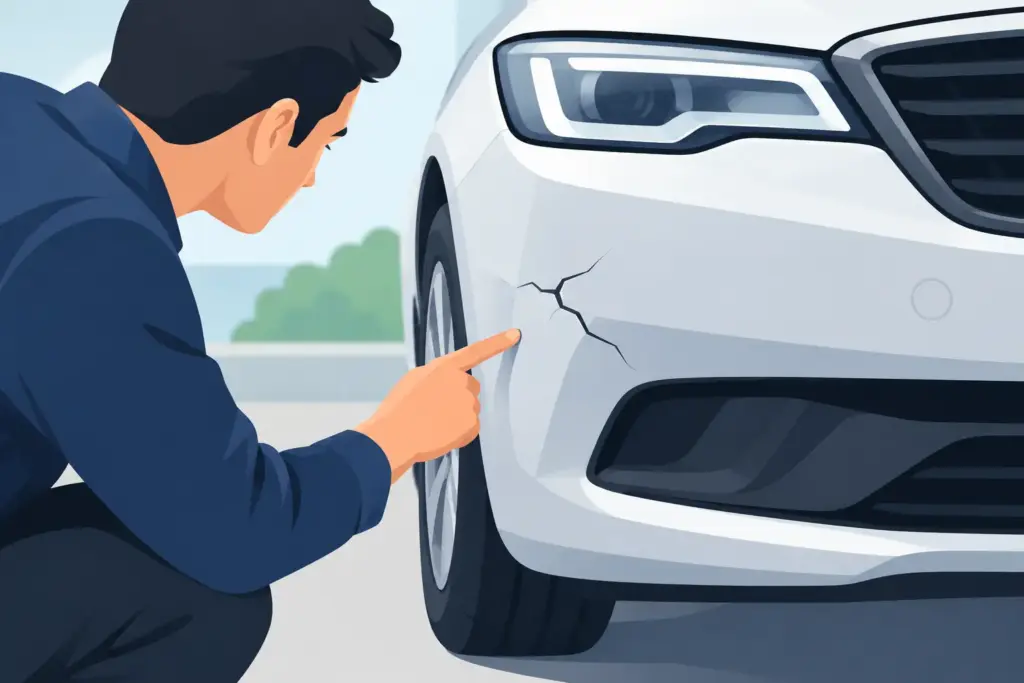
A bumper can look like it has a small scratch after a parking-lot bump, only to reveal a crack a few days later when dirt settles into the damage. Knowing how to identify bumper cracks early can help you avoid a larger repair, protect the appearance of your vehicle, and catch damage that may be affecting more than the bumper cover.
Most modern bumpers are made from flexible plastic, not metal. That makes them good at absorbing minor impacts, but it also means cracks can hide beneath paint, around sensors, or behind areas that appear to have popped back into place. A careful look now can save you from guessing later.
Start With a Clean, Well-Lit Inspection
Wash the bumper first, especially if it is covered in road dust, mud, or wax. Dirt can settle inside a crack and make it look deeper than it is, while a dirty surface can also hide a fine split in the paint or plastic. Dry the area thoroughly before inspecting it.
Park in bright daylight if possible. If you are checking the bumper in a garage, use a flashlight and aim the beam across the surface from the side rather than directly at it. Side lighting makes dents, paint stress, and hairline cracks easier to see because they create shadows or interrupt the reflection in the finish.
Look at the bumper from several angles. A crack may be nearly invisible straight on but stand out when you crouch down or view the panel from the side. Compare the damaged area with the same location on the opposite side of the vehicle. Uneven gaps, ripples, or a section that sits lower than the other side can point to impact damage beyond a simple scuff.
How to Identify Bumper Cracks by Their Appearance
A true bumper crack is a separation in the paint, plastic, or both. It may appear as a thin line, a split with rough edges, or a small opening that flexes when the bumper is gently pressed. The location, shape, and depth of that line tell a story about the impact.
Hairline cracks are often the first sign people miss. These are narrow lines in the clear coat or paint, usually near a corner, crease, grille opening, parking sensor, or mounting point. They can look like a faint scratch at first. Run a clean fingernail lightly across the line. If your nail catches, or if the line has a sharp broken edge, it may be more than a surface mark.
A crack in the plastic often looks darker than the surrounding paint because the unpainted material underneath is showing. You may see a black or gray line, especially on a painted bumper cover. The edges can look slightly raised, separated, or white from stress. On unpainted black plastic trim, a crack may show as a pale, chalky line with a visible split.
Spiderweb cracking is another warning sign. Several fine lines spreading outward from one impact point often mean the finish has been stressed, even if the bumper has not fully separated. This is common after a low-speed collision, a trailer hitch contact, or a bump into a curb or parking barrier.
Do not confuse a crack with paint transfer. Paint transfer sits on top of your vehicle’s finish and may look like a streak or colored scuff from another car, pole, or wall. It usually has soft edges and does not create a break in the bumper material. A professional can determine whether the mark can be polished out or whether the paint and plastic underneath have been damaged.
Check for Signs the Damage Is Deeper
The visible crack is not always the whole problem. Bumper covers attach to brackets, retainers, clips, absorbers, and reinforcement components that can shift or break during an impact. A bumper that looks mostly normal but no longer fits correctly deserves a closer inspection.
Pay attention to gaps between the bumper and the hood, fender, headlight, or taillight. A new gap, an uneven body line, or a corner that keeps coming loose can mean a mounting tab or retainer is damaged. These issues are common after someone backs into a post or another vehicle touches the bumper in traffic.
Gently press around the damaged area without forcing it. A healthy bumper cover has some flex, but it should not rattle, cave inward, or move away from the body. If you hear clicking, feel loose hardware, or notice a section that will not stay aligned, the repair may require more than filling and painting a crack.
Also look for changes in nearby equipment. Many newer vehicles have parking sensors, cameras, radar units, grille shutters, fog lights, or blind-spot components in or near the bumper. A warning light, a sensor that beeps inconsistently, a camera view that looks off-center, or a loose lamp should be checked promptly. A cosmetic crack may be one part of a repair that also requires proper component inspection and calibration.
When a Small Crack Can Wait, and When It Cannot
Not every bumper crack creates an emergency. A short, stable crack in an outer bumper cover may not affect how the vehicle drives. Still, leaving it alone has trade-offs. Moisture and debris can work into the damaged finish, the crack can spread with temperature changes and vibration, and a small repair can become more involved once the plastic begins to separate.
A prompt repair is especially wise when the crack is near an edge, mounting point, sensor, grille opening, or light. Those areas flex more than a flat section of bumper and are more likely to worsen. The same is true if the bumper is loose, the crack has sharp edges, a piece is missing, or the damage occurred in a collision strong enough to move another panel.
If your bumper has been pushed into a tire, is rubbing against a wheel, or is hanging low enough to interfere with driving, do not wait. Those conditions can create additional damage and should be assessed before you get back on the road.
Avoid the Quick Fix That Hides the Problem
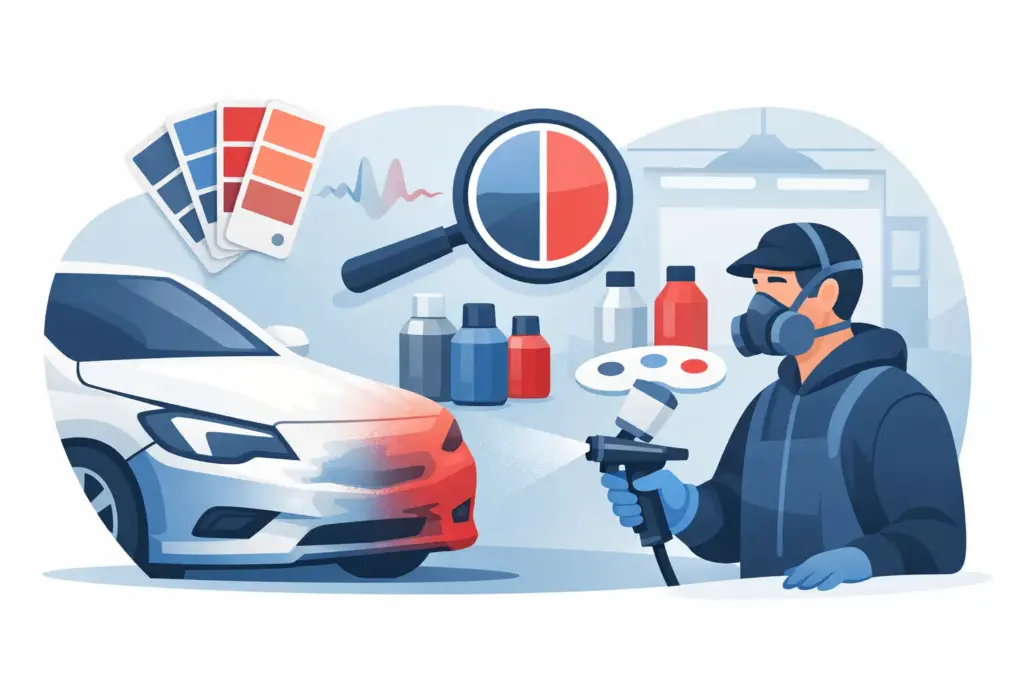
Tape, touch-up paint, and adhesive may make a crack less noticeable for a short time, but they rarely solve the underlying issue. A bumper must be cleaned, prepared, repaired with materials suited to its plastic type, reshaped if needed, and refinished so the repair holds up and matches the rest of the vehicle.
The right repair depends on the crack. Some bumper covers can be professionally plastic-welded or repaired, then painted. Others are too torn, distorted, or damaged at critical mounting points to be a good candidate for repair. Replacement may be the better value when it produces a safer fit and a more durable result.
This is also why a repair estimate should include an inspection behind the bumper cover when the impact was more than a light scrape. What looks like a small crack on the outside can involve broken retainers, an absorber, or damage to parts hidden behind the cover. Insurance may cover collision-related repairs, and a shop experienced with claims can help document the damage clearly.
Get a Professional Opinion When the Damage Is Unclear
Photos can be useful for an initial estimate, but they cannot always show whether a crack reaches through the plastic or whether the bumper is properly secured. A hands-on inspection is the clearest way to separate minor cosmetic damage from a repair that affects fit, safety features, or surrounding panels.
For San Antonio drivers, RWORKS can inspect bumper damage, explain the repair options in plain language, and help with the insurance process when a collision is involved. Clear communication matters when you are deciding whether to repair a small crack now or address a more extensive issue.
A bumper is one of the first parts of your vehicle to meet the unexpected. If a line looks suspicious, a panel no longer sits right, or a sensor starts acting differently after an impact, trust what you are seeing and have it checked before that small crack has time to become a bigger problem.