A steering wheel that sits crooked after you hit a pothole is frustrating. A vibration that starts around highway speed can be even more unsettling. Although they are often discussed together, wheel alignment vs balancing involves two very different services, with different warning signs and different effects on your vehicle.
Knowing which issue you may have can help you explain the problem clearly, protect your tires, and avoid putting off a repair that affects how your car drives. For San Antonio drivers, where rough roads, construction zones, curbs, and sudden potholes are part of daily travel, both services can matter more often than expected.
Wheel Alignment vs Balancing: The Key Difference
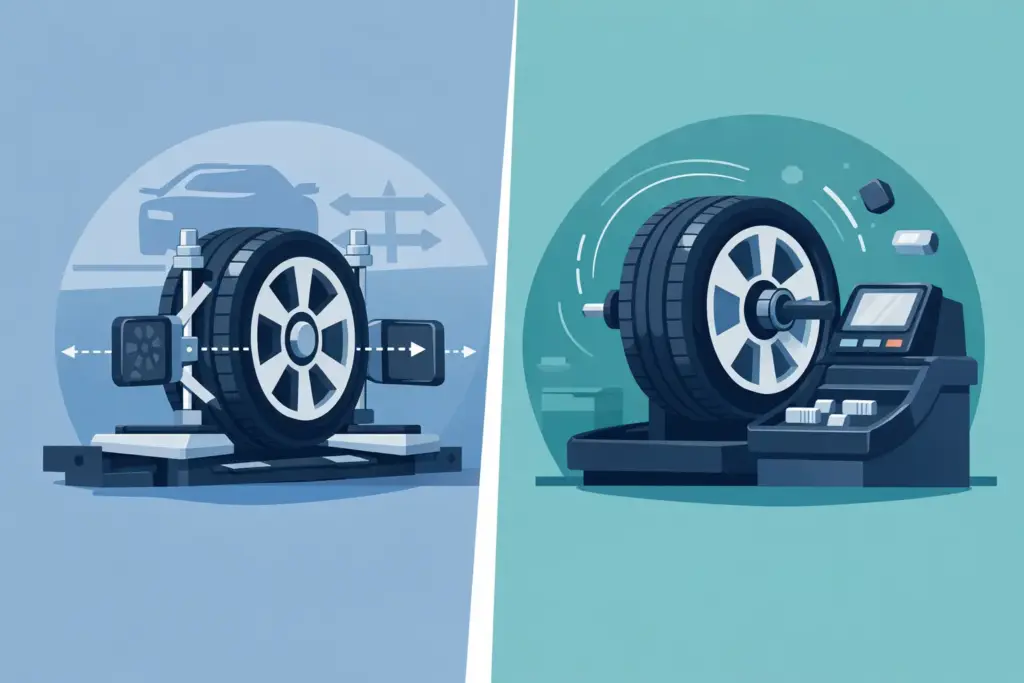
Wheel alignment adjusts the angles of the wheels so they point and sit correctly in relation to the vehicle and the road. Tire balancing corrects uneven weight distribution in the tire and wheel assembly so it spins smoothly.
Put simply, alignment affects the direction your tires travel. Balancing affects how smoothly they rotate.
Both services protect tire life and improve the driving experience, but one will not fix the other. Balancing a tire will not correct a vehicle that pulls to the right, and an alignment will not usually eliminate a steering wheel vibration caused by an out-of-balance wheel.
What Wheel Alignment Does
During an alignment, a technician measures and adjusts the suspension angles that determine how each wheel meets the road. The most common measurements are toe, camber, and caster.
Toe refers to whether tires point slightly inward or outward when viewed from above. Camber is the inward or outward tilt of the tire when viewed from the front. Caster affects steering stability and the way the steering wheel returns after a turn. These settings must work together within your vehicle manufacturer’s specifications.
Proper alignment helps your vehicle track straight, respond predictably, and wear tires evenly. It is especially relevant after a collision, a hard impact with a pothole or curb, suspension work, or the installation of new steering and suspension components.
What Tire Balancing Does
A tire and wheel are not naturally perfect in weight distribution. Even a small imbalance becomes more noticeable as the wheel spins faster. During balancing, the wheel is mounted on specialized equipment that identifies where weight needs to be added. A technician then applies small wheel weights in the appropriate locations.
The goal is a smooth rotation at all speeds. This service is commonly performed when new tires are installed, when tires are repaired or remounted, or when a driver reports vibration at highway speeds.
Balancing does not change the angles of your wheels or correct a bent suspension part. It focuses only on the rotating tire-and-wheel assembly.
Signs You May Need an Alignment
The most recognizable alignment symptom is a vehicle that drifts or pulls to one side on a reasonably flat road. A slight pull can also be caused by road crown, tire pressure differences, or a tire issue, so it takes a proper inspection to identify the source. Still, a consistent pull is worth addressing.
An off-center steering wheel is another common clue. If you are driving straight but the steering wheel is noticeably turned left or right, alignment may be needed. Your vehicle may still feel manageable, but continuing to drive it that way can wear tires faster.
Uneven tire wear is often the costliest warning sign. Wear concentrated on the inside or outside shoulder of the tire may point to an alignment angle problem. Feathered tread, which feels smooth in one direction and sharp in the other when you run your hand across it, can also suggest incorrect toe settings.
You may need an alignment after a collision even when the exterior damage appears minor. A low-speed curb strike, damaged wheel, or impact near a front corner can affect steering and suspension components. Some issues are visible, while others require measurements to uncover.
Signs You May Need Tire Balancing
A vibration through the steering wheel at certain speeds is the classic sign of a front wheel balance issue. If the vibration is felt more through the seat or floor, the rear wheels may be involved. The shake often becomes most obvious at highway speed, though the exact speed can vary.
Vibration can also come from a damaged tire, bent wheel, worn suspension component, or brake concern. That is why it is better to have the cause inspected rather than assuming a balance will solve every shake.
If you recently had new tires installed and a vibration appeared soon afterward, balancing should be checked. The same applies after a tire repair, especially if the tire was removed from the wheel and remounted. A wheel can also lose a balance weight over time due to road debris, weather, or contact with a curb.
Why Alignment and Balancing Are Often Needed Together
Alignment and balancing are separate services, but they support the same outcome: a vehicle that drives comfortably and gets the most life from its tires. A driver may need both after replacing tires, repairing collision damage, or correcting a suspension issue.
For example, a hard pothole impact can knock a wheel weight loose and bend or shift a suspension component. In that situation, balancing alone may reduce vibration but leave the vehicle pulling or wearing tires unevenly. An alignment alone may straighten the steering wheel but leave an annoying high-speed shake.
There is also a practical order to repairs. If a technician finds worn tie rods, damaged control arms, a bent wheel, or a loose suspension component, those items should be repaired before final alignment. Aligning a vehicle with worn or damaged parts can produce unreliable results because the angles may change again as the vehicle moves.
What Happens During a Professional Inspection
A thorough visit should start with the concern you are noticing: a pull, vibration, uneven tire wear, an off-center wheel, or a recent impact. Clear details help the technician narrow down the cause. Mention when the problem happens, what speeds make it worse, and whether it began after a pothole, curb strike, tire replacement, or accident.
The inspection should include tire condition and pressure, wheel condition, steering and suspension components, and visible signs of impact damage. If alignment is needed, computerized equipment measures the existing angles and compares them with manufacturer specifications. If the issue is balance-related, each tire and wheel assembly is checked on a balancing machine.
Sometimes the answer is not as simple as either service. A bent wheel, separated tire belt, damaged tire sidewall, or worn strut can mimic a balance issue. A pulling concern may be related to a brake that is not releasing correctly. Honest diagnosis matters because it prevents you from paying for a service that does not solve the real problem.
When Should You Schedule Service?
There is no single mileage interval that fits every vehicle. Many drivers choose an alignment check with new tires, after major suspension repairs, or whenever steering behavior changes. It is also wise to schedule an inspection after a meaningful pothole or curb impact, even if the vehicle seems mostly normal.
Tire balancing is commonly handled with tire installation and repair, but it should also be checked when you feel a new vibration. Do not wait for the vibration to become severe. Aside from making the ride uncomfortable, an imbalance can add stress to tires, wheels, bearings, and suspension components over time.
If your vehicle has been in a collision, ask for a complete assessment rather than focusing only on visible body damage. RWORKS can inspect collision-related suspension and alignment concerns as part of a broader repair plan, helping make sure the vehicle looks right and drives right when the work is complete.
Protecting Your Tires and Your Confidence Behind the Wheel
Tires are a significant investment, and uneven wear can shorten their life long before the tread should be gone. More importantly, steering pull and vibration can make everyday driving less predictable, particularly during rain, heavy traffic, or highway travel.
Pay attention to changes in how your vehicle feels. A small vibration, a steering wheel that no longer sits straight, or a new pull after a rough road encounter is your vehicle asking for a closer look. Scheduling an inspection early gives you the best chance to correct the problem before it turns into premature tire replacement or a larger suspension repair.



Pingback: Post Collision ADAS Calibration Explained Clearly - R Works