
A repair estimate can look like a wall of codes, labor hours, and dollar amounts when all you want to know is whether your vehicle will be repaired correctly. If you have been searching for how to read repair estimate paperwork, start with this: an estimate is a repair plan and a pricing document. It should show what the shop can see now, what it expects to repair or replace, and what the work is expected to cost.
A clear estimate gives you a better conversation with your repair shop and your insurance company. It also helps you spot the difference between a legitimate change in repair scope and a question that deserves a straightforward answer.
Start with the vehicle and claim details
Before reviewing the repair lines, verify the information at the top of the estimate. Check the year, make, model, VIN, license plate, mileage, and date of loss. A simple error here can create problems later, especially when ordering parts or matching the vehicle’s options.
If insurance is involved, you may also see a claim number, insurer name, adjuster information, and policyholder details. These fields identify the file, but they do not necessarily mean the insurance company has approved every line item. An insurer’s first estimate is often based on visible damage only.
Also look for the estimate date and expiration language. Parts pricing and availability can change, particularly for newer vehicles, trucks, specialty trim packages, and vehicles with advanced safety equipment.
How to read a repair estimate line by line
Most collision repair estimates are organized by vehicle area, such as the front bumper, left front door, quarter panel, suspension, or roof. Under each section, you will find repair operations. The format varies by estimating system, but the categories are usually similar.
Repair, replace, and refinish
The key action words tell you what the technician plans to do.
Repair means the existing part can likely be restored. For example, a dented fender may be repaired rather than replaced if the metal, mounting points, and safety-related structure remain sound. Repairing a part can control cost and preserve the original component, but only when it can be returned to proper condition.
Replace means the part should be removed and a new or alternative replacement part installed. Replacement may be necessary because of cracks, severe deformation, broken mounting tabs, corrosion, or manufacturer repair restrictions.
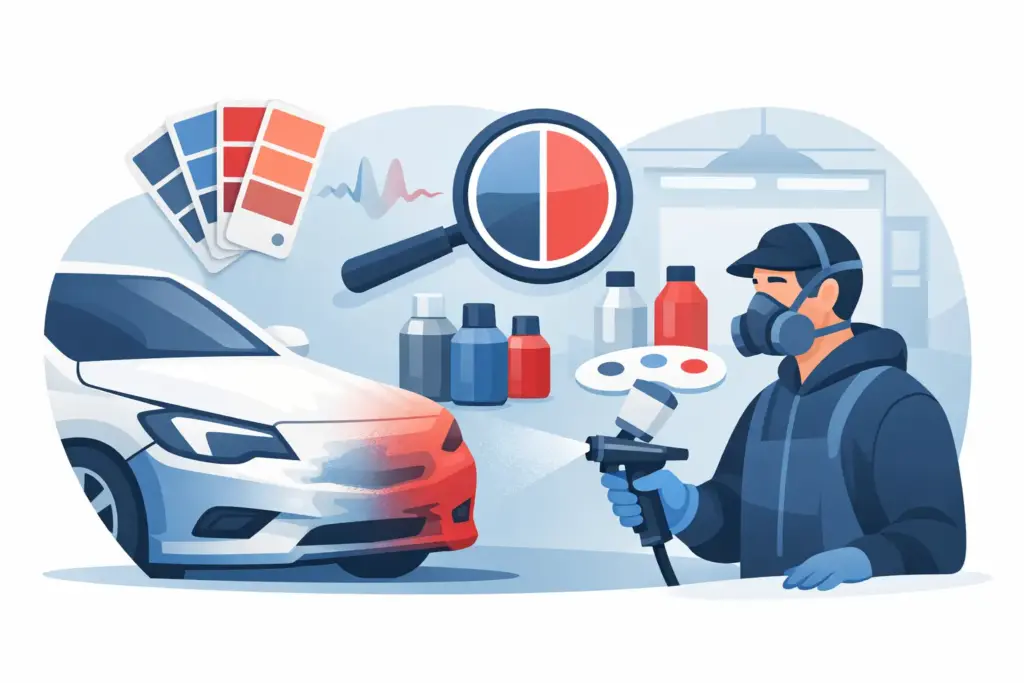
Refinish refers to paint preparation, color application, clear coat, and related work. A refinish line may apply to a repaired panel, a replacement panel, or a neighboring panel that needs color blending. Blending is not cosmetic overcharging. It is often the practical way to make a repaired area match the surrounding factory finish, particularly with metallic, pearl, and tri-coat colors.
Labor hours are not calendar days
Each repair operation often includes a number of labor hours and a labor rate. You may see separate rates for body labor, paint labor, mechanical labor, frame work, or glass work. The total is calculated by multiplying the listed operation time by that department’s hourly rate.
Those hours are not a promise that your vehicle will be ready in that number of hours. A 20-hour estimate does not mean the car will be finished in two and a half business days. Repair time also depends on parts arrival, insurance approvals, teardown findings, paint curing, calibration scheduling, quality-control checks, and shop workload.
Ask the shop for an expected timeline based on the actual repair process, not just the labor total. A dependable shop should explain what could affect that date and provide updates if conditions change.
Parts types and why they matter
The parts section should identify what is being installed. Common labels include OEM, aftermarket, recycled, and reconditioned.
OEM parts are produced by or for the vehicle manufacturer. They may be preferred or required in certain repairs, especially when fit, electronics, sensors, structural integrity, or warranty requirements are a concern. Whether insurance pays for OEM parts depends on your policy, vehicle age, and claim circumstances.
Aftermarket parts are made by companies other than the original manufacturer. Quality varies by part and supplier. In many cases, they are a cost-effective option, but fit and finish should be evaluated carefully.
Recycled parts, sometimes called used or LKQ parts, come from another vehicle and are commonly used for items such as doors, wheels, lamps, or body panels. They can be a reasonable choice when condition, color, and compatibility are confirmed. Reconditioned parts have been restored for reuse.
There is no single right answer for every vehicle. The best choice depends on the damaged component, your insurer’s guidelines, availability, safety considerations, and your preferences. If the estimate uses a part type you do not understand, ask what is being used and why.
Look beyond the visible damage
An estimate written before disassembly is an informed starting point, not an X-ray of the vehicle. Damage behind a bumper cover, inside a door, beneath trim, or around suspension components may not be visible until the vehicle is taken apart.
That is why supplements are common in collision repair. A supplement is an additional estimate submitted after the shop documents newly discovered damage, required repair procedures, updated parts pricing, or work that could not reasonably be identified at the first inspection.
A supplement is not automatically a red flag. The question is whether the added work is documented and necessary. Your shop should explain what was found, how it affects the repair, and whether it changes your out-of-pocket responsibility. Your insurance company may need to review and approve the supplement before payment is issued.
Modern vehicles also make hidden work more likely. Bumpers and mirrors can contain cameras, radar sensors, blind-spot monitoring components, and parking sensors. Repairs may require diagnostic scans, calibrations, aiming procedures, or wheel alignment to confirm those systems function as intended. These items can appear technical on an estimate, but they are often essential to restoring safe operation.
Understand the totals at the bottom
The bottom section usually separates parts, labor, paint materials, sublet work, fees, taxes, and your deductible. Review each one before focusing only on the final total.
Paint and materials charges cover items used during refinishing, such as primer, masking products, abrasives, color materials, clear coat, and related supplies. Sublet work refers to work performed by a qualified outside provider, such as glass replacement, alignment, programming, calibration, or specialty mechanical services.
Your deductible is the amount you agreed to pay under your insurance policy before coverage applies. It is not an extra fee created by the body shop. If your deductible is $500, that amount is generally your responsibility even when the insurer pays the rest of the covered repair.
For customer-pay repairs, ask whether the estimate includes sales tax, diagnostic fees, parts shipping, and any anticipated additional procedures. For insurance claims, ask whether the displayed total is the shop’s estimate, the insurer’s approved amount, or a total that includes pending supplements.
Questions worth asking before you authorize repairs
You do not need to become an estimator to make an informed decision. You do need clear answers. Before approving work, ask whether the estimate includes all visible damage, what parts types are planned, whether scans or calibrations may be needed, and whether a supplement is likely after teardown.
It is also reasonable to ask how the shop handles insurance communication, how often you will receive status updates, and what warranty applies to the repair. Keep a copy of the estimate, authorization form, insurer estimate, and any supplements. These documents make it easier to follow the repair from first inspection through final delivery.
At RWORKS, we believe estimates should make customers feel informed, not pressured. A good repair conversation is plainspoken: what was damaged, what needs to happen next, what insurance is handling, and when you can expect an update.
A lower estimate is not always the better repair
Comparing estimates can be useful, but make sure you are comparing the same repair plan. One estimate may include bumper replacement, sensor calibration, blending, and alignment, while another may only list a cosmetic repair. The lower total may reflect fewer operations, different parts, or damage that has not yet been found.
The better question is not simply, “Which estimate costs less?” Ask whether the estimate accounts for the vehicle’s damage, safety systems, appearance, and manufacturer-required procedures. The right repair should restore your vehicle properly, not just make the damage less noticeable.
When you understand the estimate, you are in a stronger position to approve repairs with confidence. Bring your questions to the shop before work begins, and choose a repair partner that is willing to answer them clearly.