How to Remove Scratches From Car Paint: DIY Methods and When to Call a Professional
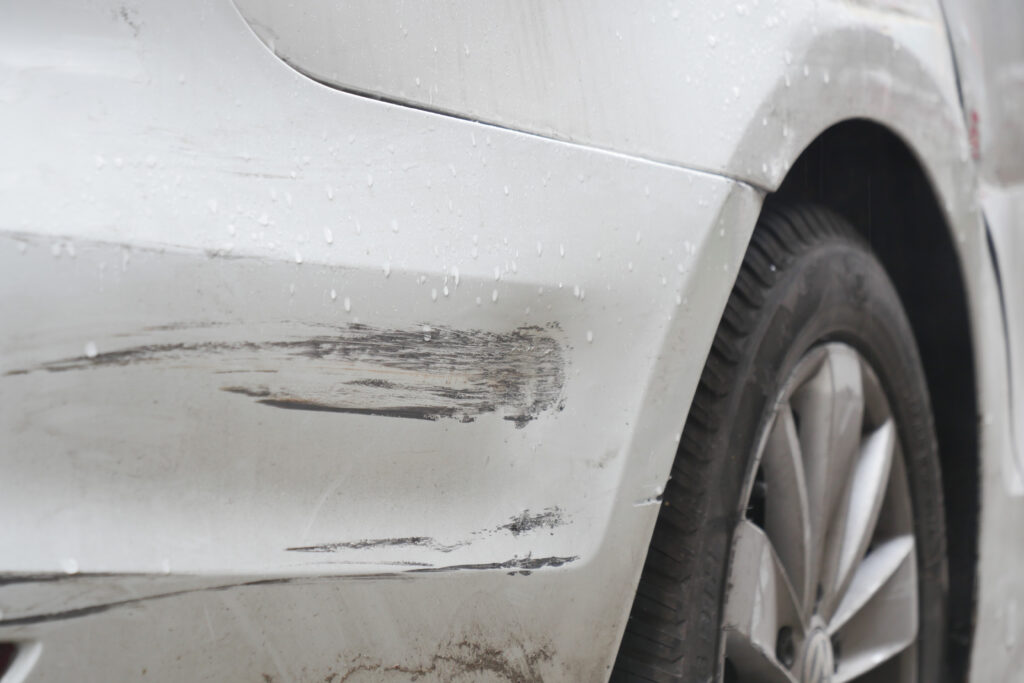
Scratches are one of the most common—and frustrating—types of cosmetic damage a vehicle can develop. A shopping cart, tree branch, car door, fingernail around the handle, or even improper washing can leave visible marks in your vehicle’s finish.
If you’re wondering how to remove scratches from car paint, the right solution depends on how deep the scratch actually is.
Some light scratches can be polished out at home with relatively little effort. Deeper scratches that penetrate the clear coat or paint layers usually require professional auto body repair to restore the finish correctly.
In this guide, we’ll explain how to identify different types of scratches, which DIY methods may work, and when professional paint repair is the better option.
Can You Remove Scratches From Car Paint?
Yes, many scratches can be removed or significantly reduced.
However, automotive paint isn’t just one layer. Most modern vehicles have several layers protecting the metal underneath:
- Clear coat – The transparent protective outer layer.
- Base coat – The colored paint that gives your vehicle its appearance.
- Primer – Helps the paint adhere and protects the underlying surface.
- Metal or body panel – The vehicle’s actual exterior panel.
How you repair a scratch depends largely on which of these layers has been damaged.
A scratch that only affects the clear coat may polish out almost completely. A scratch that exposes primer or bare metal generally requires paint work.
How to Tell How Deep a Car Scratch Is
Before attempting a repair, inspect the scratch carefully.
Try the Fingernail Test
Lightly run your fingernail across the scratch.
If your fingernail doesn’t catch, the damage is probably limited to the clear coat and may respond well to polishing.
If your nail catches slightly, the scratch may extend deeper into the clear coat or paint.
If the scratch clearly exposes a different color, gray primer, or bare metal, polishing alone will not repair it.
Look at the Color of the Scratch
The appearance can also give you clues.
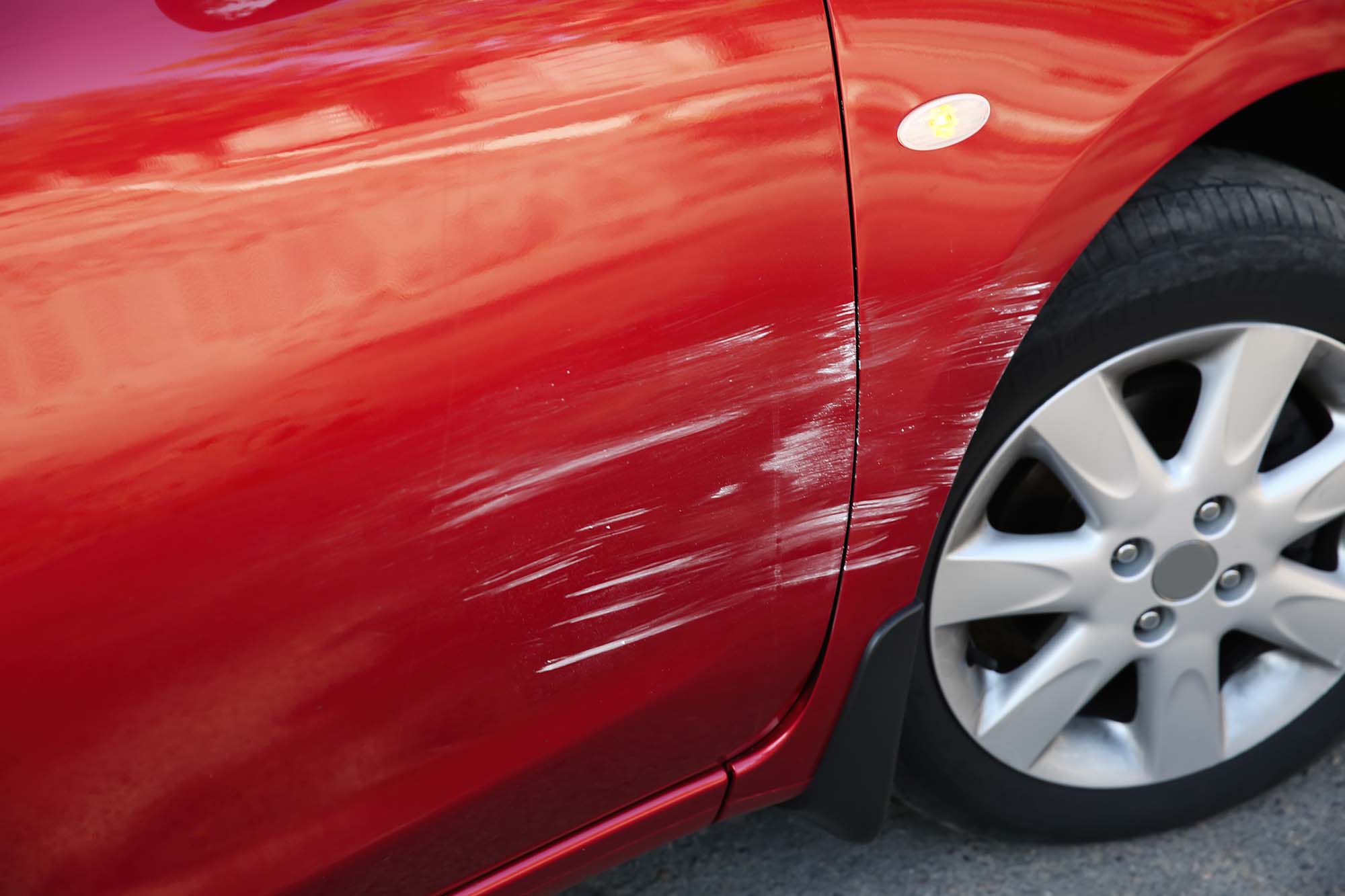
A white or hazy line may simply be clear-coat damage.
If you can see a different color underneath your vehicle’s paint, the scratch has likely penetrated the base coat.
If you see exposed metal, repair should be addressed sooner rather than later because the damaged area may become vulnerable to corrosion.
How to Remove Light Scratches From Car Paint
If the scratch is limited to the clear coat, you may be able to remove it yourself.
Step 1: Wash the Area
Always start with a clean surface.
Wash the scratched area with automotive soap and water to remove:
- Dirt
- Dust
- Road grime
- Wax
- Debris
Never polish a dirty vehicle. Rubbing dirt against the paint can create additional scratches.
Dry the area with a clean microfiber towel.
Step 2: Inspect the Scratch
Look closely at the damage under good lighting.
Sometimes what appears to be a scratch is actually paint transfer from another vehicle, shopping cart, garage wall, or object.
Paint transfer may be much easier to remove than an actual scratch.
Step 3: Use a Scratch Remover or Polishing Compound
Apply a small amount of automotive scratch remover or polishing compound to a clean microfiber applicator.
Work the product gently over the scratched area according to the manufacturer’s directions.
The polishing compound removes an extremely thin portion of the surrounding clear coat, helping level the surface and make the scratch less visible.
Do not aggressively scrub the area.
More pressure isn’t necessarily better. Excessive polishing can remove too much clear coat and create additional damage.
Step 4: Wipe and Inspect
Use a clean microfiber towel to remove the remaining polish.
Inspect the scratch from several angles.
You may need another light application, but avoid repeatedly polishing one area without knowing how much clear coat remains.
Step 5: Protect the Paint
Once you’re satisfied with the result, apply automotive wax or paint sealant.
Polishing removes some existing protection from the surface, so adding protection afterward is important.
Can You Remove Car Scratches With Toothpaste?
You’ve probably seen videos suggesting toothpaste can remove scratches from car paint.
Technically, toothpaste contains mild abrasives, which is why it sometimes makes extremely fine surface marks appear less noticeable.
However, toothpaste is not designed for automotive paint.
A proper automotive polishing compound is a much better choice because it is specifically formulated for vehicle finishes.
Using random household products can create uneven results, haze the finish, or make the damaged area more noticeable.
Can WD-40 Remove Scratches From Car Paint?
WD-40 may temporarily make certain light scratches appear less visible because it changes how light reflects off the surface.
It does not actually repair the damaged paint.
Once the product washes away, the scratch will normally still be there.
For lasting results, use automotive products designed specifically for paint correction or have the damage professionally repaired.
How to Remove Paint Transfer From a Car
Sometimes another object leaves material on top of your vehicle’s clear coat rather than scratching through it.
This often happens after:
- Minor parking lot contact
- Bumper rubbing
- Shopping cart impacts
- Garage scrapes
- Contact with painted posts
Start by washing the area thoroughly.
An automotive detailing clay, paint-safe cleaner, or light polishing compound may remove transferred paint.
Be cautious about using strong solvents because they can damage your vehicle’s clear coat.
If you aren’t sure whether you’re looking at paint transfer or actual paint damage, an auto body professional can usually determine the difference quickly.
How to Fix Deeper Scratches in Car Paint
Once a scratch penetrates the clear coat and reaches the colored base coat, repair becomes more complicated.
You may see online tutorials recommending touch-up paint.
Touch-up paint can help protect the damaged area and make a scratch less noticeable, but matching the surrounding factory finish perfectly can be difficult.
A proper professional repair may involve:
- Cleaning and preparing the damaged area
- Sanding or feathering the scratch
- Applying primer when necessary
- Color matching the vehicle
- Applying base coat
- Applying clear coat
- Blending the new finish
- Polishing the repaired area
Professional paint matching is especially important on metallic, pearl, tri-coat, or older paint finishes.
What If the Scratch Goes Down to Bare Metal?
A scratch exposing bare metal should not be ignored.
Once the protective paint layers are gone, moisture and environmental contaminants can reach the metal underneath.
Over time, corrosion may develop.
Repairing a relatively small scratch now may prevent a much larger body repair later.
If you see exposed metal, professional repair is usually the safest choice.
Can You Buff Out Every Car Scratch?
No.
The phrase “buff it out” gets used for almost every paint defect, but polishing only works when enough clear coat remains around the damage.
Buffing cannot replace missing paint.
Generally:
Light clear-coat scratches: Often polishable.
Moderate scratches: May improve with polishing but might not disappear completely.
Deep paint scratches: Usually require touch-up or refinishing.
Primer or metal exposed: Professional paint repair is typically recommended.
Trying to aggressively buff a deep scratch can actually make the situation worse by removing healthy clear coat surrounding the damage.
Should You Wet Sand Car Scratches Yourself?
Wet sanding can remove certain paint defects, but it is significantly more aggressive than polishing.
Professional technicians may use extremely fine sandpaper to level damaged clear coat before polishing the finish back to a gloss.
The problem is that modern clear coats are relatively thin.
Sand too aggressively and you can break through the clear coat into the color layer underneath.
At that point, what started as a small scratch can turn into a panel that needs repainting.
Unless you have experience correcting automotive paint, wet sanding is generally best left to professionals.
Common Causes of Scratches in Car Paint
Understanding how scratches occur can also help you prevent new ones.
Automatic Car Washes
Car washes using older rotating brushes can trap dirt and contaminants that create fine scratches and swirl marks.
Touchless washes or careful hand washing can reduce this risk.
Check out this Reddit discussion on the dangers of Automatic Car Washes.
Improper Hand Washing
Using dirty towels, household sponges, or abrasive materials can scratch the clear coat.
Use automotive wash mitts and clean microfiber towels instead.
Parking Lot Damage
Shopping carts, car doors, handbags, keys, and other objects frequently cause scratches in parking lots.
Tree Branches and Shrubs
Driving or parking close to branches can leave long scratches along doors, fenders, and quarter panels.
Dirt and Dust
Wiping dust from a dry vehicle with a towel can drag abrasive particles across the paint.
Always wash or properly lubricate the surface before wiping away contaminants.
How to Prevent Scratches on Your Car
You may not be able to prevent every scratch, but a few habits can protect your vehicle’s finish.
Wash Your Vehicle Properly
Use automotive soap, clean wash mitts, and microfiber drying towels.
Don’t Wipe a Dry, Dirty Vehicle
Even seemingly harmless dust can create tiny scratches.
Apply Wax or Paint Protection
Wax, sealants, and ceramic coatings can provide an additional layer of protection against minor environmental contamination.
They won’t stop deep scratches, but they can help maintain the paint.
Be Careful Around the Door Handles
Fingernails, rings, keys, and jewelry frequently create scratches around door handles.
Leave Extra Parking Space
When possible, avoid parking extremely close to neighboring vehicles and shopping cart returns.
When Should You Take a Scratch to an Auto Body Shop?
Professional repair is worth considering when:
- Your fingernail catches deeply in the scratch
- Paint is missing
- Primer is visible
- Bare metal is exposed
- The scratch covers a large area
- There are several scratches together
- The damage includes a dent
- The vehicle has metallic or pearl paint
- DIY polishing didn’t improve the damage
- You want the repair to blend with the factory finish
What looks like a simple scratch can sometimes involve several paint layers.
Having the damage evaluated before attempting aggressive sanding or polishing can save you from turning a small repair into a larger one.
Minor Auto Body Repair in San Antonio
Not every damaged vehicle needs extensive collision repair.
Small scratches, scuffs, paint damage, dents, and other cosmetic issues can often be handled through minor auto body repair.
At R Works in San Antonio, we can evaluate the damaged area and determine the appropriate repair based on the depth and severity of the scratch.
The goal isn’t simply to hide the damage. Proper repair should restore the appearance of the affected area while protecting the underlying body panel.
If you’re unsure whether your scratch can be polished or needs paint repair, having it professionally inspected is the easiest way to find out.
Frequently Asked Questions About Removing Car Scratches
How do you remove scratches from car paint?
Light scratches that only affect the clear coat can often be reduced or removed using an automotive polishing compound. Deeper scratches that penetrate the paint typically require touch-up paint or professional refinishing.
How do I know if a car scratch can be buffed out?
Run your fingernail gently across the scratch. If your nail does not catch, the scratch may be shallow enough to polish. If your nail catches noticeably or paint is missing, buffing alone probably won’t remove it.
Can a magic eraser remove scratches from car paint?
A magic eraser is abrasive and can dull or damage automotive clear coat. It is generally not recommended for removing scratches from painted vehicle surfaces.
Does car wax remove scratches?
Wax may temporarily make very fine scratches appear less visible, but it generally does not remove them. Polishing or paint correction is required to actually reduce clear-coat scratches.
Can deep scratches be removed without repainting?
It depends on the depth of the damage. Scratches extending into the base coat or primer usually require some form of paint repair. A professional can determine whether localized refinishing is possible.
What happens if a car scratch exposes metal?
Exposed metal can eventually develop corrosion because the protective paint layers are missing. The damaged area should be repaired and sealed as soon as reasonably possible.
How to Remove Scratches From Car Paint: The Bottom Line
If you’re trying to figure out how to remove scratches from car paint, begin by determining how deep the damage goes.
Minor clear-coat scratches can often be corrected with a quality automotive polishing compound and proper technique. Scratches that penetrate the colored paint, primer, or metal require more extensive repair.
Be cautious with internet shortcuts involving toothpaste, household cleaners, aggressive compounds, or wet sanding. A small scratch can quickly become a much larger paint problem if too much clear coat is removed.
For deeper scratches, scuffs, dents, and other cosmetic body damage, R Works in San Antonio can evaluate the damaged area and recommend the appropriate repair to restore your vehicle’s appearance.