
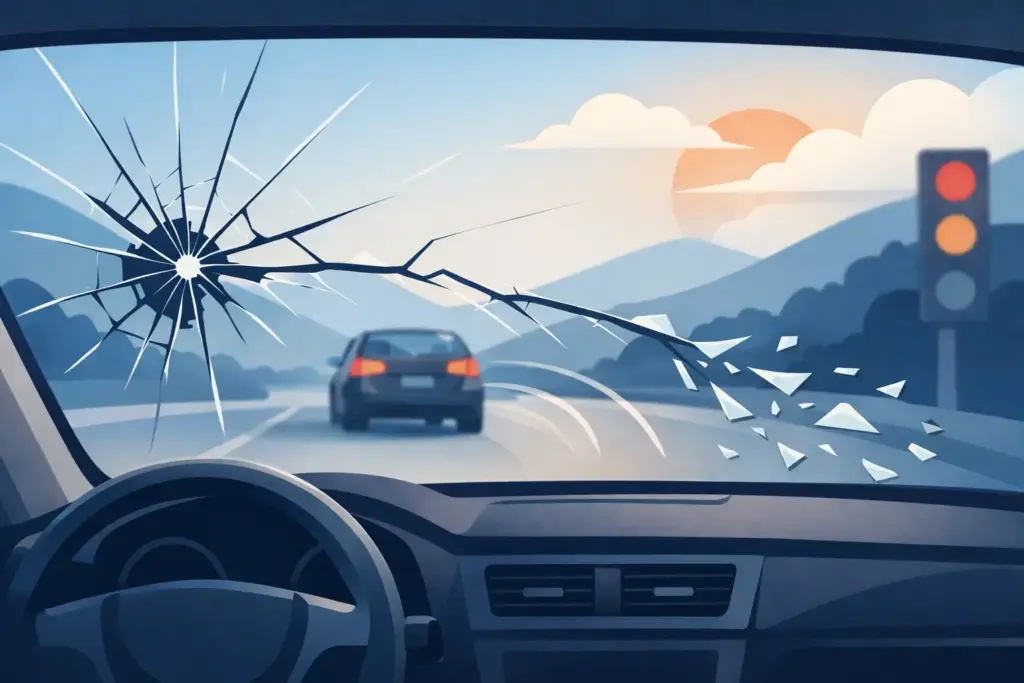
A crack that looked no bigger than a fingernail on your morning commute can reach across the windshield after one hot San Antonio afternoon or a rough stretch of road. So, can a cracked windshield spread fast? Yes. Sometimes it grows over days, but the right combination of heat, vibration, moisture, and pressure can make damage spread much sooner.
A windshield is more than a piece of glass in front of you. It supports the roof structure, helps airbags perform as designed, and gives you a clear view of traffic, pedestrians, and road hazards. That is why a small chip deserves attention before it turns into a larger repair decision.
Can a cracked windshield spread fast in San Antonio?
It can, especially when temperatures change quickly. Windshield glass expands as it heats up and contracts as it cools. If a crack is already present, those movements put stress around its edges. Parking in direct sun, then blasting the air conditioner, can create a sharp temperature difference across the glass that encourages the crack to travel.
San Antonio roads can add to the problem. Normal driving vibration, potholes, railroad crossings, gravel, and a hard door slam all flex the vehicle slightly. The windshield flexes with it. A crack may stay stable for a while, then extend suddenly after one bump that adds just enough stress.
Speed is hard to predict. A shallow chip that has not reached the edge of the windshield may remain repairable for a period of time. A long crack, a crack near the perimeter, or damage in the driver’s line of sight needs a prompt professional assessment. There is no reliable way to know from appearance alone whether a crack will stop where it is.
Why windshield cracks get worse
Most modern windshields are laminated. They have two layers of glass with a plastic layer between them. This design helps hold the glass together during an impact, but it does not prevent a surface crack from expanding through one layer of glass.
Heat is a major factor, but it is not the only one. Moisture and dirt can work their way into a chip or crack. Once contamination enters the damaged area, a glass repair may be less effective or may leave a more noticeable mark. Rain, car washes, and even morning humidity can matter if the damage is open.
The location also changes the urgency. Cracks that reach the outer edge of the windshield tend to spread more easily because the edge is a high-stress area. Damage directly in front of the driver can distort visibility, even if it is small. A crack near a camera or sensor behind the windshield may affect advanced safety features such as lane-departure warnings, automatic emergency braking, or adaptive cruise control.
Signs you should not wait
A windshield does not need to be shattered to be a safety concern. Schedule an inspection as soon as possible if the crack is growing, reaches an edge, branches into multiple lines, or interferes with your view of the road.
You should also move quickly if the glass is chipped after a collision or if there is other visible front-end damage. Damage to the hood, roofline, mirror area, or windshield frame can change how the glass sits in the vehicle. In those situations, the glass issue may be part of a larger repair need rather than a stand-alone chip.
If you see fogging between the glass layers, feel loose trim around the windshield, or notice water entering the cabin, do not assume a simple repair will solve it. Those signs call for a closer inspection of the windshield and surrounding structure.
What to do while you arrange a repair
The goal is to keep the damage clean and avoid adding stress to the glass. You do not need to stop using your vehicle in every situation, but you should drive carefully and avoid putting off an evaluation.
Avoid these common mistakes:
- Do not pour hot water on a cold windshield or use very cold water on hot glass.
- Do not aim the defroster or air conditioner directly at the damaged area on its highest setting.
- Do not press on the crack, pick at loose glass, or try to force the edges back together.
- Do not run the vehicle through an automatic car wash if the damage is open or the glass is already visibly unstable.
If the chip is fresh and dry, a small piece of clear tape placed lightly over the exterior can help keep out dust and moisture until an appointment. Do not use duct tape, glue, or a home adhesive. Residue can complicate the repair, and do-it-yourself kits are not a good answer for every type, size, or location of damage.
When driving is necessary, leave extra following distance from trucks and construction vehicles, since loose gravel can create another impact. Park in shade when possible. These steps may slow the damage, but they are temporary precautions, not a fix.
Repair or replacement: what determines the right choice?
The decision depends on the crack’s size, depth, location, age, and contamination. A small, recent chip can often be repaired by injecting a clear resin into the damaged area. The purpose is to restore strength and reduce how noticeable the damage is. A successful repair may still leave a faint mark, particularly in certain lighting.
Replacement is more likely when the crack is long, deep, spreading, located at the edge, or directly in the driver’s primary viewing area. A replacement may also be the safer option when the damage affects the windshield’s structural role or interferes with a vehicle’s cameras and sensors.
Newer vehicles add another consideration. If your windshield contains a forward-facing camera or other driver-assistance equipment, the system may require calibration after replacement. Skipping that step can leave safety features working incorrectly or trigger warning lights. Ask the repair professional whether calibration is required for your make and model and whether it is included in the repair plan.
The lowest upfront price is not always the best value. Proper glass installation depends on correct materials, clean bonding surfaces, safe curing time, and attention to the vehicle’s technology. A windshield that is installed poorly can lead to wind noise, leaks, sensor issues, or reduced protection in a future collision.
Will insurance cover a cracked windshield?
Coverage depends on your policy, deductible, and the cause of damage. Comprehensive coverage often applies to rock chips, hail, vandalism, and other non-collision glass damage. Collision coverage may apply when the windshield was damaged in a crash. Some policies offer separate glass coverage with a lower deductible or no deductible, but that varies.
Before authorizing work, review your deductible and ask for an estimate that explains what is being repaired or replaced. If the crack occurred during an accident and your vehicle also has body, suspension, alignment, or paint damage, handling the full inspection together can help identify related issues and create a clearer repair plan.
A reputable repair center can also help communicate with the insurer and document visible damage. That support is especially useful after a collision, when photos, estimates, supplements, and scheduling can feel like one more task on an already difficult day.
A clear view is worth acting on
A windshield crack rarely gets more convenient or less expensive by waiting. If it is small, getting it assessed early may preserve the option for repair. If it has already spread, a professional can explain whether replacement, calibration, or related collision work is needed.
For San Antonio drivers, RWORKS can help evaluate accident-related glass and body damage, coordinate the repair process, and keep you informed along the way. A quick inspection now can protect your visibility, your vehicle’s safety systems, and your peace of mind on the next drive home.