A bent door gap, a steering wheel that no longer sits straight, or a trunk that will not latch after a collision can point to more than visible body damage. The question of unibody repair versus frame straightening matters because the right repair protects how your vehicle drives, absorbs impact, and holds its value – not just how it looks when it leaves the shop.
For San Antonio drivers, the terms can sound interchangeable. They are related, but they describe repairs to different vehicle structures. A qualified collision shop starts by identifying what your vehicle is built on, measuring the damage, and creating a repair plan based on manufacturer specifications. Guesswork has no place in structural repair.
What Is the Difference Between Unibody Repair and Frame Straightening?
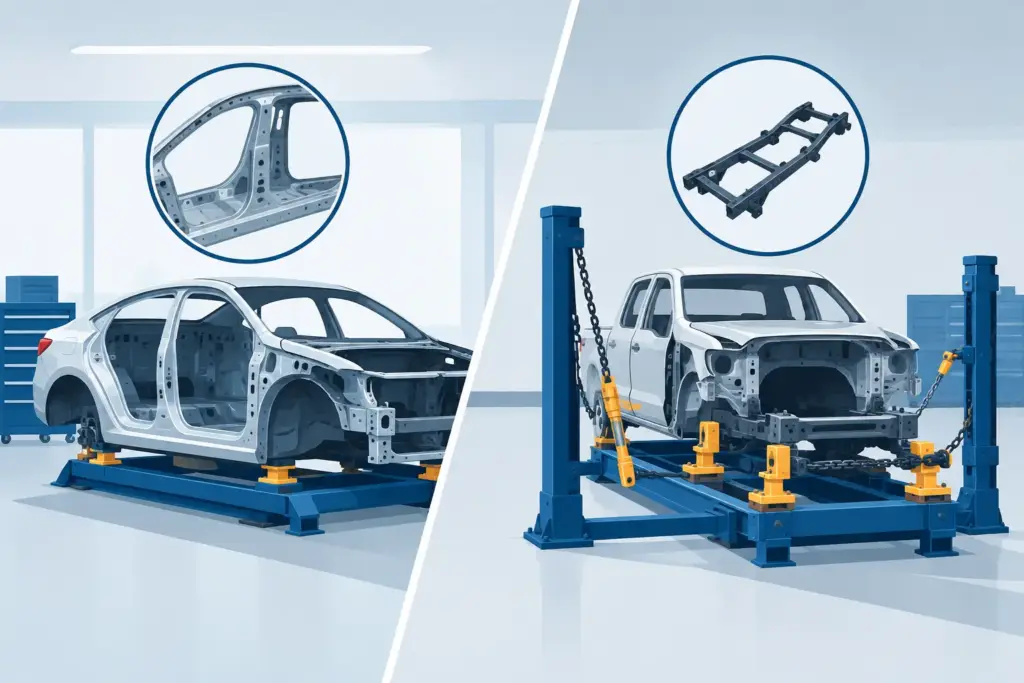
Most passenger cars, crossovers, minivans, and many SUVs use unibody construction. Instead of sitting on a separate, heavy frame, the vehicle’s body and structural supports are integrated into one system. The floor pan, roof pillars, rocker panels, front rails, and rear rails all work together to create strength and manage crash forces.
Frame straightening usually refers to repairs on body-on-frame vehicles. This design is common on many pickup trucks, full-size SUVs, commercial vehicles, and older vehicles. The body is mounted on a separate steel frame that supports the engine, suspension, and drivetrain.
The repair goal is similar in both cases: return the structure to its specified dimensions. The tools, anchoring points, repair methods, and decision-making process may be different. Calling every structural repair “frame work” is common, but it can blur an important distinction.
Unibody Repair Versus Frame Straightening: How Each Works
Unibody repair restores an integrated structure
Unibody damage can occur in a front-end collision, rear-end impact, side impact, curb strike, or even a severe pothole incident. Damage may affect visible sheet metal, but it can also travel into structural rails, suspension mounting points, aprons, pillars, or rocker panels.
A proper unibody repair begins with computerized measuring equipment. The technician compares key points on the vehicle against factory dimensions to see exactly where the structure has moved. The vehicle may then be secured to a dedicated repair system and carefully pulled in controlled stages. Depending on the location and severity of damage, the repair can involve straightening a structural section, replacing a damaged rail or panel, and welding replacement parts according to manufacturer repair procedures.
This is not the same as pulling a fender into shape. Modern unibody vehicles use carefully engineered crumple zones and high-strength steels. Heat, drilling, welding, and pulling methods must be appropriate for the materials involved. An improper repair can affect crash performance, corrosion protection, and the fit of surrounding panels.
Frame straightening corrects a separate chassis
On a body-on-frame truck or SUV, a collision can bend, twist, sway, or diamond the frame. “Diamond” describes a condition where the frame is no longer square, which can leave one side effectively farther forward or back than the other. That may cause handling concerns, uneven tire wear, poor alignment readings, or body panels that will not line up correctly.
Frame straightening also starts with measurements, not assumptions. The frame is anchored to a straightening rack, and technicians use measured pulls to move damaged sections back toward factory specifications. The body, suspension, and mechanical components may also need inspection because a corrected frame alone does not guarantee the vehicle will drive properly.
In some cases, replacement is safer or more practical than straightening. Severe rust, sharp kinks, cracked metal, or damage in areas that manufacturers do not permit to be repaired can change the plan. A reputable shop will explain that decision clearly rather than promising a repair that does not meet the vehicle’s needs.
Why Accurate Measurements Matter More Than Appearance
A vehicle can look almost normal and still have structural damage. That is why visual inspection is only the starting point. A hood may close, but the latch support could be out of position. A truck bed may look straight, while the frame underneath is slightly shifted. A bumper cover can hide damage to reinforcement bars, rails, sensors, or mounting brackets.
Accurate structural measurements help determine whether the vehicle can be repaired safely and what parts or operations are required. They also support a more complete insurance estimate. Hidden damage is a common reason collision repairs require supplements after disassembly, especially when the original impact was strong enough to affect steering, suspension, wheel position, or major panel gaps.
After structural work, the vehicle should be checked again. Alignment readings, road testing, panel fit, and calibration needs all matter. On vehicles equipped with advanced driver-assistance features, repairs may require sensor aiming or calibration after components are replaced or the structure is restored. Those steps help ensure systems such as lane support, collision warnings, or parking assistance work as intended.
Signs You May Need Structural Inspection
Not every accident requires unibody repair or frame straightening. A low-speed scrape that damages only a bumper cover or door skin may be cosmetic. Still, an inspection is wise after a meaningful impact, especially if you notice changes that were not present before the accident.
Common signs include a vehicle that pulls to one side, a crooked steering wheel, uneven tire wear, vibrations, new wind noise, doors or a trunk that require extra force to close, or uneven gaps between panels. On trucks, look for a bed that appears shifted, mismatched cab-to-bed spacing, or a hitch that no longer sits level. Fluid leaks, warning lights, and changes in ride height also deserve prompt attention.
These symptoms do not automatically prove frame or unibody damage. Suspension components, wheel alignment, tires, and body hardware can create similar concerns. The point is to have the vehicle evaluated before a small issue becomes a safety concern or causes more expensive tire and suspension wear.
Can a Vehicle Be Safe After Structural Repair?
Yes, when it is repaired using the correct procedures, parts, measurements, and quality checks. Modern vehicles are designed to protect occupants by directing crash energy through specific areas. Restoring those areas correctly is far more meaningful than making damaged panels look smooth again.
The trade-off is that quality structural repair takes careful planning. It may require more time than a cosmetic repair because the shop needs to disassemble damaged areas, document measurements, coordinate with the insurer, order approved parts, perform repairs in the proper sequence, and complete final checks. A quick promise is not always a reliable promise.
It also matters who performs the work. Choose a collision repair facility that can explain the damage in plain language, communicate with your insurance company, and stand behind the repair. Ask whether the estimate includes structural measuring, alignment checks, required calibrations, and a clear plan for any hidden damage found after teardown.
What to Expect After a Collision
If your vehicle has been hit, avoid deciding between unibody repair and frame straightening based on the damage you can see in the driveway. Take photos, start your claim if you are using insurance, and schedule a professional estimate. Let the inspection determine whether the concern is cosmetic, mechanical, structural, or a combination of all three.
At RWORKS, the focus is on returning your vehicle to pre-accident condition with clear updates throughout the process. That includes looking beyond the visible dent, helping with insurance paperwork, and addressing the alignment or structural issues that affect the way your vehicle performs long after the paint is polished.
The best next step is simple: if your vehicle does not look, feel, or drive the same after an impact, have it measured and inspected before you put more miles on it.