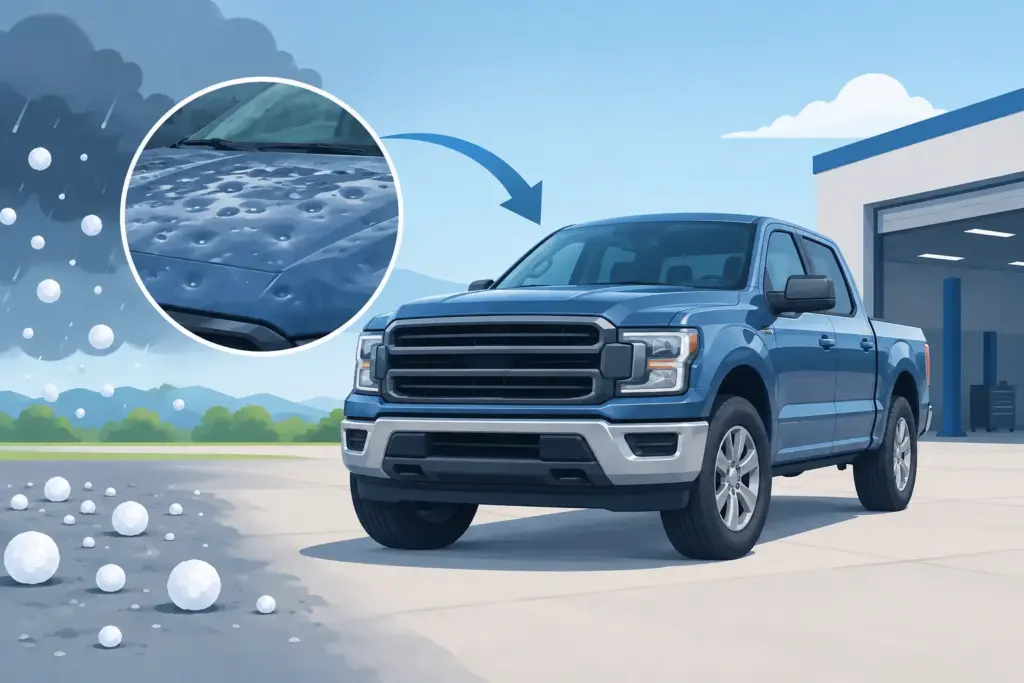
A San Antonio hailstorm can leave a truck covered in dents before the rain has even stopped. The damage may look cosmetic at first, but truck hail restoration is about more than making a hood or roof look better. Done correctly, it protects your truck’s value, preserves factory panels when possible, and helps prevent small damage from turning into a bigger repair issue.
For many truck owners, the hardest part is not seeing the dents. It is deciding whether the damage needs immediate attention, whether insurance will cover it, and which repair approach will actually return the truck to pre-storm condition. A clear inspection and a repair plan built around your specific vehicle make that decision much easier.
Why Hail Damage Deserves a Close Look
Hail can damage much more than the broad, flat surfaces that are easiest to see. A truck’s hood, roof, bed sides, doors, fenders, mirrors, trim, windshield, and back glass can all take a hit. Depending on the storm, there may also be cracked lights, chipped paint, damaged weatherstripping, or broken glass.
Dents without paint damage may not affect how the truck drives, but they can lower its resale or trade-in value. They can also make a well-maintained truck look neglected. When paint is cracked or chipped, the concern becomes more urgent. Exposed metal can allow moisture in, creating conditions for rust that may spread beyond the original impact area.
The best time to schedule an inspection is soon after the storm, especially if you plan to file an insurance claim. You do not need to know the full extent of the damage before calling a repair shop. That is what the inspection is for.
Truck Hail Restoration Starts With the Right Inspection
A quality estimate should account for more than the dents visible in a driveway. Repair professionals use proper lighting and viewing angles to identify shallow dents, stretched metal, damaged panels, and paint chips that can be easy to miss in direct sunlight.
The inspection should also include the truck’s glass, moldings, lamps, roof accessories, and bed components. Trucks often have features such as roof marker lights, tonneau covers, running boards, racks, antennas, and aftermarket accessories. These parts can change the repair plan and should not be treated as an afterthought.
At this stage, a trusted shop should explain what it sees in plain language: which panels can likely be repaired, whether paintless dent repair is an option, where conventional body repair may be needed, and whether any glass or trim requires replacement. The goal is not to rush you into work. It is to give you an accurate picture of what your truck needs.
Paintless Dent Repair or Conventional Body Repair?
The right method depends on the dents, the paint condition, and access behind the damaged panel. Paintless dent repair, often called PDR, carefully works dents out from behind the panel or uses specialized pulling techniques from the exterior. Because the original finish remains in place, PDR can be an excellent option for hail dents when the paint is intact.
PDR has real advantages. It can preserve factory paint, reduce the need for fillers and refinishing, and often shorten repair time. It is particularly effective on many hoods, roofs, doors, and bed sides. Still, it is not the right answer for every truck. Deep dents, sharp creases, stretched metal, cracked paint, and inaccessible panel areas may require conventional repair and refinishing.
Conventional body repair can restore panels that PDR cannot safely correct. This process may involve reshaping the metal, applying refinishing materials as needed, priming, color matching, and painting the repaired area. When done properly, the repaired panel should look consistent with the rest of the truck, not simply acceptable from a few feet away.
A reputable repair center will not force one method onto every dent. The best truck hail restoration plan is the one that protects the truck’s condition, appearance, and long-term value.
How Insurance Claims Usually Work After Hail
If you carry comprehensive coverage, hail damage is commonly covered under that portion of your policy. Comprehensive claims generally have a deductible, which is the amount you are responsible for before coverage applies. Because policies differ, it is smart to review your coverage or call your insurer if you are unsure.
You have the right to choose where your truck is repaired. Insurance companies may recommend a shop or provide a list of options, but the decision belongs to you. Choose a repair facility based on workmanship, communication, warranty coverage, and its ability to handle your specific truck – not only on convenience after a storm.
The insurance estimate is a starting point, not always the final repair amount. Once a shop begins the detailed inspection or gains access to damaged areas, it may find additional damage that was not visible during the initial estimate. In that case, the shop can document the issue and work with the insurer on a supplement. This is a normal part of collision and hail repair, not a reason to accept incomplete work.
At RWORKS, customers can get support through the insurance process while still receiving clear updates about their repair plan, timing, and next steps. That communication matters when hail claims are moving quickly after a major storm.
What Affects Repair Time for a Hail-Damaged Truck?
No honest shop should promise the same timeline for every hail repair. A truck with several minor dents and intact paint may move through the process much faster than one with damaged glass, cracked paint, replacement parts, or extensive roof and hood damage.
Availability matters too. After a widespread hail event, repair facilities, parts suppliers, insurance adjusters, and glass providers can all experience higher demand. Starting the claim early and scheduling an inspection promptly can help prevent unnecessary delays.
Repair time can also depend on the truck itself. Aluminum panels, high-strength steel, oversized hoods, specialty paint colors, lifted suspensions, and aftermarket components may require additional care. That extra attention is worthwhile. Fast work is only valuable when it is also correct.
Clear communication should be part of the process from the beginning. You should know whether the truck is waiting for approval, parts, glass, paint materials, or a final quality check. A shop that keeps you informed removes much of the uncertainty from an already frustrating situation.
Questions to Ask Before Approving Repairs
Before leaving your truck, ask how the damage will be repaired and whether the original paint can be preserved. Ask whether the estimate includes glass, trim, lights, and accessories that may have been affected. You should also ask how the shop handles additional damage discovered during repairs and how it communicates with your insurer.
Warranty coverage is another important question. Hail repair is visible work, so you should feel confident in the result long after pickup day. A lifetime warranty on qualifying repairs shows that a shop stands behind its craftsmanship.
Finally, ask about the expected timeline and how updates will be handled. The answer may change as the repair progresses, particularly after a large storm, but honest expectations are better than vague promises.
Protect Your Truck After the Repair
Once repairs are complete, inspect the truck with the advisor before you leave. Look at repaired panels in natural light when possible. Check that trim, lights, weatherstripping, accessories, and glass are secure and operating properly. If your truck was painted, ask about any recommended wait time before washing or waxing it.
Future storms are impossible to schedule around, but covered parking, a sturdy vehicle cover, or prompt shelter when severe weather is forecast can reduce the risk of another claim. If your truck is a daily driver, work vehicle, or family hauler, keeping it in good condition is not vanity – it is protecting an investment you rely on.
After hail, do not let a crowded repair season pressure you into settling for a quick fix. Get a thorough inspection, understand your options, and choose repairs that let you look at your truck with confidence again.