A collision can leave behind more than dents, paint damage, and a repair bill. Even after a vehicle is restored properly, its accident history may show up when you trade it in or sell it. That is where a diminished value claim may come into the conversation for Texas drivers.
The basic concern is understandable: a buyer may pay less for a vehicle that has been in a reported accident, even if the repair work looks excellent. But diminished value claims are not automatic, and the rules can depend on who caused the crash, the insurance policies involved, the vehicle’s condition, and the evidence available. Knowing the difference between repairing your vehicle and proving a loss in market value can help you make better decisions after an accident.
What Is a Diminished Value Claim?
A diminished value claim seeks compensation for the difference between what your vehicle was worth immediately before an accident and what it may be worth after a quality repair. The idea is not that the repairs failed. It is that a vehicle with an accident record can sometimes carry less resale value than a comparable vehicle with no accident history.
For example, imagine two similar late-model trucks with comparable mileage, options, and condition. One has a clean vehicle-history report. The other was involved in a collision but was repaired correctly. A future buyer, dealer, or appraiser may still value the repaired truck lower because of the reported damage. The possible gap between those values is diminished value.
This is separate from the cost of the repair itself. Collision repairs address physical damage such as a damaged bumper, bent panel, broken glass, suspension issue, or paint damage. A diminished value claim addresses a possible financial loss that remains after those repairs are complete.
When a Diminished Value Claim May Apply in Texas
In many cases, a third-party claim is the clearer path. That generally means another driver caused the accident and you are pursuing compensation through that driver’s liability insurance. Whether the insurer accepts the claim, and for how much, depends on the facts and the documentation.
Claims involving your own insurance policy can be different. First-party coverage is governed by the specific policy language, and many policies limit or exclude diminished value payments. This is one reason to read your policy carefully and ask direct questions of your insurer instead of assuming every accident creates a payable claim.
A claim may be more realistic when the vehicle is newer, has low mileage, was in strong pre-accident condition, and sustained significant documented damage. Luxury vehicles, specialty vehicles, newer trucks, and vehicles with a clean pre-accident history may have a stronger argument than an older vehicle with high mileage, prior damage, or a lower market value.
That does not mean smaller claims never have merit. It means the potential recovery should be weighed against the effort, evidence, and circumstances. A cosmetic repair on an older commuter car may have little measurable effect on market value. Structural damage or major collision repairs on a newer vehicle may raise a more serious question.
The Repair Quality Still Matters
A diminished value claim is not a reason to settle for less thorough repairs. In fact, proper repair documentation can be part of the evidence that helps explain what happened to the vehicle and how it was restored.
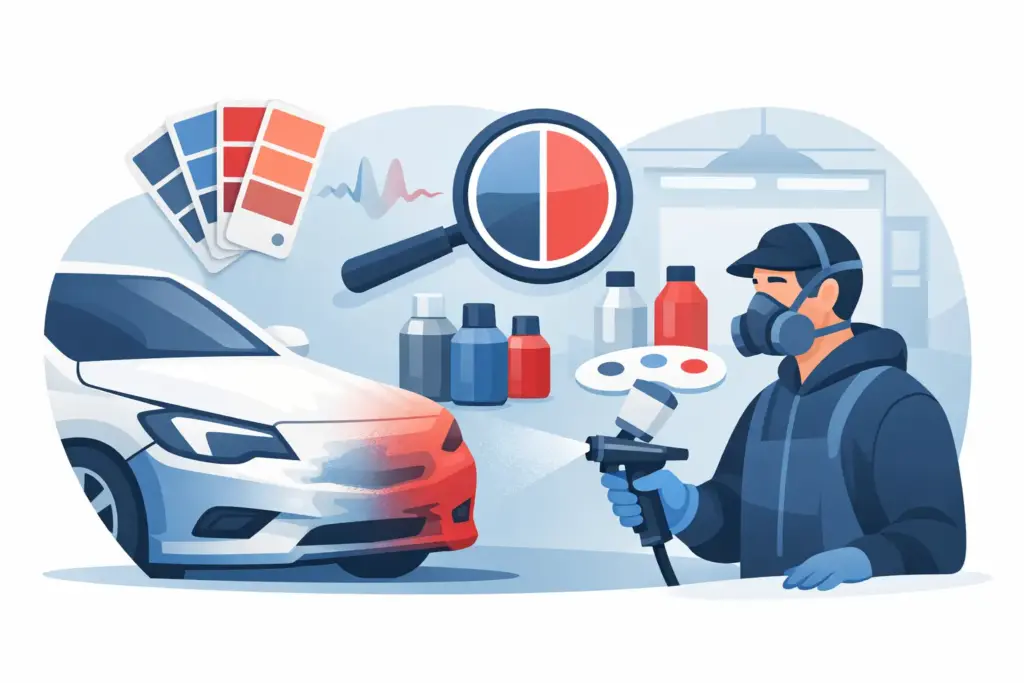
A quality collision repair center should inspect visible and hidden damage, follow appropriate repair procedures, address alignment or suspension concerns, and match paint with care. Cutting corners to reduce an initial estimate can create larger problems later, including poor fitment, premature paint issues, uneven tire wear, warning lights, or drivability concerns.
The goal after an accident is to return the vehicle as closely as possible to its pre-accident condition. That includes safety, appearance, and performance. A well-repaired vehicle may still have an accident history, but it should not be carrying unresolved damage because the repair process was rushed or incomplete.
At RWORKS, the focus is on clear communication through the repair process, insurance claim support, and workmanship backed by a lifetime warranty. For drivers considering diminished value later, keeping a complete repair file is simply good practice.
Documentation That Can Support Your Claim
Insurance companies usually will not accept a number without support. If you believe your vehicle lost market value after a crash, organize the records while the details are still easy to find.
Helpful documentation can include the police report or accident report, photos of the damage before repairs, the initial estimate, final repair invoice, parts list, and any records showing the vehicle’s pre-accident condition. If you have maintenance records, recent photos, a prior appraisal, or proof of recent upgrades, save those as well.
You may also need evidence of the vehicle’s value before and after the accident. Some owners hire an independent appraiser who specializes in diminished value evaluations. Others gather local market comparisons, dealer trade-in information, and vehicle-history records. An appraisal can add weight, but it is not a guarantee that an insurer will agree with the appraiser’s conclusion.
Be cautious with online calculators that promise a quick answer. They can provide a rough starting point, but they do not account for every factor an insurer, dealer, or buyer may consider. The severity of damage, repair type, vehicle age, mileage, prior history, local market demand, and title status can all affect the result.
How to Handle the Insurance Conversation
Start by making sure the repair claim is handled correctly. You have the right to ask questions about the estimate, parts being used, repair timeline, and supplements for additional damage found during disassembly. Do not rush to close out the repair portion of the claim before you understand the completed work and receive the final paperwork.
Once repairs are complete, contact the at-fault driver’s insurance carrier if you plan to pursue diminished value. Ask about its claim process, required forms, deadlines, and supporting documents. Keep notes of every conversation, including the date, representative’s name, and what was discussed.
Present your request clearly and professionally. State the amount you are seeking, explain how you arrived at it, and include the documents that support your position. The insurer may make an offer, request additional evidence, or deny the claim. If an offer seems low, you can ask how it was calculated and respond with additional support.
There is no one-size-fits-all outcome. Some claims resolve through documentation and persistence. Others may require advice from a qualified attorney or independent appraiser, particularly when the vehicle has substantial value or the damages were significant. This article is general information, not legal advice, so consult a Texas attorney for guidance on your specific situation and applicable deadlines.
Mistakes That Can Weaken a Diminished Value Claim
The most common mistake is waiting too long to gather records. Photos disappear, paperwork gets misplaced, and details become harder to verify. Save every estimate, invoice, email, and claim number in one place from the beginning.
Another mistake is treating the repair estimate as proof of diminished value. Repair cost and value loss are related, but they are not the same. A high repair bill does not automatically prove a high diminished value amount. The question is how the accident history may affect the vehicle’s market value after the work is finished.
It can also hurt to sell or trade the vehicle before collecting evidence. Once the vehicle changes hands, proving the exact market impact can become more difficult. If you are considering a sale soon after repairs, obtain your documentation and evaluate your options first.
Finally, do not ignore repair concerns because you are focused on the financial claim. If a panel fit, paint finish, alignment, or warning light does not seem right, address it promptly with the repair facility. Your vehicle should feel safe, drive correctly, and look properly restored before you turn your attention to its future resale value.
Put Your Vehicle First After an Accident
A diminished value claim can be worth exploring, especially when a newer or well-maintained vehicle has been damaged through no fault of your own. Still, the immediate priority is a safe, complete repair supported by accurate records and straightforward communication.
After a collision, ask for a detailed estimate, keep your paperwork, and choose a repair team that will explain what your vehicle needs without talking around the problem. Those steps protect more than a potential claim – they help protect the vehicle you rely on every day.