A repaired bumper that looks slightly lighter than the fender can be more frustrating than the dent that brought your vehicle into the shop. Paint mismatch is one of the most visible concerns after collision or cosmetic repair, especially in bright Texas sun. The good news is that a noticeable difference is not something you should simply accept as normal.
Modern automotive paint matching is precise, but it is not as simple as entering a factory paint code and spraying one panel. A quality repair depends on the vehicle’s existing finish, the condition of nearby panels, proper preparation, skilled application, and a final inspection in different lighting conditions. When those details are handled correctly, the repaired area should look natural from the driveway, parking lot, and road.
What Causes Paint Mismatch After a Repair?
Every vehicle leaves the factory with a paint code, usually found on a label inside the door jamb, under the hood, or in another manufacturer-designated location. That code gives a repairer the starting formula. It does not guarantee that one formula will perfectly match your vehicle years later.
Sun exposure, heat, weather, road grime, car washes, and time can all change the appearance of a finish. San Antonio vehicles often spend long hours in direct sunlight, which can gradually affect how a color looks. A white vehicle may take on a warmer tone. Black can lose depth. Red, blue, and metallic colors can fade or shift enough that a factory formula alone may stand out beside the original paint.
The panel itself also matters. Plastic bumpers, metal doors, hoods, and fenders do not always reflect light in exactly the same way, even when painted with the same color. Metallic and pearl finishes add another layer of difficulty because the tiny flakes or pearls must lie in the correct direction. If their orientation is off, a panel may look right from one angle and noticeably different from another.
Previous repairs can complicate the process as well. If a vehicle has been painted before, the visible color may no longer match the original factory formula. A careful shop evaluates the vehicle in front of them rather than assuming its paint history is unchanged.
Lighting Can Make a Small Difference Look Large
A color that appears perfect indoors may look different outside. Fluorescent shop lighting, shade, direct sun, cloudy conditions, and LED parking-lot lights can each reveal a different side of the finish.
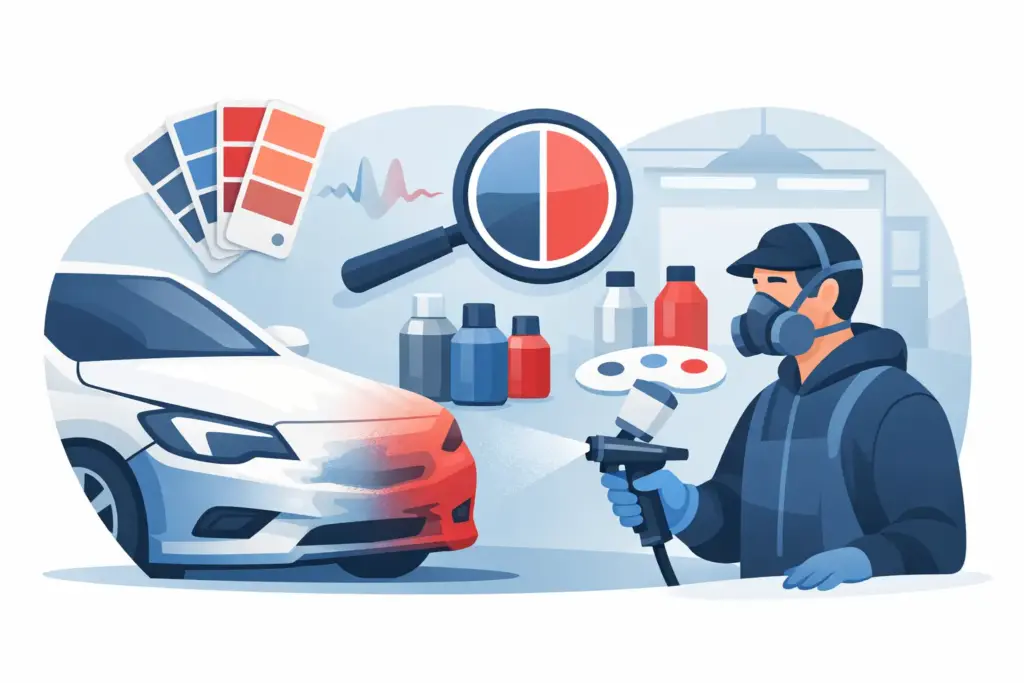
That is why color matching should not rely on a quick glance under one set of lights. Technicians compare color variants and spray test cards when needed. They check the match from multiple angles because metallics and pearls can shift as you move around the vehicle. This extra time helps prevent a repair that appears acceptable in the booth but disappoints you when you pick up your car.
How a Professional Paint Mismatch Repair Is Prevented
The best time to address a potential mismatch is before the final coat goes on. Professional refinishing begins with inspection and preparation, not with a spray gun.
First, the damaged panel must be repaired properly. Dents, cracks, poor body filler work, sanding scratches, and uneven primer can show through fresh paint. Paint cannot hide a weak repair. Once the surface is straight, smooth, and properly sealed, the color has a stable foundation.
Next comes color identification. A technician confirms the factory code, then compares it to the actual vehicle finish. Paint manufacturers often provide several variants for the same paint code because assembly plants, production dates, and material batches can create slight differences. The correct variant may be adjusted further to match the condition of your vehicle.
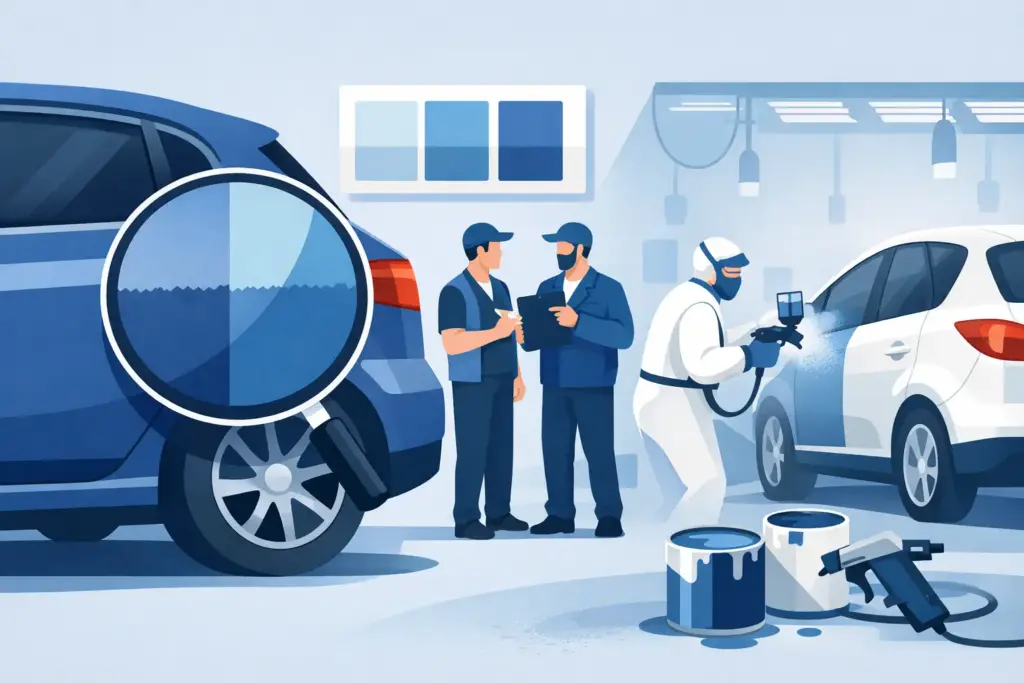
For many repairs, blending is the key step. Instead of painting only the repaired panel and ending the color abruptly at its edge, the technician gradually feathers the new color into an adjacent panel. Clear coat is then applied across the appropriate area to create an even gloss and protection level. Blending makes the transition much harder to detect and is often necessary for a proper result.
A bumper repair provides a common example. If the front bumper needs paint after a collision, spraying the bumper alone may create a visible contrast against the fenders. Depending on the color, vehicle age, and condition of the finish, blending into one or both fenders may be the better approach. It can add time and materials, but it can also prevent the “new bumper, old car” look that owners want to avoid.
Why Some Colors Are Harder to Match
Any color can require careful work, but certain finishes leave less room for error. Solid white, black, and gray may seem simple, yet variations in brightness, gloss, and undertone can be obvious. Silver and gray metallics are especially angle-sensitive. A small difference in spray technique can make the repaired panel appear darker or lighter.
Pearl white, tri-coat finishes, candy colors, and heavily metallic paints are more complex. These often require multiple layers that build depth and color differently depending on application. A tri-coat pearl white, for example, may need a ground coat, a translucent pearl coat, and clear coat. The number of pearl passes can influence the final appearance.
Matte and satin finishes require another kind of care. Unlike conventional glossy paint, they cannot be polished after spraying to remove minor defects without changing the sheen. Repairing them correctly takes specialized materials, controlled application, and close attention to the manufacturer’s repair procedures.
This does not mean difficult colors cannot be repaired well. It means the repair plan should reflect the color rather than treating every vehicle like a basic single-stage paint job.
What You Should Expect From a Quality Auto Paint Repair
A reputable collision repair shop should explain the paint process in clear terms. You should know which panels are being repaired, whether adjacent panels may be blended, and why that work is recommended. If insurance is involved, the shop should also help document the necessary operations so the estimate reflects what is required to restore the vehicle properly.
Be cautious of promises to repaint a damaged panel quickly and cheaply with no inspection of neighboring panels. That may be appropriate for a minor direct-pay touch-up in some situations, but it is not always the right solution after collision damage. The least expensive option can become frustrating if the repaired area is visible every time you approach your vehicle.
At pickup, inspect your vehicle outdoors if possible. Look at the repair from straight on and from an angle. Check panel gaps, trim pieces, and the overall gloss, not just the color. A good repair should look consistent without obvious tape lines, rough texture, overspray, dirt in the paint, or a sharp color break at the panel edge.
A little perspective is useful here. No repair shop can reverse every effect of age, prior damage, or weathering across the entire vehicle. On an older vehicle with faded paint, a newly refinished area may look cleaner and glossier than surrounding panels. Proper blending and refinishing can minimize that difference, but repainting unrelated areas is sometimes the only way to make an extensively weathered vehicle look uniformly new.
When to Bring a Paint Concern Back to the Shop
If you notice a potential color difference after pickup, contact the shop promptly and give them the opportunity to inspect it. Take a few photos in natural daylight, but understand that photos do not always capture metallic or pearl shifts accurately. An in-person inspection is the fairest way to evaluate the result.
Ask whether the issue is color, gloss, texture, or simply a lighting effect. These are different concerns with different solutions. A rough clear coat or a small finish imperfection may be corrected through refinishing steps. A true color mismatch may require additional blending or repainting. Clear communication matters because a good shop should stand behind its workmanship, not dismiss a reasonable concern.
At RWORKS, our goal is to return your vehicle looking like it belongs back in your driveway, not like it has been through a repair process. That means evaluating the full finish around the damaged area, communicating what the repair requires, and standing behind our work with a lifetime warranty.
Before approving any auto paint repair, ask how the shop plans to match your vehicle’s existing finish. That one question can lead to a better conversation, a more accurate estimate, and a result you feel good about every time you walk up to your car.