A new windshield can look perfect and still leave a critical safety system out of position. On many late-model vehicles, the glass is also the mounting point for a forward-facing camera that supports features such as lane-departure warnings, automatic emergency braking, adaptive cruise control, and traffic-sign recognition. Windshield calibration is the process of confirming that camera sees the road exactly as the manufacturer intended.
For San Antonio drivers, this often comes up after a cracked windshield, hail damage, or a collision that damages the front of the vehicle. It can also be necessary after repairs that affect the vehicle’s alignment, suspension, bumper, grille, or camera mounting area. The goal is simple: return the vehicle’s advanced driver-assistance systems, often called ADAS, to safe working order before it goes back on the road.
What windshield calibration actually does
The camera behind your rearview mirror does not just record what is in front of the vehicle. It uses a precise view of lane lines, vehicles, road edges, and traffic signs to help the car make split-second safety decisions. That view depends on the camera being positioned and aimed within tight manufacturer specifications.
During windshield replacement, even high-quality glass installed correctly can sit slightly differently than the original windshield. A camera may also be removed and reinstalled, or its bracket may be disturbed. Small changes can affect how the system interprets distance, direction, and lane position.
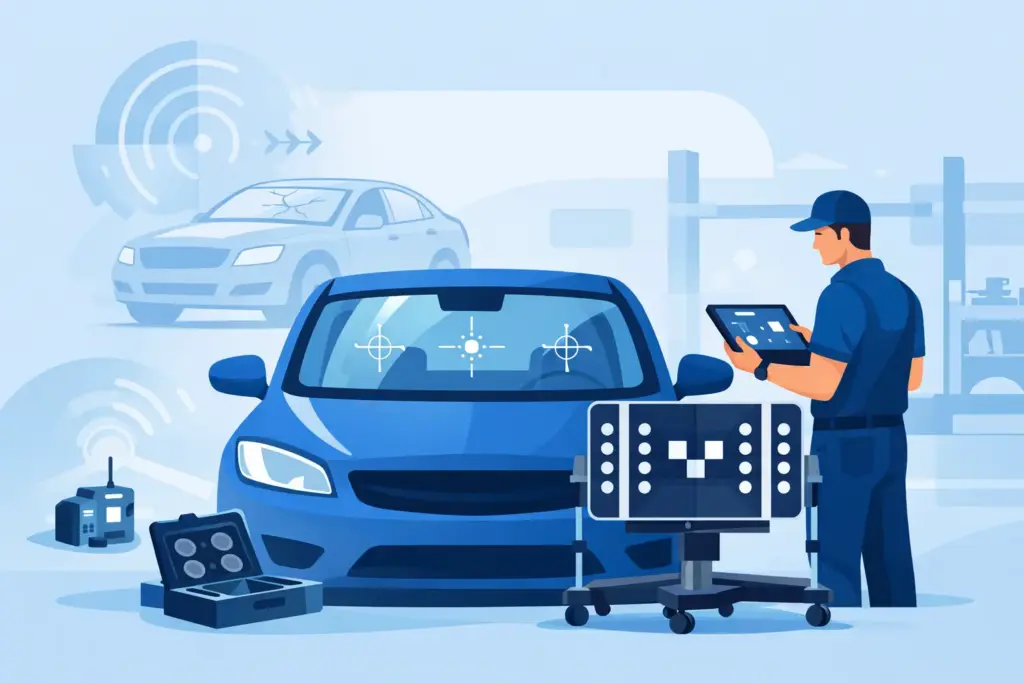
Calibration uses manufacturer-approved procedures and diagnostic equipment to reset the camera’s reference point. Depending on the vehicle, a technician may use a target board placed at exact measurements in a controlled work area, a road test performed under specific conditions, or both methods. The process is not a quick visual check. It is a documented electronic procedure that allows the vehicle to verify the camera is operating within specification.
When windshield calibration is needed
A windshield replacement is the most common reason for calibration, but it is not the only one. Whether calibration is required depends on the vehicle’s equipment and the repair performed. Some vehicles do not have a forward-facing camera at all. Others need calibration whenever the windshield is removed, even if the camera itself was never disconnected.
Calibration may be required after:
- Windshield replacement on a vehicle equipped with ADAS features
- Front-end collision repair involving the hood, bumper, grille, fenders, radiator support, or camera area
- Suspension, steering, or wheel-alignment repairs that change the vehicle’s ride height or tracking
- Replacement of a camera, camera bracket, rearview mirror assembly, or related wiring
- Repairs following a curb strike, pothole impact, or accident that changes alignment
Your owner’s manual and the repair procedures for your specific year, make, and model determine the final answer. A warning light does not have to be present for calibration to be necessary. In fact, some systems may appear normal until they encounter a situation where the camera’s inaccurate reference point matters.
Why an alignment issue can affect camera systems
A wheel alignment and a camera calibration are different services, but they can be connected. Wheel alignment ensures the tires point and track correctly. Camera calibration ensures the vehicle’s safety camera understands its position relative to the road.
If collision damage, a bent suspension component, or an improper ride height changes how the vehicle travels, the camera may no longer match the vehicle’s true direction. That is why a quality repair plan looks at the entire vehicle, not just the visible damage. Proper structural, suspension, alignment, glass, and camera-related repairs all work together.
Static, dynamic, and dual calibration
There is no one-size-fits-all calibration procedure. Manufacturers specify different methods based on the vehicle and its safety systems.
Static calibration
Static calibration is performed in a controlled shop setting. The technician positions special targets at precise distances and heights, then uses a scan tool to guide the camera through the calibration process. Floor levelness, lighting, target placement, tire pressure, vehicle ride height, and even the amount of fuel in the tank can matter. This is why a rushed process or an improvised setup is not good enough.
Dynamic calibration
Dynamic calibration is completed while the vehicle is driven under required road conditions. The camera learns its reference point by reading lane markings, traffic, and other roadway details. The route, weather, speed, and road markings can affect whether the procedure completes successfully. Clear lane lines and dry conditions usually make the process more reliable.
Dual calibration
Some vehicles require both a static procedure and a drive cycle. It takes more time, but it reflects the manufacturer’s requirements. The right approach is the one specified for the vehicle, not the fastest option available.
Why this step should not be skipped
ADAS features are designed to assist drivers, not replace attentive driving. Still, drivers rely on them every day, often without realizing it. A lane-assist system that reacts late, a forward-collision warning that reads distance incorrectly, or an automatic braking system that does not perform as expected can create a serious concern.
Skipping calibration may also leave warning messages on the dash, disable safety features, or create trouble codes that need further diagnosis. In some cases, the vehicle may pass a basic road test while the camera still has not been validated to manufacturer standards.
There is also a repair-quality issue. After an accident, a vehicle deserves more than a cosmetic fix. The paint may match, panels may line up, and the windshield may be clear, but the job is incomplete if safety-related systems affected by the repair have not been properly addressed. That level of attention is especially important for families, daily commuters, and drivers who spend long hours on busy San Antonio roads.
Questions to ask after a windshield or collision repair
You do not need to become an ADAS expert to protect yourself. A few direct questions can help you understand what was done and what your vehicle needs.
Ask whether your vehicle has a forward-facing camera or other driver-assistance sensors. Ask whether the manufacturer requires windshield calibration after the planned repair. If calibration is completed, ask for confirmation that the procedure was successful and whether any diagnostic trouble codes remain.
It is also reasonable to ask whether the repair includes a final scan and road test. Some damage is not obvious until a technician checks the vehicle electronically after parts are installed. Clear answers are a good sign that the repair process is being handled carefully rather than treated as a glass-only or body-only job.
Insurance and windshield calibration costs
When windshield damage is tied to a covered collision or comprehensive claim, calibration may be included as a necessary part of the repair. Coverage, deductibles, and approval requirements vary by policy, so the details matter. A repair facility experienced with insurance claims can document why the procedure is required and communicate with the insurer when appropriate.
For direct-pay repairs, the cost depends on the vehicle, the required calibration method, and whether additional diagnosis or repairs are needed. A simple windshield job and a repair involving a damaged camera bracket, alignment correction, or front-end collision damage are not the same situation. The best estimate is one based on an inspection and the manufacturer’s procedure for your vehicle.
A safer finish to the repair
Windshield calibration is one of those repair steps that most drivers never see, but it can make a real difference in how their vehicle protects them after the work is done. If your windshield has been replaced or your vehicle has had front-end, suspension, or alignment-related repairs, ask the question before picking it up: were the ADAS systems inspected and calibrated as required?
At RWORKS, careful collision repair means looking beyond the visible damage and communicating clearly about the work your vehicle needs. A properly restored vehicle should look right, drive straight, and give its safety systems the accurate information they need.