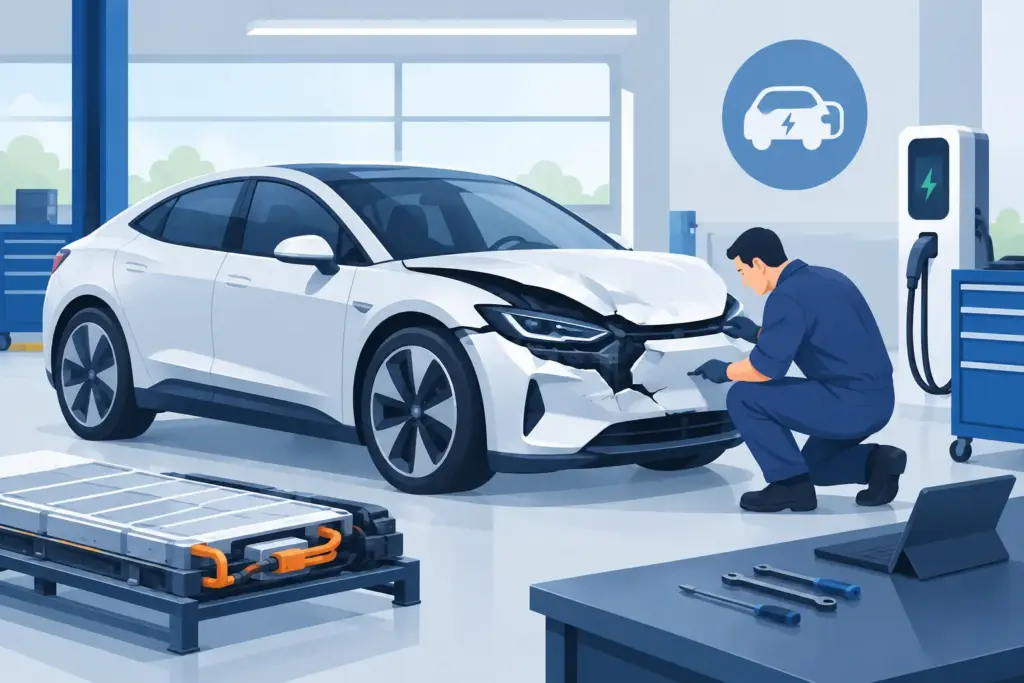
A fender bender can look minor from the outside, but an electric vehicle collision deserves a careful inspection before anyone assumes the damage is cosmetic. EVs combine conventional body panels, suspension components, cameras, sensors, high-voltage wiring, and a large battery pack mounted low in the vehicle. A repair that looks straightforward can require extra safety checks, specialized procedures, and more time than a similar repair on a gas-powered car.
For San Antonio drivers, the priority after any accident is simple: protect the people involved, document the damage, and get the vehicle evaluated by a repair team that understands the full picture. The goal is not just to make your EV look right again. It is to return it in safe, pre-accident operating condition.
Why an electric vehicle collision is different
Electric vehicles still have bumpers, doors, windshields, paint, wheels, and suspension parts. Many collision repairs are familiar. The difference is what may be behind or beneath those visible areas.
The high-voltage battery is usually protected by a reinforced enclosure under the cabin. A direct impact underneath the vehicle, a hard hit to a wheel, or damage near the rocker panels can raise questions that a surface-level inspection cannot answer. Battery cases, cooling lines, mounting points, and electrical connectors all need to be checked according to the vehicle manufacturer’s repair procedures.
EVs also rely heavily on advanced driver-assistance systems. Cameras, radar units, parking sensors, blind-spot monitoring, lane-support features, and automatic emergency braking equipment may need inspection and calibration after a collision. Even a replacement bumper cover, windshield, mirror, or suspension component can affect how those systems see and respond to the road.
That does not mean every EV accident leads to a complicated battery repair. It means the estimate must be based on proper diagnosis, not appearances alone.
What to do right after an EV accident
The first steps are much the same as after any collision. Move to a safe location if the vehicle can be moved safely, call for help when needed, exchange information, and take photos of the vehicles, road conditions, visible damage, and license plates.
With an EV, pay closer attention to warning signs that call for extra caution. Do not continue driving if you see a high-voltage warning, smell smoke or a strong chemical odor, notice fluid leaking from the underside, hear unusual popping or hissing, or find that the vehicle will not shift, charge, or power down normally. If the undercarriage struck a curb, debris, or another vehicle, it is wise to treat that as more than a routine scrape.
Keep a safe distance from a vehicle that is smoking, heating up, or showing signs of battery damage, and follow guidance from first responders. Do not try to inspect damaged orange high-voltage cables or make temporary repairs yourself. Towing should also be handled according to the manufacturer’s instructions, since improper towing can create more damage.
Once the immediate situation is handled, notify your insurer and arrange for an inspection. Clear photos and accurate accident details help, but they do not replace a complete repair estimate.
What a proper EV collision inspection should include
A thorough estimate starts with the obvious damage, then looks beyond it. The repair team should inspect body panels, bumper reinforcement, suspension geometry, steering, wheels, tires, lights, glass, and mounting points. Diagnostic scans can identify fault codes or system alerts that may not be visible from outside the vehicle.
Underbody inspection is especially important. A low-speed impact can bend a shield, damage an aerodynamic panel, or affect a suspension component. A more serious impact can compromise the battery enclosure or its related components. The repair decision depends on the location and severity of the damage, as well as the manufacturer’s repair requirements.
During disassembly, hidden damage often becomes clearer. That is why an initial estimate may need to be updated. A supplement is not automatically a sign that something went wrong. It can be the responsible result of finding damage behind a bumper, under a panel, or within a component that could not be fully evaluated until the vehicle was taken apart.
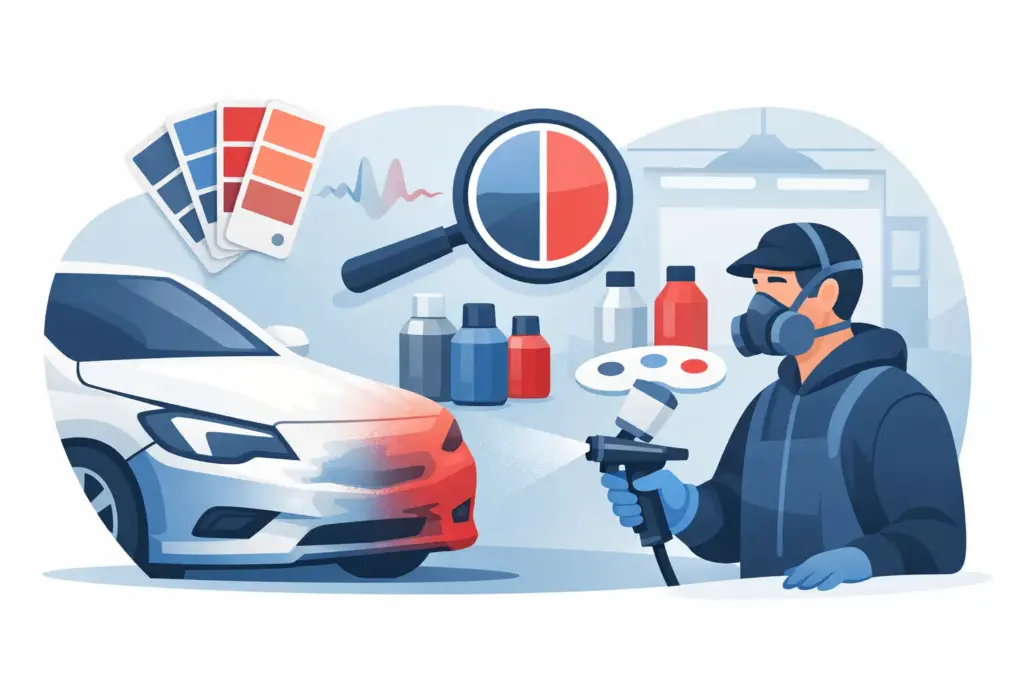
After repairs, the vehicle may require wheel alignment, sensor calibration, diagnostic verification, and a final quality-control inspection. If paintwork is involved, color matching and proper refinishing matter just as much as they do on any other vehicle.
Calibration is not an optional finishing touch
Modern safety features depend on precise positioning. If a sensor or camera is slightly out of place after a repair, the system may provide inaccurate information or fail to perform as intended. Calibration confirms that the equipment is communicating correctly and is aimed within specification.
The exact calibration process depends on the vehicle and the parts repaired. Some vehicles require a static calibration in a controlled environment, while others require a road procedure or both. The right process is the one specified for that make, model, and repair.
How insurance claims can affect the repair timeline
After an electric vehicle collision, insurance approval, parts availability, diagnostic requirements, and calibration can all influence timing. A visible dent may be repaired quickly, while a damaged sensor, specialty trim piece, or battery-related component may take longer to source and verify.
The best approach is steady communication. Your repair shop and insurance company may need to review photos, estimates, supplements, and manufacturer repair documentation. Drivers should not be left guessing where the process stands. Ask for updates when the estimate is submitted, when approvals are received, when parts are ordered, and when the vehicle moves into repair and final inspection.
A reputable repair center can help explain the estimate and work with the insurer on approved collision-related repairs. That support is particularly valuable when hidden damage appears after teardown. It keeps the conversation focused on the work needed to repair the vehicle correctly, rather than rushing to close a claim before all damage is documented.
If you are paying out of pocket, request an itemized estimate and ask which findings are confirmed versus which items may depend on disassembly. Honest expectations at the beginning prevent surprises later.
Can an EV be repaired, or is it a total loss?
This depends on more than the age of the vehicle or the size of the dent. Insurers compare the estimated cost of repair with the vehicle’s actual cash value, subject to their own claim guidelines and state requirements. On an EV, battery-related concerns, specialized parts, and labor procedures can significantly affect that calculation.
A damaged bumper, door, quarter panel, wheel, or suspension part does not automatically mean an EV is totaled. Many EVs are repaired successfully after substantial-looking accidents. On the other hand, significant battery enclosure damage, flood exposure, fire damage, or extensive structural damage can change the equation quickly.
The right answer comes from a documented inspection and a complete estimate. Be cautious about anyone who promises an outcome before the vehicle has been properly assessed.
Choosing the right shop for electric vehicle collision repair
You do not need a shop that talks over your head. You need one that takes the vehicle seriously, follows appropriate repair procedures, communicates clearly, and stands behind its workmanship.
Ask whether the shop can perform the required diagnostics, alignment work, refinishing, and calibrations, or how those operations will be managed. Ask how they handle supplements with the insurance company and whether they provide repair updates. If the vehicle has suspension damage or pulls after impact, make sure alignment is part of the conversation, not an afterthought.
For local drivers, RWORKS approaches collision repair with the same practical focus: clear estimates, insurance-claim support, quality workmanship, and communication throughout the job. A lifetime warranty on qualifying repairs also gives customers confidence that the work is meant to last.
Protect the vehicle, not just its appearance
An EV can look nearly normal after an accident and still need meaningful inspection. That is why quick visual estimates alone are not enough after an impact involving the undercarriage, wheels, bumper area, sensors, or electrical warnings.
Take the time to have the vehicle assessed properly, keep your insurer informed, and choose a repair team that explains what it finds in plain language. A careful repair may take more steps, but those steps help protect the safety, reliability, value, and everyday confidence you expect from your vehicle.